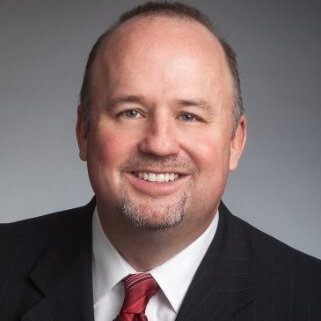
Health Level Seven International (HL7), announces the launch of the HL7 FHIR Accelerator Program. The program is based on a model piloted by the HL7 Argonaut Project and, more recently, the HL7 Da Vinci Project. The goal is to strengthen the FHIR (Fast Healthcare Interoperability Resources) standard and enhance market adoption through a programmatic approach available to myriad stakeholders.
Charles Jaffe, MD, PhD
“HL7 FHIR has achieved remarkable adoption on a global scale,” said Dr. Charles Jaffe, CEO of HL7. “An ever-growing community of implementers has emerged across a broad spectrum of health care, eager to participate in an agile onramp for FHIR adoption and implementation. The HL7 FHIR Accelerator Program provides the framework for that community to leverage the technical capability, management expertise and experience gained during the creation and growth of the Argonaut and Da Vinci Projects.”
Building on the success of current projects – Argonaut (provider-provider and provider-patient) and Da Vinci (payer-provider) – The CARIN Alliance has recently been approved as an HL7 FHIR accelerator project (payer-patient). The three projects are complementary initiatives.
“On behalf of the CARIN Alliance, its board and membership, we are grateful for the opportunity to work more closely with HL7 as part of the FHIR Accelerator Program as we work to develop additional FHIR implementation guides so consumers can get access to more of their health information,” said Ryan Howells, CARIN Alliance Project Manager and Principal at Leavitt Partners. “Consumers and their authorized caregivers are requesting more access to health care data with less friction to empower them to become more informed, shared decision-makers in the care they receive.”
The original concept behind accelerating HL7 FHIR began approximately four years ago with the advent of the Argonaut Project.
By Pratik Kirve, writer, blogger, and content writer, Allied Analytics.
Pratik Kirve
Healthcare providers have been considering data confidentiality more than ever. It has become a part of patient experience as the implementation of biometric technology to safeguard patient information adds a layer of trust and confidence. As the popularity of biometric authentication increases among smartphone users, healthcare providers have been utilizing it for various processes, especially security. According to the cybersecurity survey by HIMSS, there has been a significant improvement in awareness regarding cybersecurity among healthcare organizations.
More funding has been allocated to IT departments and the advantage of an increasing number of healthcare-specific solutions have been taken. Though the survey spotted many flaws in the implementation of security measures such as usage of outdated tech in the networks, the awareness, and implementation of security shows organizations have taken patient data security seriously. The survey found that hackers have begun security breaches and organizations need to put better vigilance over the patient data and information.
Various measures have been taken by market players and tech giants to ensure the security of data. Fingerprint reading technology has been released to improve security and offer controlled access. Market players have been collaborating to enable better security through integration of iris biometric information with blockchain network. The industry for healthcare biometrics is booming. According to the research firm Allied Market Research, the global healthcare biometrics market is expected to grow at a considerable CAGR through 2023. Following are some of the activities taking place in the industry:
By Brooke Faulkner, freelance writer; @faulknercreek.
Being rushed to the hospital is a traumatic event in a child’s life, yet a staggering 25.5 million children are taken to the emergency room each year. The reasons for these ER trips range from poisonings and infections to mental health conditions and diabetes, plus a host of terrifying injuries and baffling disorders. In addition to emergencies, there are children who make frequent visits to hospitals or stay there for weeks on end to receive ongoing treatment for chronic conditions.
Children today are much more tech-savvy than in the past — they’re getting smartphones before their age hits double digits. Many hospital administrators take tech trends into consideration in order to make the overall experience better for patients and their families. Even the processes and workflows that hospital staff follow now stress the patients’ experience. Technology is also helping doctors and surgeons perform their jobs more efficiently and safely while offering quality healthcare to more families than before.
Faster care for injuries
The last thing you expect when heading to a birthday party is leaving with your child in an ambulance. Bounce houses and similar structures are responsible for a number of injuries, and they have been for a long time. Injuries can happen at any time, and hospital staff needs to be prepared to handle them to ensure optimal health outcomes.
In more dire circumstances, faster care is necessary to save the lives of those injured. In the wake of natural disasters, as local leaders scramble to help their respective communities find stability, faster healthcare processes are required to protect the lives of those affected.
Some hospitals are using technology that tells patients the wait times at nearby emergency rooms. This can help parents decide where to take their child for the fastest attention possible. If there’s no hospital that can treat an injury at the moment, the parent can opt to visit their primary doctor or another emergency clinic.
I recently returned from HIMSS19 where I attended some excellent educational sessions and met with dozens of individuals serving the sector through their businesses and partnerships. While there I was specifically looking to establish new content partnerships with health IT’s thought leaders. My goal: To produce an abundant amount of high-quality content from the brightest and most innovative minds in the healthcare technology community for my site, Electronic Health Reporter, which I’ve published for nearly seven years.
Like most health IT sites, I have aggressive growth goals for 2019 and the amount of content I need to meet these goals I cannot produce on my own. So, I need some help. I am seeking content and thought leadership pieces from members of the healthcare technology community. If you are interested in contributing a piece or a series or a regular column, I’d grateful to have it. Requirements are pretty straight-forward: 600 words minimum, vendor neutral and non-markety (unless you’d like to sponsor a piece).
If you are a member of a content development team or agency, please consider passing this along to your colleagues and clients; if you are a thought leader who would like to contribute, please contact me directly for more details.
Thanks to the support of the healthcare technology community, Electronic Health Reporter has experienced tremendous growth in the last year or so and I’d like see even more of it. For those who don’t know, this experiment is a passion project for me; it doesn’t pay my bills nor does it keep me from working a full-time day job. I publish the site because I love health IT, and as a content creator myself I understand the value of publications that see my work and my client’s messages as important. With your content (and social) support, perhaps we can keep this thing going for another seven years!
HealthSparq and Pager announced a strategic partnership. Together, the companies will help health plan members better evaluate and navigate their care options while lowering medical and administrative costs.
Millions of health plan members have access to the HealthSparq One platform through its health plan portals where they can search for providers, get out-of-pocket cost estimates, read patient reviews, schedule care and more. Through Pager’s unique combination of clinical services and human-powered chat, members can get personalized help navigating their care.
Mark Menton
“When people have a pressing healthcare need, it can be stressful,” said Mark Menton, CEO, HealthSparq. “People want to search for that care in a variety of ways. HealthSparq offers an intuitive, self-service model for finding providers and understanding cost and quality, but sometimes people want to be reassured by a real person that they’re on the right track or just need a helping hand. Pager is a natural partner for us to help people make smart health care choices with their unique and powerful technology.”
People encounter multiple touch points while exploring their healthcare options. The partnership aims to meet members where they are by optimizing primary touch points, across both web and mobile platforms, to deliver a personalized experience.
“HealthSparq and Pager share a mission to make healthcare more convenient and accessible for consumers,” said Walter Jin, CEO, Pager. “The combination of our complementary offerings will deliver an innovative solution for health plans that ensures their members get the highest-quality, most cost-effective care while engaging in a personalized digital experience. We strive to be an example for how collaboration in health and technology can make a tangible impact on a person’s healthcare experience.”
Verizon’s second Mobile Security Index finds that more organizations are compromising mobile security in order to “get the job done”, and in turn are facing a greater risk of data loss, downtime and damage to their reputation and customer relationships.
The findings from Verizon’s Mobile Security Index 2019 show that despite companies saying they see risks growing, companies’ defenses aren’t keeping up.
Almost half (48 percent) of respondents said that their organization had sacrificed mobile security in the past year. Up from 32 percent from last year. What’s more, the index found those that had sacrificed security were nearly twice as likely to suffer a compromise—46 percent versus 24 percent. And the majority (62 percent) of those affected described the event as “major”.
Thomas Fox
“Companies are increasingly reliant on mobility as the backbone of their business operations so there needs to be a priority on securing those devices,” said TJ Fox, senior vice president and president of business markets with Verizon. “The applications on these devices now manage things like supply chain systems, point of sale systems, or customer facing apps. The lack of robust security measures could potentially expose corporate assets, and possibly customer data, to malicious actors.”
Rachel Dunscombe, an executive with the National Health Service (NHS) in the United Kingdom and a digital health trailblazer, has joined KLAS Research’s Arch Collaborative as its global (non-US) leader and senior evangelist. The Arch Collaborative is comprised of more than 170 healthcare organizations and 75,000 clinicians across 10 countries seeking to benchmark and improve EHR usability and clinician satisfaction.
Dunscombe is CEO of the NHS Digital Academy and also Director of Digital with the Northern Care Alliance (NCA) in the UK. She will retain her CEO role at the Academy and a part-time strategic role with the NCA. The NHS Digital Academy provides post-graduate education to more than 325 CIOs and CCIOs in the UK via a program that includes Imperial College London, the University of Edinburgh, and Harvard Medical School. As a CIO with seven years experience in acute, community, mental health and social care settings she has managed operational and transformational change budgets in excess of $50M per annum.
Dunscombe has received numerous honors for her healthcare IT expertise and accomplishments, including being named Most Disruptive CIO – Europe in 2016 by Talent Unleashed, with judging by Richard Branson and Steve Wozniak. She is a member of the UK Secretary of State for Health’s Digital Advisory Committee and serves as CHIME ambassador to the UK.
“The Arch Collaborative is making great strides in bringing best practices to clinician EHR training,” said Dunscombe. “I want to help them improve EHR usability and clinician satisfaction worldwide.”
Taylor Davis, a KLAS VP, welcomed Dunscombe on behalf of the Arch Collaborative. “Rachel has raised the bar for digital health education and EHR effectiveness in the UK and globally. All of us will benefit from her knowledge, experience and great passion for improving healthcare.”
Dunscombe has been a member of the KLAS Advisory Board since 2015.
In a comment letter submitted to the Centers for Medicare & Medicaid Services (CMS), America’s Physician Groups (APG) applauded the Agency for its work to help strengthen and protect Medicare Advantage (MA) on behalf of the millions of beneficiaries it serves while also noting specific areas of concern with the recently released MA 2020 Advance Notice and Call Letter.
Don Crane
“MA it is a critical component in transforming our nation’s healthcare system from volume to value-based,” said Don Crane, APG president and CEO. “Numerous studies show that despite a higher proportion of clinical and social risk factors, MA beneficiaries have better health outcomes than their peers in traditional Medicare. A strong rate notice is central to supporting this important program and improving our nation’s healthcare system overall.”
APG applauded the Agency’s work to expand supplemental benefits in MA and better address the opioid crisis through certain targeted services and cost-sharing reductions, but expressed concern with the rate adjustment itself, issues related to MA benchmarking, and the implementation of the transition from the Risk Adjustment Processing System (RAPS) to the Encounter Data System (EDS).
The letter closes by highlighting APG’s support for policies in MA which incent plans and providers to participate in risk-bearing models and called for CMS to extend the 5 percent advanced alternative payment bonus to qualified MA providers as a standalone threshold.
“The 5 percent bonus will level the playing field between providers taking risk in MA and those in traditional Medicare,” said Crane. “This will allow greater opportunities and incentives for risk-contracting in MA and will advance the Medicare delivery system for all seniors.”
Please click here for a copy of APG’s comment letter.


 Being rushed to the hospital is a traumatic event in a child’s life, yet a staggering
  I recently returned from HIMSS19 where I attended some excellent educational sessions and met with dozens of individuals serving the sector through their businesses and partnerships. While there I was specifically looking to establish new content partnerships with health IT’s thought leaders. My goal: To produce an abundant amount of high-quality content from the brightest and most innovative minds in the healthcare technology community for my site, Electronic Health Reporter, which I’ve published for nearly seven years.