What do the best care teams in healthcare have in common? They don’t just take care of the sick — they help them get better. They engage and empower their patients to play a central role in their care and become healthy. The RWJ Foundation suggests that compared to highly engaged patients, patients without the skills and confidence to manage their own health end up incurring up to a 21 percent higher cost of care. It’s time we brought patients on to the center stage for the healthcare transformation.
While consumer engagement always plays an important role when delivering any kind of service, patient engagement is an important cog in the wheel of value-based healthcare; this much has always been clear. Whether or not we are capable of meeting these needs — or if meeting them is easy — is up for debate.
Patient engagement: The ‘quarterback’ of healthcare’s transition to value
As Dr. Geeta Nayyar, chief healthcare and innovation officer at Femwell Group, expressed in an interview this HIMSS19, “Patient engagement is the quarterback to get us from fee-for-service to fee-for-value,” and one cannot agree more.
Leading health systems recognize that patient engagement is a high priority. At face value, the term may seem pretty straightforward, but there is a lot more nuance to defining a truly engaged patient. It may start with giving them the tools they need to understand what makes them sick, enabling access to a portal where they can look at their information, and motivating them to take care of themselves with help from friends and family.
The well-being of a patient — broadly, the entire population — is an important measure of the quality of care and its effectiveness in a particular network. And that’s what providers need to realize. The healthier and happier their patients are, the better their network would be.
Augmented reality (AR) is one of the hottest trends in technology today. Its popularity is equally reflected in projections, as the market is expected to be worth more than $160 billion by 2020, up from just $4 billion in 2016. But its use is not limited to simply chasing Pokémon and other games. With a growing number of applications across a range of industries, the technology is increasingly being adopted within the healthcare sector, where analysts predict its value will reach around $5 billion by 2025.
A number of healthcare providers and medical device manufacturers have already begun to realize AR’s potential for improving their efficiency and effectiveness. A handheld AR device developed by US-based AccuVein, for example, enables clinicians to quickly and easily locate veins for injections – scanning and projecting a virtual image of a patient’s veins on their skin. And in the UK, surgeons at London’s Imperial College Healthcare Trust use Microsoft’s HoloLens AR headset to create an accurate, real-time, virtual 3-D map of a patient’s blood vessels, muscles and bones before making a single incision.
Its impact isn’t only being felt by healthcare providers. In pharmaceuticals, for example, there are AR apps available which can give patients access to information such as dosage instructions and possible side effects. Those patients simply scan a particular prescription and the application recognizes the medication. Furthermore, solutions such as Ghostman are aiding patients with physical rehabilitation therapy following serious injury, and scientists are even exploring how the technology can be used to treat psychiatric and neurological conditions.
Given the benefits it offers both healthcare providers and their patients, AR’s growing popularity within the sector is not surprising. As with any new technology, though, implementing AR is not without its challenges.
Obstacles to overcome
While there may be a great deal of hype around future applications, it’s worth remembering that AR is still a relatively nascent space. There is currently little in the way of an ecosystem around the technology, as well as a lack of interoperability — both obstacles of implementation.
As it stands, developers are required to either build AR applications for one single platform or find ways of creating content for different platforms. Since each of these options has its own specific requirements, most AR apps today tend to be stand-alone projects. This situation is likely to be resolved over time with the implementation of common standards which will enable the creation of common frameworks, speeding up the overall development and deployment process. Once these standards are in place, it’s likely that AR will become more widely adopted within the healthcare sector.
Perception is also crucial — the future of AR depends on how it is perceived by end users. If AR is to be widely adopted, it’s important that developers ensure they put user experience at the heart of every project. As a burgeoning technology, AR is still something of an unknown quantity, so it is vital that sufficient time be given to ensure success. To do this, factors like loading and rendering three-dimensional objects, taking into account the real-world environment and conditions, and to carrying out extensive load testing will be required prior to release. Lag, or a lack of response in an AR application, might be frustrating when you’re trying to catch a Pokémon – but when we talk about care delivery, the consequences will be considerably more dire.
What does “patient engagement” mean in the current age of health IT? Given the recent proposed rules by CMS that tell the sector that all data generated by a patient in the care spectrum is their information, has much changed since the term took roost in healthcare several years ago? What is its catalyst in the current healthcare economy?
The patient engagement concept seems pretty easy to grasp: Getting a patient to pay close attention to their personal health and to stay active in the maintenance of it. Patients who are more involved in their personal care are healthier overall compared to patients who are not. While easy to define, patient engagement in dictionary terms, in real-world practicality, appears to be another thing altogether.
When thinking about patient engagement, many conjure up ideas of technology that interfaces with a patient who then uses said technology to accomplish some lofty goal set forth by the provider, the technology maker and even regulators. The technology might be some form of telehealth, for example. The technology might be vitals analytics or even smart devices, like watches and other wearables that track a patient’s movements and progress toward some pre-determined goal.
When the patient engagement movement caught fire, patient portals were the vehicles that were supposed to capture our (read: patients, consumers) attention. While the capabilities of such sites are vastly more developed than they were in their infancy at the start of the current decade, patients didn’t find much joy in using the portals for bill pay and scheduling. Also, there was no advocacy like the current CMS patient information ruling that allowed patients to easily take ownership of their health data through them.
CMS, lest we forget, once mandated patient engagement through the beleaguered and sometimes-hated meaningful use program (stage II, specifically). “To meet Stage II, providers must give patients clinical summaries after each visit. They must use electronic secure messaging to communicate with patients on relevant health information with a minimum of 5 percent of their patients during the review period. They must also provide patients with the ability to view online, download and transmit information about a hospital admission and give them access to any health information about that patient the providers receives, within four days of receiving it.”
Patient engagement today is not much different than what it has always been, it seems. Per HIMSS (in or about 2017) patient engagement is: “Providers and patients working together to improve health. A patient’s greater engagement in healthcare contributes to improved health outcomes, and information technologies can support engagement. Patients want to be engaged in their healthcare decision-making process, and those who are engaged as decision-makers in their care tend to be healthier and have better outcomes.” Or, pretty much the same definition as listed at the start of this piece.
Taxpayers and health systems have spent billions of dollars digitizing data, and clinicians have spent millions of labor hours entering it over the past decade. There’s too big of an opportunity to let that go to waste, said Mudit Garg, founder and CEO, Qventus. “More free-flowing data that creates greater interoperability between health IT systems has the promise to cut significant inefficiencies that benefit providers, payers, and, ultimately, patients,” Garg said. “Now, modern technologies, such as AI/ML and telemedicine, that harness the collective power of disparate data sources can surface new insights and solve highly complex problems.”
Sure, data is one of the key components of patient engagement, but the patient is the heart of the matter. The data they generate, and own, comes about through their own personal experience in and outside the point of care. “When that translates to a more delightful user experience, or a more efficient hospital visit, patients are more likely to engage in their care, which benefits all,” Garg said.
While healthcare leaders attempt to define the terms and how to best lasso or corral it in tangible terms (so as to produce desired outcomes) healthcare’s struggle of understanding the current definition of the term might be missing a broader point. Patient engagement conversations usually degenerate into technology and system applications and how these can be placed into patient/consumer hands. Alternatively, consumers tend to seek, discover and use technology that they feel betters, enhances or improves their lives.
Non-healthcare technologies developed for consumers seem to take a consumer-based approach driven by what might best attract a consumer’s attentions rather than the approach of pushing some piece of technology to consumers that might get used if pushed hard enough.
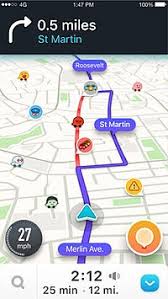
Patient engagement needs to find its Waze
A technology engagement story:
In 2006, FreeMap Israel was founded and developed with the crowd sourcing assistance of community users, a free digital database of the map of Israel in Hebrew, and to ensure its free content, update and distribution. In 2008, Waze was launched commercially. In December 2011, Waze employed 80 people, composed of 70 at Ra’anana, Israel, and 10 in Palo Alto, California.
In 2011, the app was updated to display real-time, community-curated points of interest, including local events, such as street fairs and protests. As of January 2012, the app had been downloaded 12 million times worldwide. In July 2012, Waze announced that it had reached 20 million users, half of them recruited in the previous six months. There were nearly 50 million Waze users as of June 2013.
In June 2012, Waze launched an update to provide real-time fuel prices. As with all Waze real-time updates, prices are submitted by users. In June 2013, Waze introduced a global localization project that enables future road closures and real-time traffic updates during major events in a given country, for example Tour de France.
Waze collects map data, travel times and traffic information from users and transmits it to the Waze server, at no cost to Waze. Waze users (“Wazers”) can report accidents, traffic jams, speed and police traps, and, from the online map editor, can update roads, landmarks, house numbers, etc. Based on the information collected, Waze is then in a position to provide routing and real-time traffic updates. Waze can also identify the cheapest fuel station near a user or along their route, provided Waze has enabled fuel prices for that country.
Waze offers turn-by-turn voice navigation, real-time traffic and other location-specific alerts. Waze encourages users to report traffic or road hazards by offering points. Add-ons expand the functions and personalize this interaction with the app. Add-ons can integrate Foursquare and Facebook friends to Waze or notify the user when driving through a high-crime area. In 2017, an option was added for motorcycle users, as well as specialized routes for people eligible to drive in carpool lanes.
Sage Growth Partners (SGP) recently announced survey findings on how clinical surveillance is prioritized and managed by healthcare delivery organizations. The survey of healthcare executives from hospitals across the U.S. was commissioned by VigiLanz, a clinical surveillance company, to assess their progress in the journey to higher value care and how they are using data analytics, EMRs and clinical surveillance tools to support their efforts.
The full report is available here. Key findings include:
Majority are using a clinical surveillance solution and see it as important to their organization
Most hospitals (96 percent) are using some sort of clinical surveillance solution, whether from a third-party, built in-house, or as part of their EMR. Four percent do not perform any kind of clinical surveillance.
The majority (88 percent) say clinical surveillance is extremely, very, or moderately important to their organization. Nine percent said it’s only slightly important, and 3 percent said it was not important at all or they did not know its importance.
Respondents identified the top five ways clinical surveillance can be most helpful today as: (No. 1) identifying adverse drug events, (No. 2) advancing antimicrobial stewardship initiatives, (No. 3) patient safety alerts, (No. 4) preventing inpatient infections, (No. 5) managing re-admissions.
EMRs aren’t meeting all hospitals’ clinical surveillance and data analytics needs
Most respondents (71 percent) said they invest in additional technology solutions to help them synthesize and understand EMR clinical data; 29 percent do not.
Forty percent of respondents use their EMR for clinical data analytics, 27 percent use it for financial data analytics, and 26 percent use it for operational data analytics. Five percent said their EMR does not offer any of those data analytic capabilities, and 2 percent said they do not leverage their EMR’s data analytic capabilities.
Of the respondents who use the clinical data analytics portion of their EMR, 29 percent said it works extremely or very well, 49 percent said it works moderately well, and 22 percent said it works slightly well or not well at all.
The return on investment (ROI) for clinical surveillance is clear
Some 79 percent said there is probably or definitely ROI from clinical surveillance solutions; 19 percent were unsure, 2 percent said there was probably no ROI.
The large majority (92 percent) said their clinical surveillance technology definitely or probably helps them improve quality, 8 percent were unsure. No respondents answered in the negative.
Link between hospital revenue and value-based care is strong going into 2019
About a quarter (23 percent) of respondents said at least 31 percent or of their revenue will be tied to value in 2019. Of those, 6 percent said more than half of their revenue will be tied to value.
Of respondents who solely use a third-party solution for clinical surveillance, more than one-third (37 percent) said over 31 percent of their revenue will be tied to value-based contracts in 2019.
Only 15 percent of respondents who solely use an EMR for clinical surveillance said over 31 percent of their revenue will be tied to value.
“As hospitals continue to take on more value-based payment models, their ROI for clinical surveillance will grow,” said David Goldsteen, MD, CEO of VigiLanz. “At the same time, our survey showed that those who use a third-party solution for clinical surveillance are also more involved in value-based payment models, suggesting that they view clinical surveillance is a key lever for their success. I believe that we will only continue to see hospital leaders and physicians choose these solutions for a broader spectrum of patient care insights than is available through EMRs. These insights lead to more optimal care decisions that help them meet quality and cost targets and will lead to greater success under value-based payment models now and in the future.”
21st Century Oncology, the largest integrated cancer care network in America, has announced the hiring of industry veteran Todd Higgins as the company’s chief financial officer.
Higgins, whose career has spanned two decades in healthcare services, joins 21st Century Oncology after recently serving as chief financial officer at Confluent Health, LLC and Kindred Healthcare, Inc., two Louisville, Kentucky-based companies. During that time, he has headed the financial activities for multiple Fortune 500 companies and privately held companies, demonstrating strategic prowess for surpassing revenue and cost-saving goals, and facilitating company turnarounds, integrations and acquisitions.
“We are excited to welcome such an amazing and experienced leader as Todd, whose extensive healthcare background and personal values align well with the patient-focused and physician-friendly culture we have established at 21st Century Oncology,” said Kim Commins-Tzoumakas, CEO of 21st Century Oncology. “Todd brings a strong blend of public and private company experience and an outstanding understanding of how to adapt to an increasingly consumer-driven healthcare industry. We will greatly benefit from his leadership and financial acumen as we continue to take 21st Century Oncology to new strategic heights.”
During his career as a chief financial officer, Higgins has been hand-selected to lead strategic acquisitions and turnaround efforts, helping grow revenue and earnings while transforming healthcare companies.
Salesforce announces new additions to Salesforce Health Cloud that improve healthcare through connected, intelligent patient engagement. Health Cloud brings CRM to healthcare, enabling providers like Piedmont Healthcare and 180 Health Partners to personalize patient interactions and improve outcomes. With new social determinants of health capabilities, care teams have a complete patient profile, empowering them to connect the care journey and deliver the personalized experiences that patients expect.
“As a not-for-profit, community health system, it is critical that we put the patient experience at the center of everything we do,” said Andrew Chang, executive director of marketing and physician outreach at Piedmont Healthcare. “Salesforce has enabled us to engage with our patients and help them get easier access to care, on their terms, by personalizing how we connect with them and using new ways to book appointments online.”
Introducing Salesforce innovations for healthcare
Salesforce Health Cloud’s new capabilities power complete patient profiles, relevant patient communications, and convenient, connected in-home care, including:
Social Determinants of Health: While medical care continues to improve at a steady pace, that alone cannot address the 80 percent to 90 percent of modifiable contributors to healthy outcomes, such as living conditions, socioeconomic status and environmental factors. These social determinants of health are frequently not identified by care providers, as systems for tracking and surfacing them are siloed in electronic health record (EHR) systems that require manual updates and are difficult to use.
Now care providers can capture critical social determinant information – such as a patient’s transportation options, housing status and care network, and access it in a patient profile – directly within Health Cloud. This gives the provider a more complete view of the critical factors that influence wellness, adherence and outcomes, all on one connected platform.
For example, a care provider that wants to limit a patient’s risk for readmission can know if the patient has access to transportation, or the ability to purchase healthy meals. Similarly, a life science organization that wants to help patients adhere to their therapies or properly use their medical devices can see a patient’s employment status and living arrangements, and thus offer the necessary level of financial and in-home support. A payer organization can deliver personalized preventive or wellness materials to members based on the member’s education or reading level.
By Samant Virk, MD, CEO and co-founder, MediSprout.
Samant Virk
Ask a doctor why he or she decided to go into the field of medicine and their answers vary. Many want to help people and they have personal stories like a sick parent that motivated them to become a physician. Others may come from a long line of doctors in their family and it’s a real point of pride. But, one thing is very clear, you likely won’t find a doctor who answers that question with, “So I could deal with insurance companies or get great at filling out the electronic health record (EHR).”
The cold truth is that in 2019 doctors spend more time filling out paperwork, playing phone tag, navigating federal and state mandates, and dealing with medication authorizations than they do helping their patients. Doctors spend only a fraction of their time actually building a better doctor/patient relationship and treating people. It’s hard to pinpoint when the doctor/patient relationship inextricably changed. But it’s estimated that doctors today spend just 27 percent of their time with patients.
Perhaps the biggest disappointment in healthcare is technology. We’ve all heard the “Oh how wonderful this new system is, it will change your world and healthcare for the better.” Rather than help us be better doctors who are able to assist a greater number of patients more effectively, it has created barriers and reduced our impact, interfering with one of the most essential parts of healthcare in which we were trained — communicating with our patients.
That’s because the technology is actually designed to reduce costs by leveraging data collected from government-mandated EHR rather than toward actually making patients feel better by addressing their medical needs.
Just like Uber disrupted the taxi industry and fintech is disrupting financial services, our practices need disrupting, too. And I believe it should be an inside job. Start-ups with 20-something computer geniuses are clearly brilliant, but the start-up model of launch, fail, re-launch won’t work for doctors. In healthcare, there is little room, or tolerance, for error.
The American Medical Association delivered the following comment letter to ONC National Coordinator Donald Rucker, MD and CMS Administrator Seema Verma urging a 30-day extension to the comment periods for the two proposed federal rules regarding interoperability and information blocking. The letter is posted in its entirety below:
Dear Dr. Rucker and Administrator Verma:
On behalf of the physician and medical student members of the American Medical Association (AMA), I want to express my appreciation for the detail and thought put into your proposed rules, 21st Century Cures Act: Interoperability, Information Blocking, and the ONC Health IT Certification Program and Medicare and Medicaid Programs; Patient Protection and Affordable Care Act and the Interoperability and Patient Access for Medicare Advantage Organization and Medicaid Managed Care Plans, State Medicaid Agencies, CHIP Agencies and CHIP Managed Care Entities, Issuers of Qualified Health Plans in the Federally-facilitated Exchanges and Health Care Providers.
The 21st Century Cures Act includes many provisions that, through prudent regulation, will advance patients’ and physicians’ access to medical information. I recognize and appreciate the desire for swift rulemaking. However, such rapid change in health care policy, technology, and business practices may lead to unintended consequences for patient privacy and physician burden. Moreover, the proposed rules are interwoven, complex in nature, and include multiple detailed requests for information. To ensure that the rules are as successful as possible in meeting your goals, it is vital that stakeholders be given adequate time to provide comprehensive, thoughtful, and detailed comments. Expediency should not take precedence over deliberation as we confront a true paradigm shift in health care. I therefore urge that the comment periods for both rules be extended by at least 30 days. I appreciate your consideration and ongoing collaboration.
Thank you for considering our request. If you have any questions or care to discuss further, please feel free to reach out to Margaret Garikes, vice president of federal affairs, at 202-789-7409 or margaret.garikes@ama-assn.org.


 What does “patient engagement” mean in the current age of health IT? Given the recent
  A technology engagement story:
 Salesforce announces new additions to Salesforce Health Cloud that improve healthcare through connected, intelligent patient engagement. Health Cloud brings CRM to healthcare, enabling providers like Piedmont Healthcare and 180 Health Partners to personalize patient interactions and improve outcomes. With new social determinants of health capabilities, care teams have a complete patient profile, empowering them to connect the care journey and deliver the personalized experiences that patients expect.
 The American Medical Association delivered the following comment letter to ONC National Coordinator Donald Rucker, MD and CMS Administrator Seema Verma urging a 30-day extension to the comment periods for the two proposed federal rules regarding interoperability and information blocking. The letter is posted in its entirety below: