Most telehealth companies sell a medication with a subscription wrapped around it. A questionnaire. A prescription. A box that shows up.
Mochi Health works differently. The company connects patients, providers, and independent pharmacies on one platform. It’s the structure of that connection, not any single medication moving through it, that Mochi is actually selling.
That distinction matters more than it sounds. A prescription pipeline can be copied by any competitor with a similar drug supply.
A working three-sided marketplace, where each side has a reason to keep showing up, is considerably harder to replicate, and it’s the reason Mochi frames its business this way rather than as a weight-loss app with a pharmacy attached.
The Prescription Pipeline Most Telehealth Runs On
The standard direct-to-consumer model is a straight line. A patient fills out a form. An algorithm or a rushed provider approves a prescription. A single contracted pharmacy ships it.
The patient never chooses the pharmacy and rarely keeps the same provider twice. This model works fine for a single, simple request. It breaks down the moment a patient needs anything ongoing.
The Three Sides, Explained
Mochi’s marketplace gives each of the three parties something a straight pipeline doesn’t. Patients choose their own provider from a roster of more than 400 board-certified physicians, nurse practitioners, and dietitians, and they keep that same provider as their care continues, rather than being routed to whoever’s available.
Getting started is a short eligibility survey, then a provider match, and from there unlimited ongoing access to that care team rather than a single one-off visit.
Providers get the other half of the arrangement. The ability to practice without being boxed into a single condition or a script written by someone else’s protocol, building an actual panel of patients they know over time.
And independent pharmacies plug into Mochi’s software as fulfillment partners that patients can see and compare, competing for that business on service and price rather than being handed volume by default. None of the three sides is just a vendor. Each one has a reason to stay.
Why the Structure Is the Product, Not the Medication
The medication itself is close to a commodity; multiple pharmacies can produce comparable versions of the same GLP-1 or dermatology treatment. What isn’t commoditized is the structure that connects a specific patient to a provider who knows them and a pharmacy that’s been vetted and is competing to serve them well.
Mochi has described its role plainly, as “a software-enabled marketplace that’s making pharmacies better at what they do, which results in better patient outcomes.” This is a description of infrastructure, not of a drug.
That framing is also why Mochi’s pricing looks the way it does. A flat membership starting at $39 for the first month and $79 a month after, with no hidden fees, and medication priced and shown separately rather than bundled into an opaque total.
What This Means Day to Day for a Patient
In practice, a Mochi member gets an in-app care team, messaging with their provider, and 24/7 support that persists across their relationship, plus access to more than 9 treatment areas, from weight management to skincare, mental health, and menopause, without switching platforms or providers each time a new need comes up.
The company reports members averaging meaningful, sustained progress over the course of a year of continued care, the kind of outcome a one-off prescription pipeline isn’t structured to produce, because it was never designed to keep anyone around long enough to get there.
The Marketplace Is the Product
Most of the category still markets itself around the medication: whichever drug is trending, whichever price point undercuts a competitor this quarter.
Mochi’s bet is that the medication is the least differentiated part of the business and the marketplace connecting patient, provider, and pharmacy is the part actually worth building.
More than 500,000 patients choosing their own provider and pharmacy inside that structure is the evidence that the bet is working, and it’s the reason Mochi Health describes itself first as a marketplace, and only second as anywhere you can get a prescription filled.
The great challenge of the American healthcare system in the 21st century has been its accessibility. Hospitals are overrun with patients, doctors and nurses are bogged down by staffing shortages, and rural Americans still suffer in huge stretches of medical deserts where the nearest hospital could be fifty miles away or more.
The question then becomes, in a digital era when so many processes and organizations are becoming more efficient, flexible and convenient, can the same be accomplished in the healthcare complex?
Telehealth and digital medical technologies have begun to create a bridge in healthcare where there once was a widening gap. Patients who suffer from chronic illness and/or receive end-of-life care are often made to endure an interminable cycle of rehospitalization. These patients are shuffled endlessly between hospitals and homes, a journey that in some areas of the country could take hours to traverse. They are packed into waiting rooms and ushered through hospital hallways, where oftentimes the risk of contracting another serious illness is far higher, and they are put through a gamut of medical testing and vitals checking before they are finally able to receive the care that they desperately needed. These patients not only require the high-acuity care that hospitals can provide, but also the means to access this treatment in a comfortable and convenient setting.
Home health agencies have long provided quality care in the comfort of patients’ homes with the help of acute home care models and outpatient-at-home programs. However, as our healthcare system continues to have undue pressure placed upon it, these agencies are forced to provide higher levels of care and services to more and more patients.
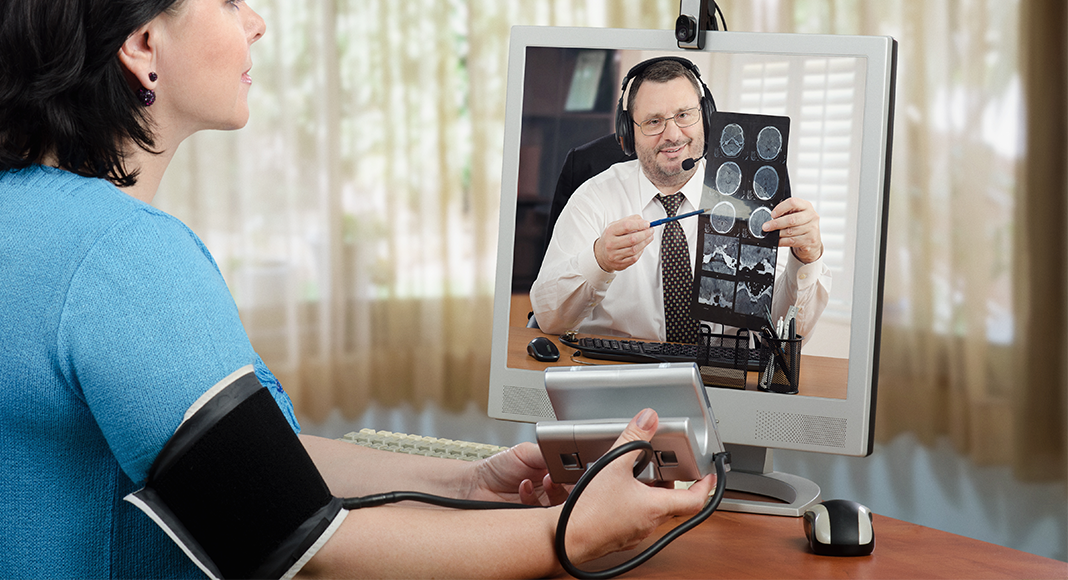
This feat can be accomplished, but not without these services being buoyed by the latest in available medical technologies. We can now monitor vitals remotely and provide actionable insight to doctors and nurses who can offer treatment plans and prescribe medications that are then delivered directly to patients’ doors. In addition to this new level of virtual care, teams of mobile clinicians and nurses become integral in the delivery of quality care outside of hospital walls and help to further expand their reach into the surrounding community.
The convenience of telehealth, both for the medical professional and the patient, is a strength that can’t be overstated. Telehealth, or telemedicine, empowers patients to have better access to quality care at more affordable prices. As a result, telehealth and telemedicine have seen a sharp increase in use and popularity over the past few years.
There are many explanations as to why that uptick has occurred, from the practice becoming routine during the pandemic, an increase in access to more technology, and a demand for more convenient, affordable healthcare.
Technology has advanced in leaps and bounds in almost all industries, but it’s not hard to see just how much has changed in nursing. Previously labor-intensive tasks like lifting patients and administering medication are now made much easier by using technology and innovative practices. If it has been some time since you stepped foot in a hospital, you might be amazed by the following incredible changes.
Online Nursing Programs
In the past, the only way to become a nurse was by attending a nursing school in person. You might have had to move to a new location and change your entire life just to partake in the program. Now, you can enroll in a nurse program online, and nothing else in your life has to change.
As long as you have a computer, an internet connection, and your chosen provider’s classroom software, you can study to become a nurse. Nursing programs are available for secondary school graduates and nurses looking to upskill. All classes, assignments, and grades are accessible anywhere in the world from the cloud.
Diagnostic Equipment
Diagnosing illnesses has always been challenging, especially when a wide range of symptoms can indicate an equally wide range of ailments. However, diagnostic equipment has advanced significantly, and it’s now no longer as challenging as it used to be. For example, nurses can use handheld biosensors that require a body specimen and receive definitive answers. They can also utilize ultrasound machines for the best chance of success while placing an IV.
U.S. hospitals are struggling to see patients in a timely manner amidst hours-long backlogs.
The rise in Omicron variant cases has left many US hospitals unable to cope with the number of patients being admitted, with ERs bearing the brunt.
The backlog is not only causing problems for COVID-19 patients but also for people suffering from various other ailments wh are unable to get seen as soon as s they should be. Many urgent procedures have also been paused as medics desperately try to clear the backlog.
Long waits
California man, May Gleason, took his father Eugene, 92, to a local emergency room a week ago as he required a blood transfusion to treat his blood disorder The procedure, which should have taken a maximum of 10 hours, turned into a 48-hour ordeal, as medics struggled to attend to his, or the many other patients who were sat right beside him’s needs.
Om average, over 144,000 people were admitted to US hospitals with COVID as of January 24th. This was the highest number of recorded COVID patients since the pandemic started, according to the Center for Disease Control and Prevention.
A new report from Reason Foundation, Cicero Institute and Pioneer Institute rates every state’s telehealth policy for patient access and ease of providing virtual care.
Millions of Americans tried telehealth for the first time last year as federal officials and governors temporarily lifted restrictions that limited patient access to virtual care. But many of these restrictions on practices like speaking with doctors across state lines, recording voice messages with care instructions, and mandating insurance coverage have been reinstated, the new report finds.
“Once the public health emergency declarations started to end or executive orders were withdrawn many of the new flexibilities for providers, insurers, and patients were lost overnight,” said Vittorio Nastasi, policy analyst at Reason Foundation and co-author of the report. “States need to adopt a number of telehealth reforms to provide their residents better access to this safe and effective virtual care.”
Nationally, the study finds that several states that have been hardest hit by the pandemic have the most restrictive telehealth laws. These states include New York, California, and Connecticut which have not signed up for interstate licensing compacts and have coverage parity mandates that offer no flexibility between the insurer and provider.
Only three states — Arizona, Florida, and Indiana — allow all providers to easily practice telehealth across state lines. Forty-seven others have arbitrary barriers in place that limit patients’ access to specialists and available appointments based purely on residency.
On a positive note, almost all states have removed the requirement that a patient must first see a provider in-person before they can use telehealth services, the exception being Tennessee, while Alaska and West Virginia require an in-person visit before certain services can be provided. Another 20 states allow full independent practice for nurse practitioners without the supervision of a physician.
The report highlights telehealth policy best practices for states. “While they cannot and should not replace all in-person medical appointments, virtual visits can save patients time and help them avoid germ-filled waiting rooms. Providers can also take some pressure off overburdened systems as they can see patients from an office or home,” writes report co-author Josh Archambault, a senior fellow with Cicero Institute and Pioneer Institute.
While FitBit Watches and smartphone apps have certainly made an impact on personal health and wellbeing,healthcare technology is also revolutionizing the entire medical industry. This is especially true in the field of recovery from addiction disorders.
Technology today is enabling medical professionals and rehabilitation facilities to effectively provide healthcare to individuals who desperately need assistance with substance abuse. Furthermore, technology helps people with addiction disorders by placing powerful data in the hands of healthcare providers and individuals struggling with addiction.
As of 2021, there are over20 million Americans suffering from some type of addiction disorder. Regrettably, this number is on the rise. Political upheavals, economic instability and pandemic-related tribulations are affecting millions of Americans, and this contributes to the number of deaths from drug overdose to skyrocket in to an all-time high in 2022.
Thankfully, medical technology is bridging the gap for people in need by efficiently and effectively rendering aid to people seeking recovery.
How Technology Plays A Role In Addiction Recovery
While the aforementioned statistics are staggering, there is hope, and technology is at the forefront of millions receiving treatment they deserve. Here are a few examples of how technology is helping people with addiction disorders.
1) Telehealth Services
While the pandemic has left adverse effects on the American population, it has also forced the medical industry to make improvements. Telehealth is a network of health-centric services and information that is utilized and accessed over the internet. People with addiction disorders or in recovery can make appointments online to see their doctors, refill prescriptions or even receive rehabilitative care through telehealth services. This reduces a lot of stress for many people struggling with addictions. In the past, the only option for in-patient rehabilitation was to physically attend a recovery facility. Telehealth allows patients in rehab to safely move through the recovery process in the comfort of their own homes.
By John Guiliana, DPM, MS, medical director of podiatry, ModMed.
The flaws in our healthcare system that have bloated the cost of care to nearly one-fifth of the United States gross domestic product are too numerous to list. However, as a physician, I would like to highlight some issues from a clinical perspective, especially the value of preventive care.
Physicians and care providers wield tremendous power to drive down the cost of healthcare. They can champion a higher standard of care while limiting avoidable medical expenses. One overall strategy is stressing wellness and prevention to keep people out of doctors’ offices and hospitals. But we can’t do it alone.
Both providers and payers need to act. When it comes to completely rethinking traditional reimbursement models, payers need to be on board.
Among the best practices is a more “hands-on approach” to preventive care, taking full advantage of technologies that already exist. Incorporating these technologies effectively can include creating more digital “touchpoints” with patients to keep them engaged in their own care. Greater patient involvement can also help them make more informed decisions and decrease time wasted through staff-assisted scheduling and data entry.
Furthermore, patient engagement tools can cut unnecessary spending by increasing efficiency. The potential also exists for greater patient engagement to translate to marked improvements in patient outcomes.
At the same time, practices that leverage these technologies successfully could also see lower costs.
A call to recognize telehealth’s role
When medical technologies become routine in a practice setting, they can also help with routine care – such as a patient’s annual or bi-annual in-person visit. These regular wellness visits, for example, can be elevated through more frequent interactions between physicians and their patients, including telehealth services. In fact, efforts to expand telehealth services out of necessity during the COVID-19 pandemic are translating to enhanced accessibility to physicians for patients.
On top of the increased convenience provided by telehealth platforms, patients trusted and appreciated the ability to interact with physicians via digital technologies during the pandemic, a March 2021 study revealed. Out of 368 patients surveyed, 47% said they were “very satisfied’ with the virtual health visit and another 35% were ‘satisfied.”
At the same time, payer models need to reflect the increasing popularity of telehealth services. In other words, payers need to catch up and increase reimbursement for appointments that include telehealth consultations.
In that sense, payers will be critical to improving preventive care as well. It is pretty simple. Without fair reimbursement, telehealth has no chance of remaining viable for providers.
On a positive note, the Centers for Medicare and Medicaid Services (CMS) expanded coverage for telehealth services during COVID-19. What will happen after the pandemic subsides remains unknown, so more permanent legislation is needed to continue virtual health care coverage.