The Keystone Health Information Exchange (KeyHIE), a network of more than 350 healthcare facilities, announced that it recently launched an innovative new tool that allows physicians to share medical images and associated reports to enable better care coordination, provide important clinical context for diagnostic interpretations, and improve outcomes.
The leading-edge tool was developed by Life Image using SMART on FHIR — fast interoperability healthcare resources, an innovative common standard that addresses the complexity of healthcare data for the seamless on-demand exchange of information. The Life Image Instant Access apps contain a suite of functionality based on popular workflow improvements that are most often requested by doctors, patients and administrators to solve persistent problems. With the Viewer app functionality, clinicians can now instantaneously view diagnostic content in the KeyHIE web-based portal. The power of FHIR is its ability to integrate into web browsers and its simplicity in searching for specific data, which eliminates the need for cumbersome searches and numerous manual steps inside of an EHR.
Founded in 2005, KeyHIE is one of the oldest and largest health information exchanges in the United States. It serves more than 5.8 million patients over a large geographical area including Pennsylvania and New Jersey.
“Current medical data is critical in delivering care. However, data access and exchange are extremely challenging given the data silos that prevent the frictionless flow of necessary information. This tool allows the integration of actionable data and clinically important information for diagnosis or treatment at the point of care,” said Joe Fisne, associate chief information officer of Geisinger.
From the KeyHIE provider portal, powered by Orion Health, doctors can call up a patient’s medical imaging directly through the Life Image Viewer app and examine it while reading the diagnostic report within their portal. There is no separate login or application to obtain in order to use this rich functionality. It is seamless within the physician workflow and interface.
“As a longtime partner of Geisinger, Life Image is thrilled to be able to continue innovating with the Geisinger-led KeyHIE to develop cutting-edge tools that use industry-leading interoperability standards,” said Matthew A. Michela, president and CEO of Life Image. “The integration of our Viewer app into the HIE brings a whole new level of seamless collaboration that harnesses the power of Life Image workflows and makes them available instantaneously in the portals and tools that our customers already use.”
Imagine being rushed to the emergency room after a car accident or a heart attack. You’re in terrible pain, perhaps confused and disoriented. The last thing you want to have to worry about at that critical moment is the ability to communicate with a doctor. Yet, for many patients in America, this is the unfortunate reality.
According to 2017 Census Bureau data, a record of 66.6 million U.S. residents spoke a language other than English at home. By 2010, the Limited English Proficiency (LEP) population, those individuals who are not fluent in English, rose to 8.7%, up from 6.1% from 1999. In those 10 years, the U.S. saw an influx of over 11 million LEP individuals, driving the need for qualified language services.
In an increasingly globalized world, the healthcare industry is lacking in world language skills, and the need for multilingual healthcare professionals is rapidly growing.
Healthcare providers should be capable of communicating with patients in a way that allows them to make informed decisions about their health. Effective communication with patients is critical to the safety and quality of treatment, but in modern society that’s not always the case.
ACTFL’s Making Languages Our Business report shows the results of a national survey among 1,200 upper-level managers and human resources professionals with knowledge of their organization’s foreign language needs. The report was conducted by Ipsos Public Affairs, with support from Pearson LLC and Language Testing International. The report points to a critical and growing language skills gap across multiple business sectors—and the U.S. healthcare system is not immune to the challenges that this gap presents.
Language Barriers in Healthcare
According to the report, the healthcare and social assistance sectors are more likely than any other industry to have foreign language needs exclusively for the domestic market. Additionally, employers in healthcare are also the most likely of the sectors represented in the report to expect an increase in demand for foreign language skills in the next five years.
While there are several laws in place designed to ensure healthcare organizations can communicate to patients in multiple languages, not all organizations adhere to them.
Title VI of the Civil Rights Act of 1964, Americans with Disabilities Act (ADA) and Affordable Care Act (ACA) all require federal healthcare programs such as Medicare or Medicaid to provide patients with interpretation/translation services if they have a language barrier or sensory impairment.
If a medical organization neglects to seek assistance from a qualified interpreter or does not provide translated written materials, and it results in harm to the patient, this constitutes medical malpractice.
Precision medicine involves formulating treatments for individualized patients, typically with genetic sequencing that could shed light on the underlying causes of disease. It’s an amazing idea that could substantially reduce the likelihood of the same treatment curing one person and failing to help another.
However, some things still hold precision medicine back. Here are six ways it could advance.
1. Lower Research and Development Costs
Statistics indicate precision medicine is gaining momentum. For example, 70% of cancer drugs in development are precision-based, and 20% of research and development in the pharmaceutical sector relates to precision medicine.
Those are promising signs, but cost remains a significant factor that slows down the advancement of precision medicine. The research and development associated with it is more expensive than standard approaches because it involves genetic testing. Companion testing is often required to find biomarkers, as well as marker-negative patients.
Securing financial backing can be tricky, especially if investors or the financial decision-makers at pharmaceutical companies are still dubious about precision medicine’s potential.
2. More Patient Education
Many patients have heard about precision medicine in passing, but they don’t know what it entails or how to avail of it. Intermountain Healthcare, a Utah-based health system with nearly two dozen locations, found that a lack of patient education restricted its adoption of precision medicine. The organization began automatically referring metastatic cancer patients to a research clinic that used precision medicine.
There, patients had access to a proprietary system that checked for more than 160 genetic mutations associated with cancer by examining portions of a person’s genetic code. Then, people from a molecular tumor board interpreted the results, guiding doctors in setting up treatment plans for their patients.
The health system is one of essential socio-economic activities; therefore, it requires rational and effective management. For this, it is necessary to have a tool that allows adequate control of the information generated in health institutions.
Hospitals, as the main actors of the health system, generate an essential volume of information, but in most cases, it is dispersed or not available in the necessary time and manner.
In recent years, health information systems have helped improve the quality of life of people in all sectors of our society, so it is inevitable to adhere to this dizzying technological career. Currently, clinical and administrative management of hospitals and health centers is possible through a single platform, with the support of cutting-edge technology, developed to optimize the processes that allow the operation of organizations dedicated to treating patients in any branch of the medicine.
Hospital management systems allows us the ability to optimize and digitize all the processes within the institution, which will help to improve customer service, reduce process costs, streamline the search of medical records, bills, patients, doctors, etc.; thus, having a database of each module implemented.
We tend to have a negative view of risk, regarding it as a danger to the business. But, it also presents opportunities to push boundaries. If we reframe risk as a change-maker, then what degree of risk is acceptable? The healthcare industry faces this conundrum at every turn. Whether testing a toxic chemotherapy drug that could be lifesaving, or adopting IoT devices that provide detailed analytics, these advances can all expand the threat landscape.
Unlike testing pharmaceuticals in a controlled lab setting, the world of cyber and its risks are in constant flux. Healthcare data is at the top of cybercriminals’ lists, contributing to a record amount of breached health records in the past year. Full patient medical records are a valuable commodity on the dark web and?sell for up to $1,000?each.
Now, healthcare organizations can’t stay stagnant in implementing protections.
The reality of highly-regulated industries is that compliance mandates tend to govern security operations. But where regulations are cut and dry, risks do not fit neatly into boxes of “high risk” and “low risk.” Instead, risk is on a spectrum that requires a holistic cybersecurity strategy to appropriately prioritize and mitigate risk according to what is deemed as acceptable.
To help healthcare organizations mature security policies and become more comfortable with risk, here are three recommendations for 2020 cybersecurity planning:
DirectTrust announces its Second Annual DirectTrust Summit, scheduled at the Washington Marriott Georgetown in Washington, DC, June 9-10, 2020. DirectTrust also announced its call for speaker proposals is now open to health information industry experts interested in speaking at the Summit.
DirectTrust is a nonprofit healthcare industry alliance created to advance the electronic sharing of protected health information (PHI) between provider organizations, and between providers and patients, for the purpose of improved transitions of care, care efficiency and coordination, patient satisfaction and reducing healthcare cost.
The DirectTrust Summit brings healthcare industry leaders together to share ideas and best practices around improving health information exchange and interoperability. In response to feedback from the inaugural summit this past June, the format for the Second Annual DirectTrust Summit has been expanded to include a full-day event on June 9 and a half-day of breakout sessions on June 10. Additionally, a virtual participation option via webcast is available for the full-day event and plenary sessions.
“We’re thrilled to announce the Second Annual DirectTrust Summit—and excited to be convening in Washington, DC,” said Scott Stuewe, DirectTrust president and CEO. “Our inaugural event in June was a terrific success, which is amply validated by the calls for more time and more sessions.
“As introduced, our intention with this Summit continues to be to look to the future; to build awareness and understanding of the many elements involved in and influencing the electronic sharing of health information, and to foster collaboration between DirectTrust members and DirectTrust members with non-members. Our goal is to help advance the industry’s progress toward achieving secure exchange among provider organizations, and between providers and patients nationwide,” Stuewe continued.
“With this in mind, we’re eager to learn about and share new and original applications of Direct Secure Messaging and interoperability, and invite industry experts to share their submissions on our Call for Proposals link,” concluded Stuewe.
This year’s Summit also adds a host committee responsible for evaluating speaker proposals and driving awareness of the event.
Members of the Host Committee were selected for their distinguished positions in healthcare interoperability. They include:
Jodi G. Daniel, JD, Partner, Crowell & Moring;
Leslie Kelly Hall, Founder, Engaging Patient Strategies and Consulting Executive, LifeWIRE Group;
David Kibbe, MD, MBA, Principal, The Kibbe Group;
Steven Lane, MD, MPH, FAAFP, Clinical Informatics Director, Privacy, Information Security, and Interoperability as well as a family medicine physician with Sutter Health;
Micky Tripathi, President and CEO, Massachusetts eHealth Collaborative
The Summit is open to both DirectTrust members and non-members. Additional information about the Summit—including Registration, Early Bird pricing, and Call for Speaker Proposals—may be found at bit.ly/DTSummit2020.
HITRUST CSF Certified status demonstrates that the organization’s Population Health Platform has met key regulations and industry-defined requirements and is appropriately managing risk. This achievement places Relias in an elite group of organizations worldwide that have earned this certification. By including federal and state regulations, standards and frameworks, and incorporating a risk-based approach, the HITRUST CSF helps organizations address these challenges through a comprehensive and flexible framework of prescriptive and scalable security controls.
“Organizations like ours are under great pressure to meet complex compliance requirements that include technical and process elements such as HIPAA, NIST, ISO and COBIT,” said Ben Johnson, general manager for the Relias Population Health Solution. “The HITRUST CSF is the gold-standard that needs to be met, and Relias is pleased to be able to demonstrate its commitment by achieving HITRUST CSF Certification.”
“HITRUST has been working with the industry to ensure the appropriate information protection requirements are met when sensitive information is accessed or stored in a cloud environment,” said Ken Vander Wal, chief compliance officer, HITRUST. “We are pleased that Relias has taken the steps necessary to achieve HITRUST CSF Certified status, and we expect their customers to have confidence in this designation.”
The shortage of specialist physicians in the United States continues to receive a great deal of attention as an area of concern. However, a lesser-known compounding factor is the increase in referral rates. In a 2012 study, the National Ambulatory Medical Care Surveys found that between 1999 and 2009, the probability of receiving a specialist referral during an ambulatory patient visit increased from 4.8% to 9.3%, a 92% increase, nearly double. While this study is now several years old, we can surmise that this trend has continued due to the persistence of several factors contributing to the overall disparity between specialist referrals and the number of available specialist physicians.
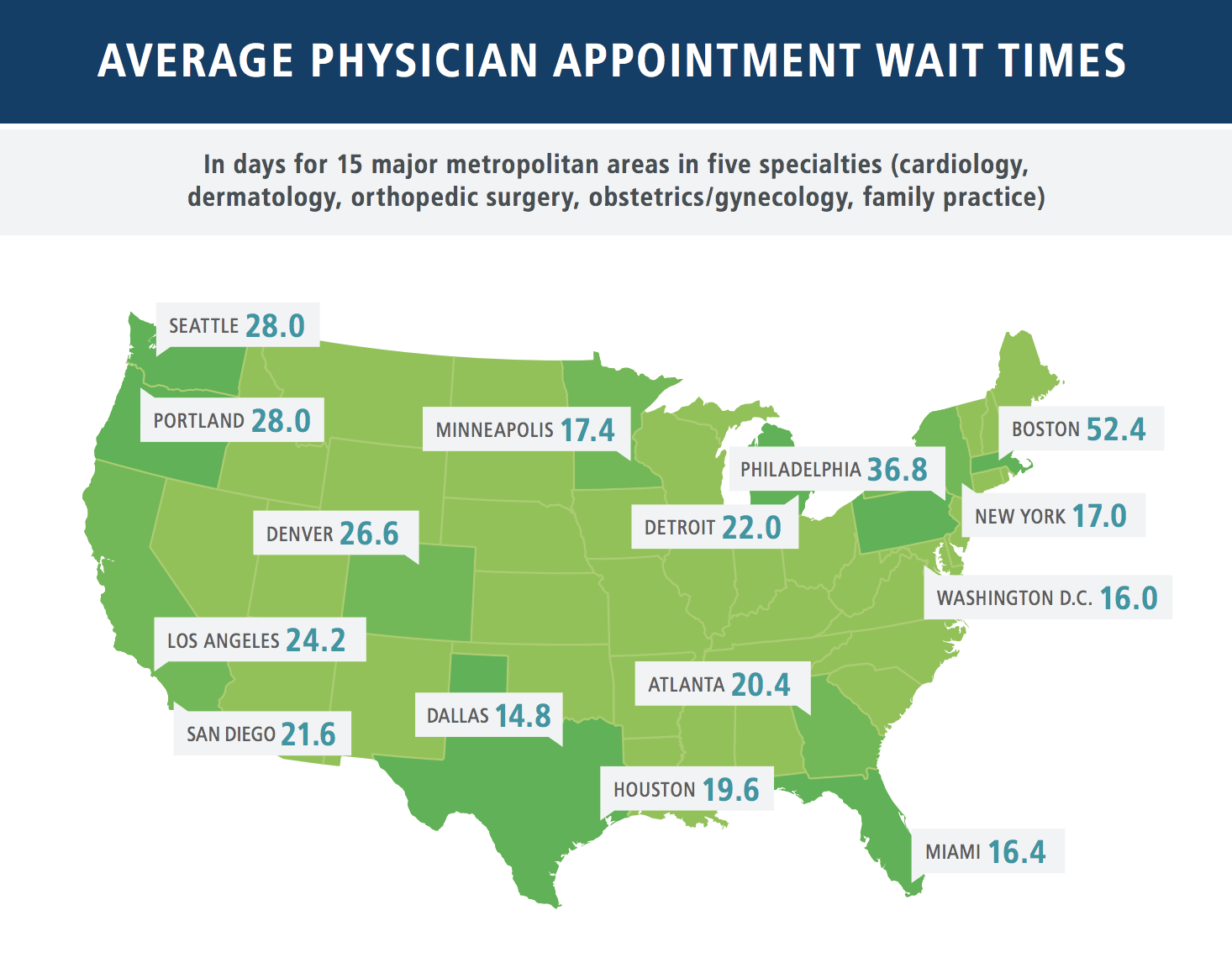
The clear impact of these compounded problems is substantially increased wait times among patients with a physician referral for specialist appointment. In 15 major metro areas, a recent Merritt Hawkins study covering the medical specialties of cardiology, dermatology, orthopedic surgery, and obstetrics and gynecology, found appointment wait times increased 25% from 2014 to 2017. Wait times averaged 24.1 days across the study, with some extreme cases waiting 165 days for an appointment.
Long wait times impact patient outcomes and healthcare operations
On top of the anguish and emotional impact of waiting for care, diseases and illnesses can progress as patients sit in appointment queues for weeks or even months on end. As NEJM describes, “long waits before appointments, particularly specialist appointments, often contribute to the development of avoidable complications,” which cause more difficult health cases both for the patient and for the physicians caring for them.
There are notable effects on healthcare operations that add to the case for reducing patient wait times as a crucial avenue for improving healthcare overall. For example, long wait times for appointments increase the prevalence of no-shows, indicating that patients are either frustrated enough to not follow through on scheduled appointments or forget appointments altogether because of the long interim period. Sometimes appointments can even be moved around by specialist physicians at the last minute, leaving patients in limbo for even longer.
Additionally, long wait times frequently lead to patients receiving inefficient care. Firstly, extended waits often deter patients from seeking initial care. This shifts the healthcare industry away from proactive to reactive care, which is less effective and more costly for all parties involved. Secondly, the inability to access the care they need and when they need it, leads to patients seeking care within inappropriate settings. These patients are more likely to be admitted to EDs, as the 30-day rate of ED and inpatient usage was 8.7 times higher for patients awaiting a specialist appointment. A study by Truven Health Analytics noted that 71% emergency room visits are unnecessary and avoidable. Each of these issues alone make strong cases for reducing patient wait times; these issues combined suggest reducing patient wait times is a crucial goal that must be prioritized when it comes to streamlining healthcare delivery and improving quality of care.
In light of these concerning figures and effects, healthcare organization operations are turning their focus toward reducing wait times and improving patient outcomes. This fits well as part of an overall strategy to increase quality and efficiency of healthcare delivery. Below, we will focus on how telehealth platforms, specifically eConsults, combat multiple factors driving specialist appointment wait times, streamlining the physician referral process and thereby reducing patient wait times for happier and healthier patients.
Positive impacts of reducing patient wait times by accessing specialty care from within primary care
Increasingly, healthcare providers are entering into value-based payment arrangements. Telehealth solutions, and specifically eConsults, can support the drive toward more efficient care by increasing access to specialists while better optimizing time and place of care.
eConsults are is an electronic form of peer-to-peer collaboration, providing PCPs with a platform to consult with specialists on specific patient cases. eConsult interaction occurs using a secure, HIPAA-compliant messaging platform, where specialist guidance is received within 24 hours, drastically reducing the interim time between referral and treatment. eConsults can replace more than 70% of routine referrals with immediate, specialist-guided treatment from the PCP, without the wait and additional cost. Keeping lower acuity patients out of the specialist referral queue means faster access to face-to-face visits for the higher acuity patients, expediting care and improving outcomes for all.
One provider (and frequent user of AristaMD eConsults) at a Federally Qualified Healthcare Center describes the challenges of securing specialty care for the patients at her clinic: “Especially with MediCal patients, it usually takes at least four or five months for a patient to complete a referral. Very often, patients end up waiting three to five months, then receive notification their appointment has changed, the specialist has moved, or even that the specialist is no longer taking that patient’s insurance. Some of these patients are then in limbo for more than six to nine months. This is where the benefit of AristaMD’s eConsult platform comes in. AristaMD specialists provide guidance on patient care plans, for example diagnostic or medication recommendations, within 24 hours.”
Several studies have already noted demonstrable decreases in wait times once eConsults were introduced in large health systems. The San Francisco Department of Public Health saw dramatic improvements following the introduction of their eConsult program. The median wait time for a non-urgent appointment with a rheumatology specialist was drastically reduced from 126 days to 29 days. Additionally, patients visiting specialists needed fewer follow-up appointments as a result of a more extensive pre-visit workup made possible by this telehealth platform. Other similar successes have been observed in Los Angeles and the NYC Health + Hospitals System, with the latter finding that median wait times for high-urgency specialist visits decreased from 30 days to 16 days as a result of eConsult implementation.
Conclusion
eConsults are ideal for addressing the growing problem of lengthy patient wait times. They empower PCPs to deliver specialist-guided care to lower acuity patients in a timely manner while freeing up the capacity for in-person specialist visits for the more complex, higher acuity patients who need them most.
 Precision medicine involves formulating treatments for individualized patients, typically with genetic sequencing that could shed light on the underlying causes of disease. It’s an amazing idea that could substantially reduce the likelihood of the same treatment curing one person and failing to help another.
 The health system is one of essential socio-economic activities; therefore, it requires rational and effective management. For this, it is necessary to have a tool that allows adequate control of the information generated in health institutions.
 DirectTrust announces its Second Annual DirectTrust Summit, scheduled at the Washington Marriott Georgetown in Washington, DC, June 9-10, 2020. DirectTrust also announced its call for speaker proposals is now open to health information industry experts interested in speaking at the Summit.
 Relias announces