The COVID-19 pandemic has rapidly changed the healthcare landscape, and with that, the amount of disruptive technologies flooding the industry at the same time has drastically increased. IT leaders are now not only facing new opportunities brought about by emerging technologies, but many previously unforeseen challenges as well – and this will only continue in the year, and even years ahead.
From new technologies to the people needed to implement them, here are four of the top challenges keeping many IT leaders awake at night.
Maintaining a healthy continuous integration (CI) and continuous delivery (CD)
This practice ensures a faster delivery of a developed service and can provide a competitive edge. The challenge today is maintaining a CI/CD pipeline with changing cloud architectures, while also maintaining proper security compliances and legacy services without greatly increasing technical debt. Cloud service providers change supported versions that can impact new development and force tech debt to take priority.
Additionally, having a solid CI/CD pipeline with testing, compiling and automatic deployment is key. The solution to this challenge is ensuring that all services are initially built with CI/CD in mind. Development leads must ensure their teams are approaching the development of every solutions based on this mindset and must be given the time to keep up with technology, service provider changes and too gather current and future service changes.
Getting Artificial Intelligence (AI) and Machine Learning (ML) buy in
Today, machine learning is commonly talked about – similarly to how data was talked about in the ‘90s and “analytics” in the ‘00s. It is essential that business leaders understand the change a company will introduce when implementing AI/ML. This may include new product features, knowledge required by staff, new staff positions, etc.
To successfully combat this challenge, business leaders must start with a feasibility study (data availability, model reliability, costs, product value, supportability, governance issues). This may be performed by knowledgeable staff or consultants and will help communicate at a business level what is means to introduce machine learning into the company or into a product. This can also help start the governance process to ensure expected outcomes match real outcomes.
Scaling operations amidst growth can be difficult; staff begin to feel strapped for time which can lead to burn out and companies can get stuck with legacy technology. However, as a company grows into the mid-sized market, it’s normal to outgrow the tools and resources that helped them get there—sometimes it’s time for a change.
Village Family Dental is a multispecialty dental practice in North Carolina founded in 1985. In the span of a couple of years, our dental practice expanded from three to 11 locations and three ambulatory surgery centers. The company was growing at a significant rate, and our lean finance team needed to find a way to better manage the many financial workflows associated with these multi-entity operations.
We had outgrown our legacy on-premise accounting software, so we upgraded to Sage Intacct, a cloud-based solution that could more effectively handle our growing transaction volumes and automate manual data entry.
Prior to the new software implementation, our team was performing numerous manual tasks. In fact, one of our controllers was spending all of her time on manual journal entries and double-entering information from our payroll and patient management software.
Since deploying the software, our finance team was able to effortlessly scale with the booming business, increasing efficiency by 25%. In addition to offloading other tedious tasks, automating recurring entries, allocations and intercompany payables and receivables, the new technology’s consolidating and reporting capabilities enabled our team to deliver departmental reporting in under 10 minutes, a dramatic change from the 10 days it took previously.
We’ve also integrated several partner systems, including a Workforce Go payroll solution that transfers pay summaries by both department and by the provider, and our Hybrent purchasing software which provides real-time pricing and shopping for office coordinators, with orders and invoices pushed seamlessly from the point of purchase into Sage Intacct.
By Karen Smith, head of sales and marketing, MePACS.
Karen Smith
People are living longer and fuller lives thanks to advancements in public health, nutrition, sanitation and medicine in the last 100 years. And now, thanks to innovative technology, there are a number of products available that are allowing people to age at home.
People over the age of 60 areestimated to account for one in six people globally by the year 2030, and by the middle of the century it’ll reach one in every five people. The world is facing an ageing population crisis and that will bring strain on healthcare and aged care facilities.
However, the coronavirus pandemic has shown that there is a significant distrust in the aged-care industry. Recently,an Australian survey showed that only 15% of locals aged between 60 and 80 trust the aged care industry. There has also been a significant increase in people considering in-home aged care services for people between 50 and 70 years old in Australia.
During the pandemic, MePACS has seen a 60% increase in demand for personal alarms and smartwatches for clients. Technology is allowing seniors to live a more independent life at home while continuing to do the things they love without fear.
Living an independent life
Most developed countries are facing an ageing population. In the US,AARP Research found 76% of Americans aged 50 and older would prefer to live at home as they age. In Australia it’s a similar story. ABureau of Statistics 2015 survey found that 94.8% of Australians aged 65 and over are living in households and a quarter of older adults live alone.
While many older adults would prefer to live at home, it’s not always possible especially for those who have limited mobility and find performing regular household tasks difficult. Luckily, technology has improved dramatically so that household tasks can be automated, such as smart fridges that can sense when groceries are running low. There are virtual assistants, such as Google Home or Amazon Echo which can perform tasks using voice commands.
The CE mark we know and recognize today was originally an EC mark, but in 1993, this was replaced with the CE mark we use now, which is found in directive 93/68/EEC. This CE mark is abbreviated from the French ‘Conformité Européene’ and is usually displayed on medical devices or on the packaging of medical devices sold in the European Economic Area (EEA). This CE mark is a form of proof that the medical device meets certain EU requirements.
A CE marked medical device, such as a hearing aid or a pacemaker, indicates that it meets the health, safety and environmental standards of the EU, as well as all EU legislation. CE markings aren’t just used for the member states of the EEA but Turkey and Switzerland also use this certification which is applicable to medical devices regardless of whether manufacturing happened inside or outside of the EEA. Because of the wide usage of the CE marking, it’s important that you as a user understand the different types of CE markings you will encounter.
The CE mark for European Conformity
If a product is intended to be used for medical purposes, is a contraceptive or is used to clean a medical device, it is likely a medical device. This is something that the manufacturer decides at an early stage, and if the product fulfils the criteria in the Medical Device Regulation (MDR) it will be classified as a medical device and receive the CE mark.
In particular, medical devices must meet the general safety and performance requirements of the MDR. This in turn, means that they have to meet the requirements of various ISO and IEC standards for medical devices.
Manufacturers are only allowed to affix the CE mark on a medical device after meeting those requirements. This means that the CE mark tells you as a consumer that the product is safe to use.
By Dr. Donald Voltz and Eric Tran, master of science in microbiology and immunology, School of Medicine, Tulane University, New Orleans, LA.
The COVID-19 virus is ravaging the planet at a scale not seen since the infamous Spanish Flu of the early 1900s, inflicting immense devastation as the U.S. loses more than 200,000 lives and counting.
According to CDC statistics, 94% of patient mortalities associated with COVID-19 were simultaneously suffering from preexisting conditions, leaving a mere 6% of victims with COVID-19 as their sole cause of death. However, while immediate prospects for a mass vaccine might not be until 2021, there is some hope.
The fact that four in ten U.S. adults have two or more chronic conditions indicates that our most vulnerable members of the population are also the ones at the greatest risk of succumbing to the pandemic.
Healthcare providers must pay close attention to patients harboring one of 13 chronic conditions believed to play major roles in COVID-19 mortality, particularly chronic kidney disease, hypertension, diabetes, and COPD.
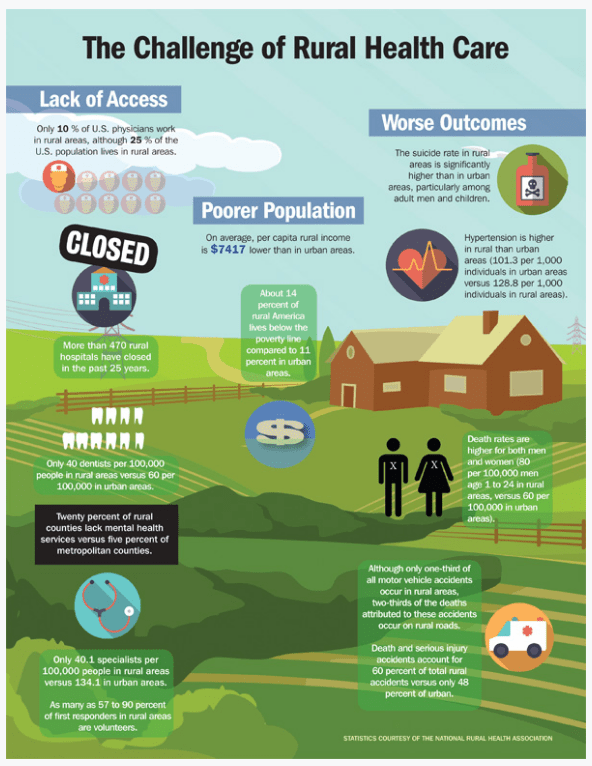
Rural populations are some of the most vulnerable and must be supervised due to their unique challenges. The CDC indicates 80% of older adults in remote regions have at least one chronic disease with 77% having at least two chronic diseases, significantly increasing COVID-19 mortality rates compared to their urban counterparts.
Health behaviors also play a role in rural patients who have decreased access to healthy food and physical activity while simultaneously suffering high incidences of smoking. These lifestyle choices compound with one another, leading to increased obesity, hypertension, and many other chronic illnesses. Overall, rural patients that fall ill to COVID-19 are more likely to suffer worsened prognosis compared to urban hubs, a problem only bolstered by their inability to properly access healthcare.
Although most individuals who sustain a traumatic brain injury find themselves to be able to return to their normal lives as soon as possible, there are some unfortunate cases that require rehabilitation after traumatic brain injury. Individuals who sustain a brain injury and need long term care must have rehabilitation services that are geared toward maintaining their mental health throughout their recovery process. There is a need for individuals to understand what rehabilitation will entail during this time.
Cognitive Rehabilitation
The first phase of long-term rehabilitation is the phase known as cognitive rehabilitation. This phase addresses issues that can affect the individual’s ability to think critically and problem solve after sustaining an injury. Cognitive rehabilitation involves helping individuals learn how to use their thoughts to deal with the daily demands of life. It is imperative that those who sustain a brain injury be able to manage stress and other negative emotions.
Behavioral Rehabilitation
The second phase of cognitive rehabilitation is known as behavioral rehabilitation. This phase works to improve communication, self-care, and emotional control. When an individual who has suffered a traumatic brain injury learns how to better interact with others, they will be able to increase their ability to function on a daily basis.
Another important aspect of behavioral rehabilitation is physical rehabilitation. Individuals must be able to regain strength and function on a daily basis if they are going to be able to maintain their independence. They will also need to be able to take care of themselves while they are still recovering.
Everyone’s lives eventually get touched by a need for physical therapy. Whether your mom is going through it after a hip replacement surgery, or you have to go through it after a car crash, it’s not easy for anyone. Physical therapy can look completely different based on injury and the patient, but there’s one thing that strings it all together.
It helps people.
If you, or someone you care about, are coming out of surgery, physical therapy may be the only step left to finish healing. Here are all of the ways that it can help and why patients shouldn’t skip it.
Sets goals
Surgery can be scary because it takes away some of our security in ourselves and our bodies. When we lose that control, it’s essential to feel like we can earn it back. Physical therapy gives us attainable goals for things we can achieve or hope for. Although not every series of treatments can guarantee a perfect recovery, the milestones that come with can be good enough to feel success in small steps. These goals are vital to handle well about ourselves.
You could argue that, of all the different ways that technology has brought improvement to the lives of humans across the globe, none is more significant as the benefits to healthcare and medicine. From creating the X-ray machine to the many different surgical practices and personal care advancements, technology has helped increase life expectancy and optimism about the future of healthcare. As we journey into the years ahead, we continue to invent technologies that treat rare diseases and improve the general quality of life.
One significant advancement in technology is the creation of electronic health records (EHRs). The movement towards EHRs has caused a massive evolution in medicine and healthcare delivery, leading to other advances in health diagnosis and treatments. Gone are the days when hospitals relied on contrasting information systems that could not transfer and share patient records. The EHR system has made it possible to connect many systems and allow for faster, efficient, and integrated care.
Another advancement worth mentioning is telehealth or telemedicine. This simply refers to using telecommunications technology to improve healthcare. Whether you are focusing on At Home Companion Care or healthcare for deprived rural areas, patients can use different computers to have virtual meetings with doctors. Another advantage of using telehealth or telemedicine is its cost-effectiveness.
The telehealth technology works well with the right monitoring tools. When patients need to monitor their health from home, they can reduce visits to the doctor’s office and save some money. Today, millions of people use different telehealth technologies and remote health monitoring systems. Health workers and service providers can send needed data to health centers at remote locations. The benefit of this system is that it provides the right tools and methods to treat and monitor patients with chronic health issues regardless of their location.