Being a pharmacist is one of the most rewarding, yet challenging jobs. It requires a high level of knowledge and handwork as well as great communication skills.
You need to be personable and empathetic because you’re dealing with patients on a daily basis, but you also need to be able to prioritize your time to stay organized.
Finding a balance between all of these different factors can be difficult, but it’s definitely possible. It might take some time and experience to reach the level at which you’re comfortable owning and managing your own pharmacy, but it will be rewarding when you do eventually reach this stage.
If you’re a newly-qualified pharmacist with the hopes of one day owning your own pharmacy practice, or if you’ve recently progressed onto being a pharmacy owner after years of being a technician, here are some top tips for you. Following these tips will ensure you become a successful pharmacist-owner.
Hospital workers are burnt out. The physician shortage in the U.S. is growing increasingly dire, and COVID-19 variants are filling up intensive care units from coast to coast.
In late August, U.S. Army veteran Daniel Wilkinson made news, dying of a treatable illness outside of Houston, simply because no hospital beds were available. Parts of the country, like Louisiana, are finding themselves unable to provide ambulance services and other essential hospital functions due to case surges.
It’s times like these when our front-line workers jump into action, risking it all to manage high patient influx while delivering the highest quality care possible. As an HR worker, there are ways you can also help support your hospital staff, both professionally and personally.
Communicate to Fill Roles Efficiently and Effectively
“One-third of the physicians now working in the U.S. are expected to reach retirement age in the next decade,” and besides that, the aging American population is requiring increasing care for a growing number of chronic illnesses and ailments. The physician shortage in the U.S. isn’t going anywhere, especially in light of COVID-19 variant surges.
That means HR workers are working overtime to fill in the gaps. When physicians fall ill or are otherwise unable to work, fill-ins are also in order. Communicating with your hospital staff can help you better understand their needs. Perhaps they need a nurse who specializes in critical care, or maybe a doctor with experience in infectious diseases. Increasing the number of nurse practitioners hired may also help to fill the gap left by retiring physicians.
Quitting rates are higher than ever before, and one way to deal with the talent shortage is to liberate your talent strategy. Maintaining a database of pre-vetted, qualified applicants can help streamline the hiring process, which could otherwise take weeks or months. Recruiting culture is fast changing to allow for faster hiring and more efficient communication.
The healthcare industry deals with a significant amount of sensitive information every day, thus making healthcare organizations a prime target for cyberattacks. If stolen by cybercriminals, sensitive healthcare data could be used for identity theft, extortion, and other illegal activities. These confidential data may include patient names, dates of birth, addresses, and social security numbers.
Cases of data breaches continue to put high-sensitive patient information at risk. Moreover, cyberattacks resulted in at least one data breach in 91% of healthcare organizations six years ago. And, just last year, more than 50% of all healthcare vendors exposed Protected Health Information (PHI) due to data breaches.
To protect healthcare data, organizations should take a proactive approach. This would mean implementing healthcare security practices not limited to the list below.
Updating Or Replacing Outdated Infrastructure or Hardware
They say the only permanent thing in this world is change. Technology isn’t an exception. One of the various ways that healthcare organizations could reduce the risk of data breaches is to update their IT infrastructure. They have to ensure the latest security patches are available and installed.
However, the need to update IT infrastructure can be costly. Installing it requires distinct knowledge from professionals. Therefore, healthcare organizations must ensure they have the budget and the right people on board to carry out the process. They may do so by working with Dallas managed services provider (MSP) or the nearest IT company that will take care of all the required updates.
Backing Up Data
A ransomware cyberattack uses malware to limit or prevent users from accessing a system. Users could only regain access after a ransom is paid. It tells us one thing – data breaches can also compromise data availability and integrity.
This is why cybersecurity experts highly recommend frequent offsite data backups. It’s the practice of protecting data by copying it from a primary to a secondary location. Most established IT companies provide this for their clients as part of their service.
Surgeries are primary income-generating activities in hospitals and health care facilities. As such, efficiency is crucial in the operating room (OR), where time equates to money as well as someone’s life.
Numerous procedures are done in operating rooms to remove tumors or replace faulty body parts daily. And while carrying them out allows surgeons to upgrade their skills, such improvement must be matched by technologies to make surgical procedures and their outcomes better overall.
Ultimately, the operating room staff must have all the resources to minimize errors and downtime while improving patient experience. Below are a few of the emerging innovations that enhance efficiency in the OR.
Technologically Advanced Surgical Cameras
With cutting-edge imaging technology, doctors can operate with surgical precision. Advanced surgical cameras are capable of not only providing three-dimensional views but also capturing high-definition images. Ultra-small in size, they can be inserted into any body cavity, helping surgeons reach any internal area. Once inside, these cameras create an accurate map of the patient’s body.
Additionally, there are surgical headlights that do more than illuminate the surgical site. Others come with video recording capabilities such as BFW’s LED surgical headlight system to facilitate minimally invasive surgical procedures.
Hybrid Operating Rooms
As the name suggests, a hybrid operating room is a traditional operating room equipped with the latest technologies and imaging systems, including computed tomography (CT) scanners, magnetic resonance imaging (MRI) machines, and the like. This type of operating room also comes with modern surgical tools for minimally invasive procedures.
A hybrid OR procedure involves far more precise and efficient methods than those carried out in standard operating rooms. Setting up and maintaining one can be costly, though, with estimates reaching several million dollars.
Life insurance is something that healthcare providers would rather not deal with. After all, it is only slightly related to the medical field, in that most insurers require a person to undergo a medical before approving their application. However, that could soon change.
If you need a refresher on life insurance, this article from Lemonade Insurance does a great job at explaining what life insurance covers. For people who do not have dependents, this information may not be something they know. Even those who do have dependents don’t always know how much insurance they should get, or whether they even really need life insurance.
The idea that technology will impact life insurance might sound strange, but it is already happening. Here’s how it will impact healthcare providers.
Starting and running a successful medical practice may seem like a straightforward process, but it is not. Doctors go through years of rigorous training to get the necessary certifications; however, none of the classes teach them how to run an empire. If you are in this field looking to break away from the traditional jobs available, there are certain factors that you have to bear in mind. Knowing the dynamics of the business as well as the requirements set by regulatory agencies is crucial in helping you make well-versed decisions. This article discusses top tips that will help you get the business off the ground and run it with minimal challenges.
Build a website
Virtual presence is vital for a privately owned medical practice. It makes it easier for you to reach the target demographic without breaking an arm and a leg to fund marketing. Contracting an expert to help with the process may be costly. Luckily, there are website builders that offer various website templates that you can choose and customize, and that allows you to handle this phase without paying someone to do it for you. Before building the website, assess the needs of your business as dictated by your area of expertise to ensure you include all the necessary functions. Get to know more about websites by reading expert articles on authoritative sites to guarantee that all bases are covered as you begin the process.
Find the appropriate location
Private medical practice compete with those provided by the government and big hospitals. For this reason, you have to be smart about the location you select to ensure that your target population can find you with ease. Additionally, few clinics or hospitals in the locale should be offering similar services and products to yours. Standing out gives you an upper hand as the clientele has to rely on your private practice to get the help they need without going out of their way.
A new initiative launched by Health Level Seven International (HL7) and jointly supported by the Centers for Disease Control and Prevention (CDC) and the Office of the National Coordinator for Health IT (ONC) seeks to use widely recognized data exchange standards to help advance public health. The effort, called Helios, intends to strengthen the capacity and streamline data sharing across all levels of public health using the HL7 Fast Healthcare Interoperability (FHIR) standard.
“Public health has risen in urgency and importance over the last 18 months,” said the ONC’s National Coordinator for Health IT Micky Tripathi, Ph.D., M.P.P., “FHIR accelerators have had great success in engaging implementers as early as possible to help identify and overcome longstanding barriers to interoperability. The Helios alliance is a market-based implementation collaboration that will help to ensure FHIR development is coordinated and focused on real world public health needs.”
The initiative is the latest to use HL7’s FHIR Accelerator program, which seeks to speed the development and availability of FHIR to deliver better data that leads to better health outcomes. The Helios alliance represents an ambitious new use of the FHIR Accelerator Program, pulling together a diverse group of state, tribal, local, territorial, and Federal public health agencies, private and philanthropic sector partners, and other groups interested in the equitable and effective use of data for the advancement of public health.
“Helios is expected to become an integral component of the HL7 FHIR Accelerator Program and comprise a cornerstone to the newly announced HL7 Implementation Division,” said Charles Jaffe, M.D., Ph.D., the CEO of Health Level Seven International. “The Helios Public Health Accelerator will provide a critical step toward the direct access to data needed for public health.”
As the FHIR standard matures, there is a clear path to utilize FHIR and other existing standards to execute the interoperable exchange of data for public health. Helios members will help demonstrate the utility of FHIR and ensure public health needs are at the forefront as FHIR-based implementations evolve and rollout nationwide.
As the FHIR standard matures, there is a clear path to utilize FHIR and other existing standards to execute the interoperable exchange of data for public health. Helios members will help demonstrate the utility of FHIR and ensure public health needs are at the forefront as FHIR-based implementations evolve and rollout nationwide.
“Standardizing and automating our data flows will help us accelerate data into action,” said Daniel Jernigan, M.D., M.P.H., CDC’s deputy director for public health science and surveillance. “Organizing in this way will help ensure FHIR-based solutions are integrated, aligned, and are a complement to everything else that’s going on in the public health community.”
Organizers of Helios are encouraging other entities to participate in the effort. More information about Helios and the project’s goals can be found on HL7’s website, www.hl7.org/helios/.
I’ve heard from several home healthcare agency administrators that they are preparing to don their scrubs for the first time in years to enter the front lines. This is because the long-term care industry continues to face one of its greatest threats in history, a classic business crisis of supply and demand.
In a recent survey, 88% of respondents stated their home care business was negatively affected by the caregiver shortage, and another survey reported in Bloomberg Businessweek saw 85 percent of organizations in Wisconsin did not possess the necessary staff to cover the shifts scheduled.
This problem extends nationwide. Clinicians across the United States have been tasked with providing care to an increasing patient population, which will continue to grow with what is commonly cited as the “Silver Tsunami” of 10,000 baby boomers turning 65 every day.
As a result, the aging population is anticipated to reach 88 million in 2050. And yet, we must consider that many retiring nurses are baby boomers fated to become patients themselves. Without enough staff to meet the needs of the growing patient population, organizations are plagued by missed visits and the consequences. Fortunately, some good has come amid the pandemic, most notably that technology has been given a boost.
Technology has also become much more prominent in healthcare with secure mobile communication that enables caregivers to spend more time on patients, along with wearable devices to track activity data and artificial intelligence to predict outcomes. Telehealth and remote care monitoring have grown exponentially due to COVID-19 and can quickly address the staffing crisis by augmenting existing practices and boosting efficiency and productivity.
Benefits of Telehealth
Through its ability to maintain patient-provider relationships over a distance, even the Centers for Disease Control (CDC) acknowledged telehealth as an essential component in care continuity. Telehealth also eases the impact of nursing shortages in rural communities and beyond by improving efficiency, as caregivers utilizing telehealth can help remotely care for more patients in less time.
 Being a pharmacist is one of the most rewarding, yet challenging jobs. It requires a high level of knowledge and handwork as well as great communication skills.
 By Adrian Johansen, freelance writer;
 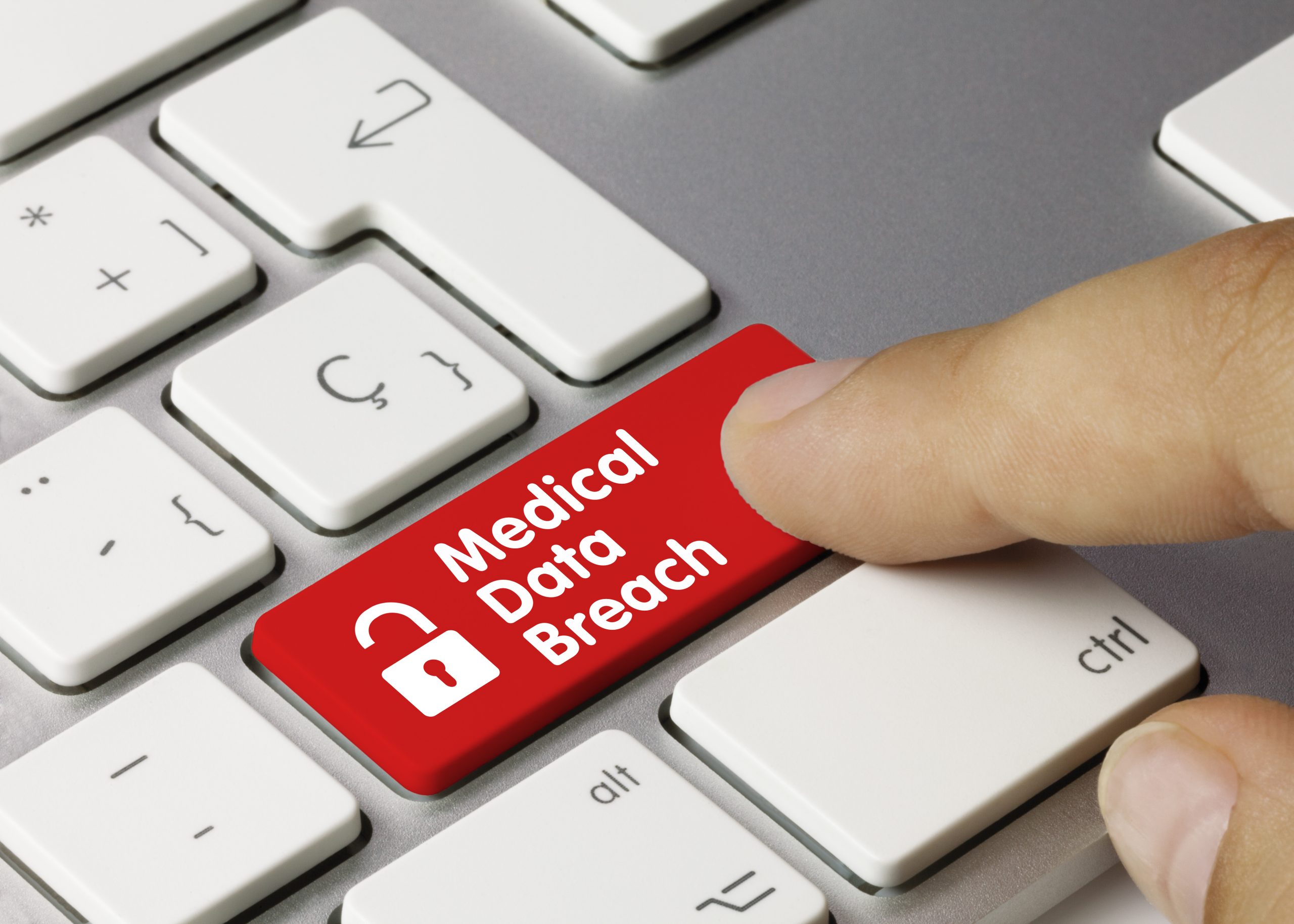 The healthcare industry deals with a significant amount of sensitive information every day, thus making healthcare organizations a prime target for cyberattacks. If stolen by cybercriminals, sensitive healthcare data could be used for identity theft, extortion, and other illegal activities. These confidential data may include patient names, dates of birth, addresses, and social security numbers.