By Dr. Madhavi Vemireddy, co-founder and COO, CareTribe.
Millions of Americans live with chronic health conditions every day, sometimes even debilitating or disabling health conditions. When our physical health fails, it inadvertently impacts every facet of our lives: social, financial, interpersonal, as well as professional. As a result, millions of Americans are enlisted to support their loved ones struggling with their health each year. Within the healthcare industry, we refer to the former as “family caregivers ” and the latter as “care recipients.”
Today, more than 53 million Americans can be described as family caregivers.
Family caregivers commonly find themselves scrambling to solve problems for their afflicted loved one, often at the expense of their job, their family, and friends, and sometimes even their own physical and/or mental wellbeing. The average American caregiver spends four years or more in the role of a caregiver, spending approximately 24 hours per week dedicated to supporting their loved one with their out-of-pocket spending as a caregiver costing on average more than $7,000 per year.
Unfortunately, caregivers typically find themselves providing this level of care for a loved one with very little expert support. Usually, caregivers tap into their network of friends and family members for advice or assistance. Because of the chronic stress that the role of caregiving brings, caregivers are twice as likely to suffer from adverse health effects like depression, hypertension, diabetes, pulmonary disease, and other ailments–all while carrying the responsibility of caregiving for their loved one.
Creating a Community Centered on Caregiving
These reasons are why my husband and I founded CareTribe to support the millions of Americans struggling to support their loved ones who are afflicted with chronic health conditions, the ramifications of those conditions, and the impact they hold on the overall quality of life for both care recipients and caregivers alike.
In creating CareTribe, our mission was to provide family caregivers with an innovative technology platform driven by artificial intelligence (AI) that combines condition specific pathways, relevant benefits, curated products and resources, and human experts to provide personalized support, regardless of what stage caregivers are at in their journey to assist their loved ones.
One of the greatest health concerns of modern society is nursing shortages in different states across the world. The prevalence and impacts of the recent Covid-19 pandemic have taught the world that professional nurses and physicians are pertinent to providing quality healthcare services. As the pandemic continued to expand, it became evident that frontline nurses suffered the most, causing an unpredictable shortage of professional healthcare workers at such a poor timing in history. Predictions indicate that by 2030, there will be a shortage of more than 50,000 nurses in certain states.
This trend explains why nursing programs and professionals embrace technology to help in the ideal recruitment, retaining, and monitoring process. Here is how technology helps to counter nurses’ shortages in the healthcare system.
Specialty Preference Over Facility
Gone are the days when nursing and other healthcare job vacancies filled the print media pages. Around a decade ago, influential healthcare policymakers decided that the system would evolve from print journals, specialty publications, and newspapers to social media, website optimization, and email marketing. This strategy would facilitate analytical and metrical monitoring to promote nursing by specialty rather than a facility.
Electronic Scheduling
Many nursing training processes take place virtually. Several nurses get assigned to different shifts based on their competence skills and preference areas. Electronic scheduling helps solve the nursing shortage challenge by facilitating trading shifts among professional healthcare workers and establishing a stable balance between work and personal lives.
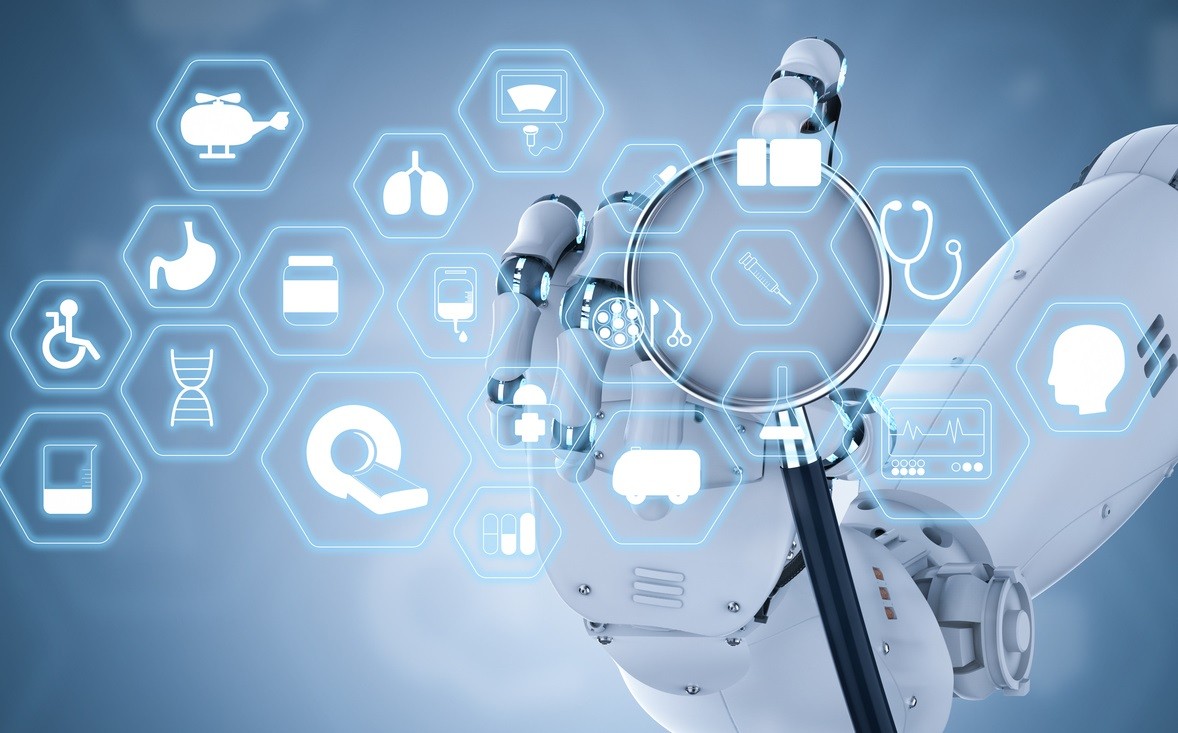
3d rendering medical interface with robot hand holding stethoscope
Hospitals have always been a place of innovation. From the first medical breakthroughs to new technologies, hospitals are constantly changing and adapting to meet today’s needs. As a result, doctors need better tools, more efficient systems, and faster access to information to provide quality care for their patients. This blog post will explore some of the most innovative technological advances in hospitals that are making healthcare more efficient than ever before.
The Artificial Intelligence Intrusive Surgery Machines
Artificial Intelligence has been making its way into the operating room for some time now. These machines make surgeons work smarter, not more complex, and may eventually replace the current surgical team with a single AI-enabled device.
The use of AI in surgery will only grow as these devices become more sophisticated, and physicians across specialties like cardiothoracic surgery, vascular intervention, or even neurological procedures can use them in operations such as deep brain stimulation.
Artificial intelligence will also bring new efficiencies in hospital operations providing data insights that lead to cost savings from reduced wait times. This step will be through better planning capabilities, fewer bed shortages through enhanced inventory management, and lower overhead costs due to decreased staffing needs, among other benefits.
The efficiency increases will also extend to the patients themselves, who will spend more time with their loved ones because of shorter wait times, a better quality of life, and experience less pain due to AI-assisted surgery.
Hospitals are using artificial intelligence to automate various tasks, such as triaging incoming patient charts based on severity. In some cases, AI is even being used to decide what course of treatment will be best for the patient in question.
Employment in healthcare occupations is projected to grow 15% over the next few years, adding nearly 2.4 million jobs. Yet, there is no end in sight to the nation-wide healthcare hiring crisis, especially among the majority of workers that are underpaid and undervalued. While understaffing can be a nuisance and result in lost earnings for those in sectors such as hospitality, it’s consequences can have catastrophic effects in healthcare.
What do you do when you can’t provide critical care in a timely manner? Many healthcare providers are facing this issue as the industry needs thousands of additional professionals to keep up with current and future demand.
What’s driving the crisis
To understand why the shortage is occurring, we need to understand the challenges many healthcare professionals face. Burnout is real – a recent poll by the Washington Post indicates nearly 30% of workers are considering leaving the profession as they seek a better work/life balance. Personal protective equipment (PPE) crucial for the safety and wellbeing of our healthcare workers is still widely unavailable for many small and mid-sized clinics. And they’re underpaid, too – Last year, nursing assistants made a median salary of $30,000, and medical assistants, home health aides and others averaged only $13.48 per hour (less than $30,000 per year). Finally, there’s a limited supply of medica professionals in general. As of now, the United States has a greater number of citizens over the age of 65 than ever before. Additionally, over the next ten years, 20% of the United States will become senior citizens. Add to that the training time needed to work in healthcare and you see a mismatch between the jobs that need to be filled and the skills available workers possess.
Healthcare leaders need to think outside the box to stem the tide of those workplace attrition. To get the top healthcare talent (and keep them), you need to answer two questions: how am I treating my employees and how am I treating my patients? Everyone wants to make good money, and while that’s an important factor, it’s not only about compensation.
The growing preference for outpatient orthopedic surgery is much more than another pandemic-inspired trend. Recent advances in medicine over the past few years have made procedures, even those as intensive as total joint replacements (TJR), safe to conduct in the outpatient or ASC setting.
Now, surgeons can capitalize on regional anesthesia and tranexamic acid to minimize blood loss and GPS software to improve the precision of implant positioning, all factors which ensure the patient can recover comfortably in their own home, not the hospital.
While these advances make outpatient TJR procedures possible, the digital transformation in healthcare makes it preferable. Specialty-specific digital tools are crucial for the transition to outpatient surgery, reducing the burden on physicians, limiting a patient’s time spent out of the home, and lowering costs for both patients and physicians.
Physician
As has been widely reported, inefficient electronic health record software can intensify burnout instead of mitigating it. Physicians that spend extensive time documenting, especially after hours, report higher rates of burnout, and programs that are click-intensive and data-heavy contribute to this phenomenon as well.
These pitfalls are especially burdensome in the ASC setting because it is a site of care that may be separate from a patient’s primary care office or hospital system. In order to best understand a patient’s medical history and effectively communicate with their other physicians and specialists, ASCs need interoperable EHR systems that minimize manual data entry.
EHR adoption is already especially challenging within orthopedics, as this is a specialty that covers a wide age range, from children to older adults, and encompasses integumentary, neurovascular, and musculoskeletal systems across the entire body. Therefore, on top of the challenges of finding software that mimics the workflow of outpatient care, it must also capture the nuances of the orthopedic specialty. It should streamline workflows and predict and suggest codes, reducing overall clicks and time spent within the system, so that the physician can dedicate that time to the patient.
Over-the-counter refers to the medications available to you without the doctor’s prescription and can be bought without hesitation. These medications are beneficial in curing common illnesses and disorders that may occur regularly. You might want to keep these in stock as cuts and wounds, common cold and body pain, as common as they come, may still disrupt some of your days.
To prevent/cure any of your illnesses, make sure you have a bunch of these medications on hand. It is also advisable to get these online from any Canadian pharmacy at a low price and home-delivered.
Pain relief: pain relief is a must as a temporary guard against hurt till you get a doctor’s opinion. Make sure you stock up on pain relief medication for unforeseen circumstances.
Tylenol: Acetaminophen is best for people with low tolerance. It effectively treats headaches and fever along with typical aches and pain except for inflammation. It has fewer side effects, no stomach issues and is also safe for children.
Ibuprofen: not suggested for children under 6months. Ibuprofen is the active element in most painkillers and is generally used when Acetaminophen does not work. It treats headache, dental pain, menstrual cramps, muscle aches, arthritis and also aids in reducing fever, minor aches. It is advisable for musculoskeletal injuries kike swollen and sprained joints. Try Advil or Motrin.
Fever Medicine: rising temperature is one of the symptoms that the body displays to make us realize that it is in fighting mode, trying to kill off the bacteria and infection virus that has a hard time surviving in the high temperature.
You can treat the minor and significant fever with Tylenol and ibuprofen. But aspirin and naproxen are equally effective in treating high temperatures.
H1, which provides the largest global healthcare platform that connects healthcare professionals, announced today that it has acquired Portland, Oregon-based Carevoyance, which offers ??the best targeting, sales enablement, and physician segmentation platform to medical device sellers. The acquisition enables H1 to expand its presence in the medical device market, and allows Carevoyance – which will continue to operate independently, as a subsidiary of H1 – to include H1’s proprietary data in its product offering to provide more value to clients. Both companies will continue to serve customers in their respective markets.
The transaction provides for synergies to expand the market presence of both companies. Carevoyance has a strong history of evaluating healthcare data to surface actionable insights for life sciences, medical device and provider partners to help those companies reach the right buyers. The company counts among its clients some of the biggest medical device companies in the world, including Olympus, Nuvasive and Insightec. H1 has built the premier intelligence platform for Healthcare Providers around the globe, searching scholarly data and medical claims data to surface the most relevant researchers or clinicians given any criteria.
H1’s world-class teams and operations pros can help meaningfully accelerate Carevoyance’s growth. “Carevoyance has always been singularly focused on delivering actionable insights through software to provide our clients with a competitive edge in market,” said Anatoly Geyfman, founder, Carevoyance. “We are thrilled at the opportunity to join forces with H1 and bring best-of-breed commercial intelligence to every life sciences team. The combination of H1 and Carevoyance will allow customers to make excellent data-driven decisions at every stage of the product lifecycle – from research through commercialization.”
“Acquiring Carevoyance strategically accelerates H1’s entry into the medical device space and adds depth to our engineering and client facing teams” said Ariel Katz, co-founder and CEO of H1. “Perhaps most importantly, after spending time with Anatoly and the rest of the Carevoyance team, we thought they’d be a strong culture fit and together we can continue to drive towards supplying a source of truth of HCP information to the life sciences industry.”
By Maggie Peña, vice president of client services, Interlace Health.
The COVID-19 pandemic impacted and changed the world in countless ways, including forever altering the world of healthcare. Of these changes, one of the biggest was the explosion of healthcare technologies.
Health systems’ digital strategies accelerated rapidly at the start of the pandemic. Telehealth’s growth and a significant increase in the adoption of digital solutions changed the way care was offered. While plenty of health systems understood the importance of implementing new technology in healthcare and had plans in place to do so, they largely hadn’t turned those plans into action.
But once the pandemic took the world by storm, the digital front door was opened faster and wider than anyone could have anticipated.
This digital transformation in healthcare has shown providers the importance of digital healthcare solutions and how powerfully they can impact operations and care. These technologies can increase patients’ access to providers and lower the costs of quality care. But their impact also extends to providers.
How Healthcare Technology Transforms Workflows
Health systems have long relied on complex and often inefficient processes. In an industry where the stakes are so high, changing the way things are done can create unwanted risk. But digital solutions have the power to transform workflows and traditional processes — especially those that rely on paper.
Manual, paper-based processes are often inefficient. Every element of healthcare operations is rooted in data collection, analysis, and storage, which creates a tremendous need for uninterrupted and streamlined processes. Digital healthcare solutions offer that capability by automatically assigning, populating, and archiving the forms used to gather and store this data. They also decrease the risk of human error and the time staff members spend on cumbersome manual tasks.

 By Brian Radin, president,