Do you have a dental practice and want to know if you are up to date with all the latest technology? Are you curious as to how technology has been implemented in the dental care world and want to know what kind of tech they make use of?
Technology has changed the way we live and work. It’s also changing the way we take care of our teeth. From dentist offices such as Winnipeg dentists, to dental assistants, technology is making it easier for all those involved in dentistry to do their jobs better and more efficiently than ever before.
Dental assistants can now use software that automates many of their tasks, freeing them up to spend more time with patients and helping doctors provide quality care. From apps that remind you to brush your teeth every morning, to dentists who make house calls, there are many new ways to improve oral health. Continue reading to find out more about how technology has improved dental care
AccessDX Holdings, an international provider of advanced laboratory diagnostic solutions, has acquired 2bPrecise from Allscripts Healthcare Solutions. A recognized leader and innovator in healthcare informatics, 2bPrecise enables organizations to amplify their precision medicine strategies by delivering point-of-care insights so providers can identify patients at risk for heritable conditions, arrive at precise diagnoses more quickly and initiate optimal therapies more quickly.
2bPrecise will join the AccessDX portfolio of industry-leading diagnostics, software and services, including the MedTek21 software platform which facilitates diagnostic-based clinical decision support, compliance and program analytics for thousands of care organizations, patient groups and providers. The combined strengths of AccessDX and 2bPrecise ensure meaningful insights will be accessible within the clinical workflow of any EHR, while helping organizations streamline virtually all aspects of establishing and supporting precision medicine programs.
“We’re thrilled to welcome the 2bPrecise team and platform as we execute on our combined vision for democratizing the use, interpretation and delivery of advanced diagnostic solutions at the point of care,” said Joe Spinelli, SVP of product & strategy for AccessDX. “Combined, our worldwide organization will be able to accelerate the pace of innovation and best serve the needs of healthcare organizations that continue to expand their adoption of actionable precision medicine solutions.”
Utilization of genetic and genomic data is accelerating across nearly all clinical specialties, perhaps most notably in behavioral health/psychiatry, neonatology and pediatrics, oncology and cardiology. Providers can arrive at precise diagnoses faster and initiate effective treatments sooner when genetic and genomic information is available and actionable. Providers, payers and clinical organizations alike agree that the ability to seamlessly access information within their clinical workflow is key to precision-medicine success.
“AccessDX is a genuine leader in genomic information management. Our collective capabilities will serve as a force multiple for the practical utilization of precision medicine,” said Assaf Halevy, founder and CEO of 2bPrecise. “With a unified mission to drive dimensional change in healthcare, the combined talents and energy of 2bPrecise and AccessDX will compound acceleration in delivering on our vision of intelligent, personalized care for the good of healthcare organizations and the patients they serve.”
With the introduction of newer applications, data strategies, assistive listening devices and more, technology is helping to improve the quality of life of seniors, especially those in care facilities. The pandemic accelerated the implementation of advanced technologies and now more seniors own a smartphone or take part in video conferencing and telehealth, for example. This has allowed them to reach out to family and friends remotely and access more information related to their health. Here are a few examples of how technology is improving the quality of life of seniors.
Automated messaging
With automated messaging services such as SMS for Healthcare, the families of seniors in residents and assisted living facilities can receive regular updates about their well-being and daily activities. This is now a common service and provides families with peace of mind. The pandemic helped to raise awareness of the importance of these types of messaging services as people weren’t able to visit their loved ones.
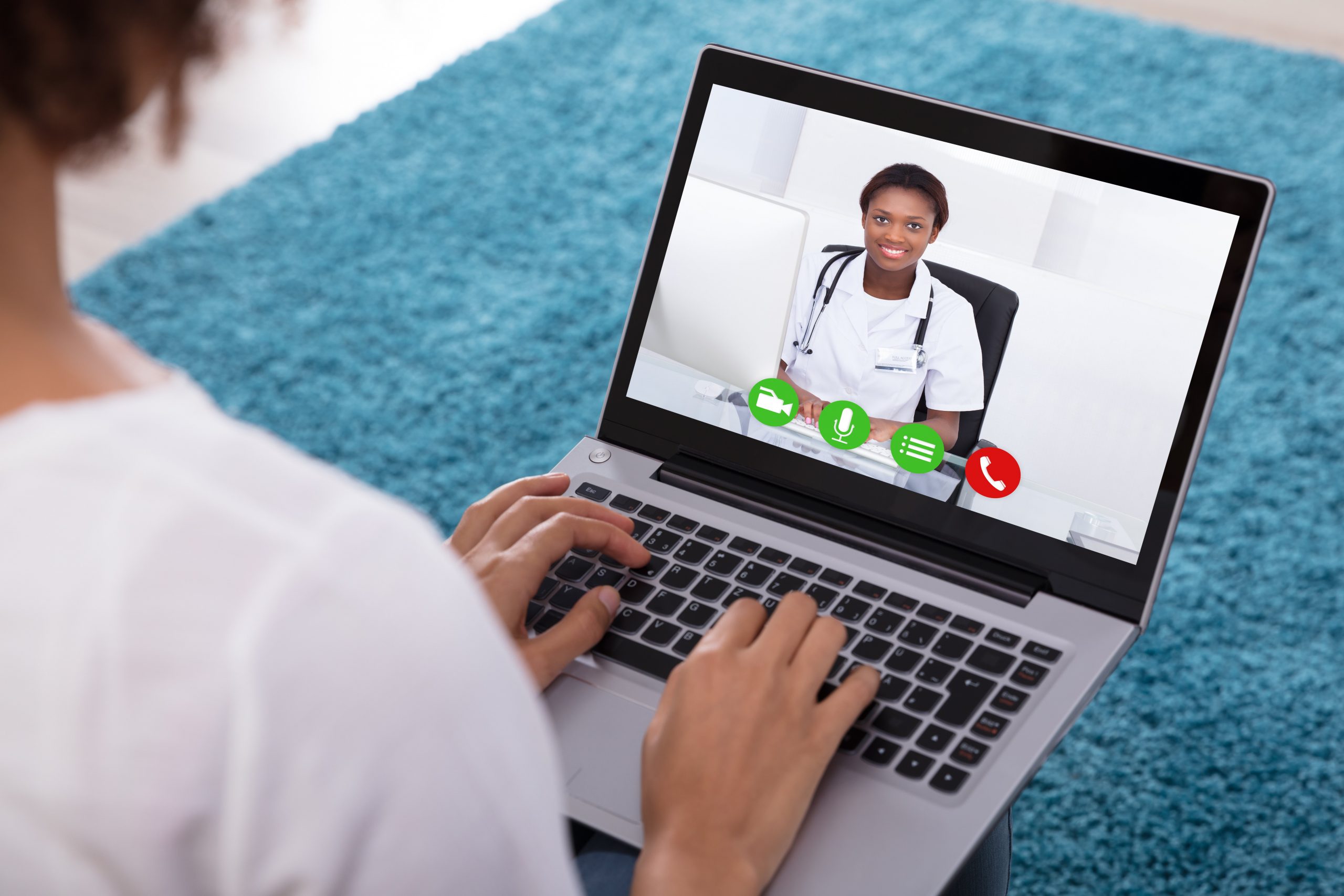
Telemedicine is rapidly defining the modern medical landscape, with thousands of patients moving away from in-person meetings to video consultation. Statistics reported by the CDC identify that up to 30% of all medical visits are now conducted remotely, via digital means, underlining the importance of digital healthcare in the modern medical ecosystem.
One area in which this has created questions is the provision of Medicare. How does the preference for digital medical care change billing? And how has technology impacted medical insurance and its applicability to medicare-eligible groups? Telehealth is, at the very least, improving access to healthcare to those groups eligible for Medicare.
DirectTrust has acquired the assets of SAFE Identity, including its Trust Framework. The acquisition substantially extends DirectTrust’s capabilities and services and is expected to enable new and expanded interoperability use cases. SAFE Identity (SAFE) is an industry consortium and certification body supporting identity assurance and cryptography in healthcare. DirectTrust is a nonprofit healthcare industry alliance that supports secure, identity-verified electronic exchanges of protected health information (PHI) between provider organizations, and between providers and patients, for the purpose of improved coordination of care.
DirectTrust has created DirectTrust Identity, a new division, to house the SAFE Trust Framework. New and current members of both organizations will be able to rely on DirectTrust to manage policies and infrastructure supporting a community that issues secure and identity-assured credentials for electronic transactions in healthcare. SAFE Policy Management Authority (PMA) members will participate as members of DirectTrust Identity, which will operate the SAFE infrastructure used by multiple large pharmaceutical companies to securely interact with federal agencies (in accordance with 21 CFR Part 11) and business partners in the US and globally.
“Our acquisition of SAFE Identity’s assets is truly a groundbreaking moment for DirectTrust and the entire electronic healthcare information industry,” said Scott Stuewe, president and CEO of DirectTrust. “SAFE Identity and DirectTrust are like-minded organizations with memberships that share common goals. Since our inception, DirectTrust has focused on instilling trust in electronic health communication with the goal of improving health for individuals and populations. Both the DirectTrust and SAFE Identity trust framework communities seek to enable safe and secure transactions through the use of identity-assured credentials backed by a public key infrastructure and consensus-based policies.”
Stuewe continued, “Members will be able to interact with federal agencies for signing documents and authenticating to systems. Potential new use cases could include universally trusted healthcare credentials for consumers; identity assurance and security for the pharmaceutical supply chain (DSCSA), possibly all the way to clinical pharmacy; as well as medical device security and identification.”
DirectTrust, most recognized for Direct Secure Messaging and the Direct Standard it supports and promotes, came into existence with backing from the ONC as a public key infrastructure (PKI)-based trust framework to enable healthcare interoperability to scale. SAFE-BioPharma (predecessor to SAFE Identity) came into being when the FDA and pharmaceutical companies sought a secure and scalable mechanism to submit digitized reports to the agency. In response to a growing need for high assurance digital signatures, several large pharma companies established SAFE as a legal framework to facilitate trust and interoperability of digital identities with government bodies, including the FDA, DEA, and the European Medicines Agency. While SAFE Identity and DirectTrust have branched out to other missions since their beginnings, both credit their initial existence to collaborations with federal agencies, and retain important relationships and roles with the federal agencies.
To learn more about DirectTrust Identity, including Frequently Asked Questions, visit bit.ly/DTIfaqs.
In a very short period, the novel coronavirus has caused a very significant impact on the global health and socio-economic sector. This has caused serious damages and mortality among countries, especially those developing countries that lack resources and with a poor government response.
In light of this ongoing pandemic, this article presents the feasibility of nanotechnology in combating the prevailing problem of the COVID-19.
Pathogenicity & Structure of SARS-CoV-2
Severe acute respiratory syndrome coronavirus 2 (SARS-CoV-2) is the virus that causes the novel coronavirus disease. Coronaviruses are single-stranded RNA viruses and under this type of virus are severe acute respiratory syndrome coronavirus (SARS-CoV) and Middle East respiratory syndrome coronavirus (MERS-CoV) that caused viral epidemics in 2002 and 2012 respectively.
The genome sequence of the 2019 novel coronavirus (2019-nCoV) shows a different homology from the other subtypes of coronavirus and is categorized under betacoronavirus which can be most likely found in bats. The virus is composed of densely glycosylated spike proteins that are responsible for virus binding and infiltration of the host cell.
Taking medication is essential to treat some health conditions if they are taken the prescribed way. However, when you skip your dose or take an overdose, the results can be deadly.
Medication nonadherence among the elderly is common. According to the Department of Health and Human Services, about 200,000 seniors are hospitalized annually because of severe drug reactions, and 50% of seniors are non-compliant with prescriptions meaning they don’t take their medication as prescribed.
Numerous reasons can cause seniors to make mistakes while taking their prescription drugs. Today, this guide highlights the common reasons seniors do not take their medication and tips on how their caregivers can help prevent them.
By Vikram Savkar, vice president and general manager of the medical segment at Wolters Kluwer’s Health Learning, Research and Practice business
During the pandemic, nearly every healthcare provider in the country had to execute a rapid, unplanned switch to telemedicine for the majority of their consults and activities. According to one study from the RAND Corporation, there was a 20-fold increase in the rate of telemedicine utilization after March 2020. For the most part, this transition was executed well and successfully, but only due to heroic levels of creativity and dedication by clinicians in every field.
With few established practices to rely on, it fell to each hospital, each department, each clinician to more or less invent ways to conduct virtual consultations in dermatology, cardiology, oncology, and more. There was much trial and error, but a commitment to rapid learning meant that the community as a whole was able to achieve a reasonable level of healthcare delivery quality to patients via the web.
Now, however, it is clear that telemedicine will be a permanent and sizeable segment of healthcare delivery; some estimate that more than 20% of healthcare from 2021 onward will be virtual. As a result, every aspect of the healthcare ecosystem must move out of an “emergency” mindset when it comes to telehealth and focus on establishing scalable, sustainable processes that ensure that a steady shift to telehealth drives equity, access, and quality. Healthcare providers themselves are actively engaged in this effort, and medical schools also now need to evolve to reflect this new normal.
Medical schools have incorporated some telehealth training into their programs in recent years, but it has tended to be ancillary. Now, it will be critical for telemedicine training to be incorporated more structurally into core curricula. What is being called “webside manner,” for instance, is significantly different to “bedside manner” and needs to be taught explicitly ?— in both a classroom setting and during clerkship rotations, as well as residencies.
Clinicians need to be taught how to establish rapport with patients whom they don’t see face to face, how to assess possible domestic abuse threats when the patient may not be able to speak freely, and how to gather emergency contact information in case there is a critical event during the consult for which the clinician needs to call emergency services. They also must learn how to take advantage of the unique opportunity that telehealth presents to closely observe and document social determinants of health by, for instance, asking patients to show the contents of their refrigerator. And they must be taught how to navigate the “digital divide” and ensure that patients without access to broadband or smartphones aren’t consigned to a lower quality of telehealth care.
 AccessDX Holdings, an international provider of advanced laboratory diagnostic solutions, has acquired