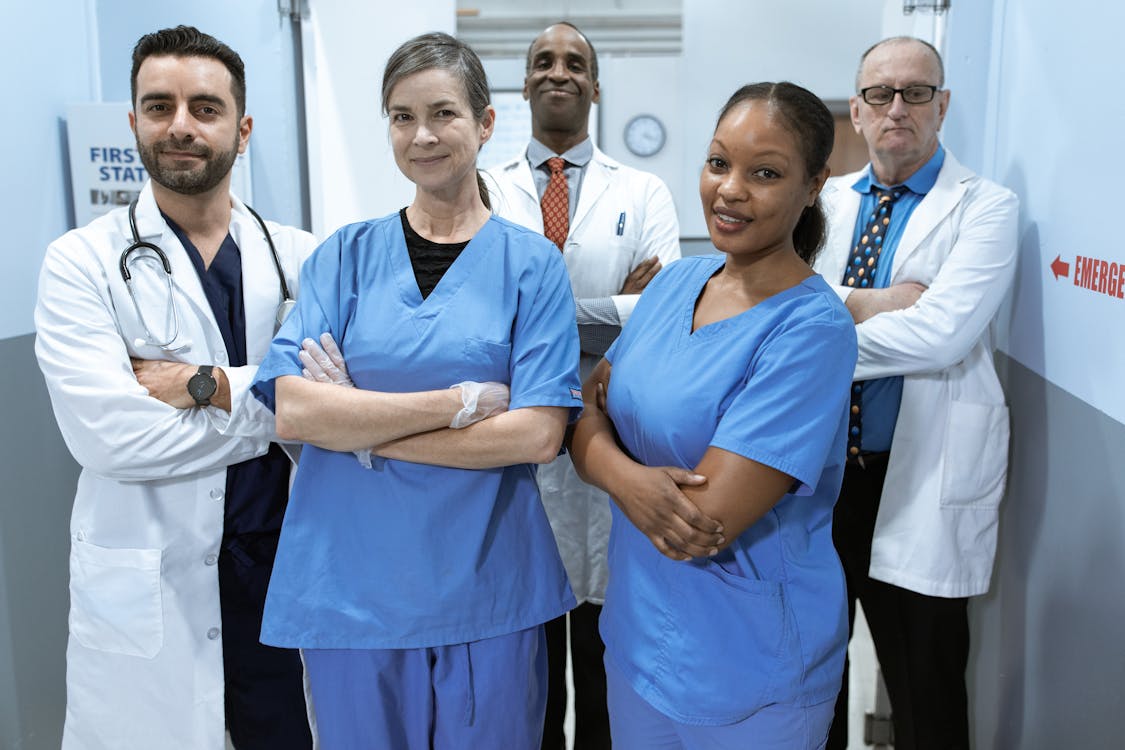
During the coronavirus pandemic, nurses all over the world emerged as frontline soldiers to combat this disease. But the onslaught of COVID-19 soon made everyone realize that merely having clinical skills was not enough for RNs; instead, they must undertake further responsibilities. Thus, nurses are today being encouraged to continue their education, pursue advanced degrees in their profession, and assume leadership roles eventually. But how can RNs improve their abilities as effective leaders and competent managers? We’ll discuss how nurses can successfully transition to management. Moreover, we’ll discuss the importance of nurse leaders in our current healthcare environment as primary caregivers.
10 Ways of Becoming a Better Nurse Leader
How do we determine how successful a nurse leader is? A nurse leader brings change by inspiring others and motivating them to become future leaders. All nurses are leaders as they persuade patients to take the necessary steps towards complete recovery and collaborate with physicians to oversee their medical condition. They are also serving as mentors for less-experienced nurses. Understandably, improving your leadership capabilities will only transform you into a better healthcare practitioner. And, if your future objectives include getting a management position, becoming a better leader doesn’t seem like a futile effort. So, what are some steps RNs today can take to improve themselves as leaders?
Nurses have been overwhelmed by the workload during the pandemic. Most of them don’t have time to spare for continuing their education. However, online courses are available for RNs that help them study at their own pace! Hence, you can opt for DNP online to eventually become eligible for clinical leadership or healthcare management in the future. Many RNs have earned a doctor of nursing practice digitally to assume management-related responsibilities. These educational programs offer RNs several opportunities for transitioning to management. But we know that sheer learning isn’t enough! If you wish to become an effective leader, you need to harness the following qualities as well:
By Jeremy Dadzie, digital health strategist, Anexinet.
The healthcare industry has one of the worst reputations when it comes to customer experience. A recent Salesforce study revealed that nearly half of consumers are unhappy with their healthcare experience, and a vast majority feel healthcare organizations are more focused on the needs of the industry than on the needs of the patient.
Healthcare providers are beginning to realize just how dramatically a patient-centric approach improves customer loyalty—especially now that COVID has wreaked havoc in almost every industry.
The advent of digital innovations gives the healthcare industry a novel opportunity to enhance customer experience like never before. Customer expectations (especially for millennials) have increased. Meeting these expectations won’t be easy, but by staying patient-centric in the approach, and leveraging innovative technologies. such as Artificial Intelligence (AI), Machine Learning (ML), and Internet of Health, healthcare providers can create solutions that not only enhance the digital experience but also increase profitability.
Here are a few ways to can improve patient experience:
All humans need some extra support sometimes in their lives, whether it’s someone suffering from a physical ailment or having emotional problems. No person is an island. But, who are these people who dedicate their lives to others? Social workers are those unsung heroes who spend their professional lives helping adults, children, and sometimes animals live better lives. They may either be school counselors or child services. But, that is not all they do.
A new role in the 21st century
The role of social workers has transformed in the modern world. Nowadays, social workers play a primary role in societies. They work at the micro and macro level. Sometimes these professionals also develop policies to address challenging national and global issues. Tech-savvy social workers use the latest tools for self-development and awareness programs, and maintain an online presence to increase their reach.
Diverse options
During times of crisis, we all turn to these heroic individuals for support. These highly-trained and qualified people usually have graduate-level degrees in social work and justice. But, their accolades do not limit them to specific areas of community and volunteer work. Instead, their education and experience open up diverse options. Most people think that social workers only work in traditional settings, such as mental health clinics and nursing homes. They are wrong because they have a myopic view of the degree.
So, what can you do with a social work degree besides social work? Most of the skills students learn in social work programs apply to a career in human resources. For example, social workers have excellent communication skills that are valuable in every industry. Similarly, critical thinking skills can help students pursue a thriving career in healthcare.
Across the United States, persistent and growing gaps in care are driving health disparities and presenting barriers to improving overall health and health outcomes. Many health disparities stem from inherent inequalities in social determinants of health (SDOH), such as where a person lives or works, their education level, and their access to healthcare.
Health equity — defined by the Robert Wood Johnson Foundation as when everyone has a fair and just opportunity to be as healthy as possible — is not a new concern. For decades, health equity has been in the spotlight within the public health realm. But the COVID-19 pandemic brought the topic of health equity to the forefront like never before. Something once discussed only among policy experts, advocates, and health communicators is now mainstream news and discussed around the dinner tables of Americans across the nation every single day.
As COVID-19 quickly spread, it became increasingly apparent that minority patients were disproportionately affected compared to other populations. A recent study found that Black people were 3.57 times more likely to die from COVID-19 than white people. The reasons are varied: Multigenerational families and insufficient access to care contributed to higher infection and mortality rates for minority populations. This disparity serves as a reminder that systemic inequalities persist across many facets of American society.
Social determinants of health can be far reaching
SDOH often present barriers to care. Research has shown that when assessing a person’s health, their ZIP code is often more predictive than their genetic code. But despite their prevalence, SDOH should never dictate health outcomes or the quality of care a patient receives.
By Noel Felipe, revenue cycle practice leader, Firstsource.
The pandemic has created a sense of urgency around improving patient engagement. Consumers accustomed to Amazon-like retail experiences are now embracing digital across personal transactions, including healthcare. Telehealth and remote monitoring have gained rapid traction, especially for non-emergent conditions and follow-up. At the same time, outpatient visits are rapidly outpacing inpatient. Together, these two trends are resulting in patients spending very little time at hospitals receiving care and paying bills.
With more care delivered through outpatient and virtual settings, healthcare leaders are asking: how do we effectively engage patients to optimize the patient financial experience and enhance recovery?
The answer lies in understanding shifting consumer expectations and designing a patient engagement solution that best fits their evolving needs.
What do modern consumers expect?
As robo calls continue to rise, Americans are using their smartphones to screen calls, making it harder for providers to connect with patients after service. Studies show that the chance of collecting goes down by 58% once patients leave the facility, as they are less motivated to pay once the services have been rendered. This means providers must begin the patient engagement process early in the revenue cycle at the pre-service stage and maintain high levels of engagement during and after service to improve their net revenue.
The good news is consumers increasingly prefer digital channels of communication that offer the flexibility to engage with providers outside traditional business hours and in the privacy of their homes. They also want to get things done quickly and easily. Whether they are shopping for a provider or checking their health insurance coverage, they want to get the information they need, when they need it – and they are willing to use self-service to achieve this.
Scheduling an appointment with your doctor is usually the first thing you do when you’re feeling a little under the weather or have some questions about your health. But as technology keeps advancing, your options for healthcare are rapidly expanding. One of these options includes telemedicine, which enables you to get medical advice when you need it most, all without leaving the comfort of your home.
What Exactly is Telemedicine?
As the name implies, telemedicine is a way for patients to communicate with their healthcare practitioners with tech instead of physically popping into the doctor’s room or hospital for a consultation.
Telemedicine enables you to discuss your symptoms and questions with your doctor using video, web-based platforms or apps, and email. In turn, your doctor can send you a diagnosis, discuss your treatment options with you, and send over a prescription, all without the need for physical interaction.
Telemedicine is nothing new, but the name is. In fact, healthcare providers have been using this care method since the 1950s, when telemedicine was offered through landline telephones. Thankfully, technological advances have made it possible for healthcare providers and their patients to use various options for care these days. These options include online portals, apps managed by companies that offer telemedicine, and video software that even facilitates video remote interpreting services.
How Does Telemedicine Work?
Telemedicine isn’t suitable for emergencies like broken bones, lacerations, strokes, or heart attacks. Anything that requires immediate physical care should always be handled in person, at a clinic, or hospital. But telemedicine is an excellent supplemental care solution for issues you’d usually turn to your GP for.
A quick virtual consultation with your healthcare provider can help patients get the preventative care they need when physical consultations aren’t possible or not entirely necessary. Telemedicine is also helpful for other applications, including virtual dermatology and psychotherapy.
Is Telemedicine the Same as Telehealth?
Although the terms telemedicine and telehealth are often used interchangeably, there’s a considerable difference between the two. According to the World Health Organization (WHO), telemedicine allows patients to “heal from a distance” and receive healthcare services without physically visiting their physicians.
Health IT states that telehealth comprises the use of electronic data and telecommunications technology to promote and support remote clinical healthcare and professional health education and public health.
Unlike telemedicine, telehealth is not a virtual healthcare service but rather a way to improve patient care and education opportunities for physicians.
By Ken Perez, vice president of healthcare policy and government affairs, Omnicell, Inc.
On July 9, President Joe Biden issued a wide-ranging executive order (EO), “Executive Order on Promoting Competition in the American Economy,” that is highly critical of big business and advocates policy and regulatory changes to spur competition in seven areas: labor markets, healthcare, transportation, agriculture, internet services, technology, and banking and consumer finance. The EO has been described as the centerpiece of a new Democratic Party emphasis on restraining the nation’s most powerful companies, bolstering and consolidating the federal government’s power.
Of course, as with all presidential EOs, the EO by itself does not impose new requirements on the business community; rather, federal agency-driven policy changes, formal rulemaking or passage of legislation by Congress are required. Moreover, an EO can be easily overturned by a new president, as Biden has done with several Trump-era EOs.
Healthcare Proposals
The EO tackles four areas in healthcare where the Biden administration contends that lack of competition increases prices and reduces access to quality care: prescription drug prices, hearing aids, hospitals, and health insurance. In accord with the status of the high cost of prescription drugs as the public’s top healthcare-related concern, three-fourths of the EO’s healthcare verbiage is devoted to this area, with only brief paragraphs addressing the other three. Here are the specific proposals in the EO for the four areas.
Earlier this year, a recent survey by Ernest & Young showed a rapidly widening gap between vacancies and job applicants in the U.S. As the world recovers from a crippling pandemic, industries are facing large challenges in securing qualified workers for their vacancies. One of the industries leading the list: the healthcare industry. Experts have said the pandemic has only exacerbated the healthcare worker shortage that is ongoing in the country right now.
According to Dr. Ernest Grant, president of the American Nurses Association, “Nurse shortages are a long-standing issue, but because of COVID, it is anticipated to grow even more by next year.” As healthcare providers facing unprecedented labor shortages, the focus is turning to the impact that closed borders have had on migrants filling those vacancies, and the invaluable but unrecognized role migrants have been playing in the healthcare industry for years.
Migrant Healthcare Workers Leading The Frontline Of Global Crisis
Recently, the contribution of migrant workers to the global pandemic has come to the forefront- particularly in the healthcare industry. After and during the outbreak, migrant healthcare workers have been on the frontlines of providing medical care. In several key outbreak locations and metro cities across the U.S, they have made up more than double of their national average in the healthcare industry. According to New American Economy Research Fund, immigrant healthcare workers are 51 percent of the healthcare worker population in Miami. For New York, the epicenter of the recent outbreak, that number is 41.8 percent.
Senior And Disabled Healthcare Services Rely Heavily On Migrant Healthcare Workers
Throughout the years, migrants have accounted for a significant proportion of the healthcare industry. In 2017, migrants were 18.2 percent of healthcare workers. Fast forward to the latest national statistics and they now account for 28 percent of physicians and 24 percent of dentists in the U.S. These success stories, in regards to the legal side of things, transpire due to professional legal help. In other words, an immigration lawyer helps individuals jump through immigration hoops, which can drastically lessen stress for the immigrant family as well as their employee. Furthermore, another notable point is the contribution of migrant healthcare workers to senior healthcare. They also account for 38 percent of home health aides – commonly used with those aging at home or those with disabilities.
With 1 in every 4 Americans living with a disability, the support they provide to a significant portion of the American population is undisputed. Also, 30.2 percent of migrant healthcare workers are nursing home workers, providing critical support to the aging population in their later life. There is also a brewing shortage of care workers for older adults.