
MedCrypt Inc., a provider of security solutions for healthcare, has joined the BlackBerry QNX Partner ecosystem, a worldwide network of technology companies who specialize in development tools, middleware, and embedded software products (e.g., database, HMI, and more) that are compatible with and complementary to BlackBerry QNX’s broad technology portfolio.
The QNX OS for Medical is a safety-certified version of the trusted QNX Neutrino operating system used in critical embedded systems globally.
“The healthcare industry has seen nearly twice as many breaches between February and May this year in comparison to last year’s count, indicating a growing need for medical tech to be secured at the source, before it goes to market,” said Mike Kijewski, CEO at MedCrypt. “We’re happy to join the BlackBerry QNX Partner ecosystem as it will further help us bring new and necessary medical technology to market quicker with top notch security built right in.”
“We are excited to expand our BlackBerry QNX Partner network with the addition of MedCrypt,” said Kaivan Karimi, senior vice president and co-head, BlackBerry Technology Solutions. “As the explosion of connected devices drives new applications and solutions in healthcare and around the world, it also increases the risk of cyberthreats and breaches, requiring data and infrastructure to be secured at every layer. Together with our partners, we are providing access to BlackBerry’s trusted software and cryptography solutions and technological know-how to accelerate the design, development, integration, and testing of mission-critical systems in healthcare and other industries.”
MedCrypt’s medical device cybersecurity software tools and APIs make it more efficient, easier, and less expensive for medical device manufacturers (MDMs) to build safe and secure medical devices. Building upon QNX OS for Medical and providing integration services and design will enable MedCrypt’s customers to develop safety-critical solutions for the medical device industry.
MedCrypt’s cybersecurity platform can be implemented in full or with a modular approach to proactively secure both legacy and new medical devices and maintain their security posture. MedCrypt solutions include:
- Cryptography: encrypt/decrypt data and cryptographically sign/verify instructions with unique key pairs
- Behavior Monitoring: capture device metadata, detect abnormalities, and send alerts
- Vulnerability Monitoring: monitor specific software versions at the device level for known vulnerabilities; generate real-time software bill of materials (SBOM)
The MedCrypt data security library cross-compiles for and runs on the QNX OS for Medical as a turnkey solution. BlackBerry QNX solutions are used extensively for life-critical medical devices including blood diagnostics, ultrasound imaging, infusion delivery, heart monitoring, resuscitation and surgical robotics.
To learn about the BlackBerry QNX Channel Partner Program, visit https://blackberry.qnx.com/en/partners/qnx-partner-directory.

Since its introduction in the mid-1800s, the nursing profession has evolved leaps and bounds. Like other aspects of the medical profession, you might not recognize the nursing practice even as recently as a hundred years ago. So much has changed.
For example, it’s not such a female-dominated anymore; there are plenty of male nurses who take their jobs seriously. The schooling is a lot different, too. Yet, in other ways, much about nursing is the same. A nurse still helps the sick and injured; it’s just the overall science of treatment that has improved.
Let’s look at some of the ways that nursing has transformed since 1920.
Training
In the early 1900s, nursing schools were called “Nightingale schools” after Florence Nightingale. There were less than a thousand such schools in the U.S. at the time. Students spent two to three years in training, but most of it was on the job. The aspiring students took care of actual hospital patients and spent little time in classrooms. Their time in school was more like an apprenticeship than what the modern nursing student goes through.
Today, there are a few classifications of nurses: LVN and RN are the most common. An LVN is a Licensed Vocational Nurse, and the schooling runs for about a year. An RN is a Registered Nurse, and the schooling is much longer. RN nursing programs last two or three years; some RNs pursue bachelor’s and graduate degrees. Gone are the days when a nursing profession
Setting
World War I ended near the end of 1918, and World War II didn’t start until the end of the 1930s. However, during those wars, many nurses were deployed to hospitals near the front lines. They had to deal with horrible sights, but many worked selflessly to help the injured and dying.
In addition to war hospitals, nurses back in the U.S. a hundred years ago were going through a change, as healthcare began its journey to become what it is today. Before the 1920s, babies were often born at home under midwife care. Some nurses were qualified to administer anesthesia. But standards were being laid down. Hospitals were beginning to look like what we expect a hospital to look like today.
Continue Reading
The internet has significantly transformed the education sector. Unlike in the past where learners were forced to physically go to a classroom for lessons, today it is possible to earn a diploma or degree remotely.
Most learning institutions have started online programs – to cater to people who prefer online education. Some institutions have a hybrid system – where an online education system is fused with physical learning.
There’s basically no courses that can’t be undertaken through online education, including medicine. Besides the actual medicine subjects, there are several departments that work hand in hand with the medical sector.
For example, when you go to a hospital, you will find different departments such as human resources, accounting, billing, and management among others. This means anyone working in a hospital can enroll and advance their career through online education.
Continue Reading

It is not just necessary to monitor your health in the modern world. This has become a fashion trend. The ranks of such people are constantly replenished. Mobile app developers have created a great number of programs that track certain indicators.
With a smartphone, you can measure your heart rate, calculate calories at lunch, or watch how you slept last night. There are hearing test apps. Plus, smart applications will remind you to drink a glass of water and count the steps you’ve taken in a day. Let’s consider which free health care apps are the most functional.
Apps that remind you to have a glass of water
On average, a person should drink from 1.5 liters of water per day. This norm fluctuates because people lead different lifestyles. Coffee drinkers, active training enthusiasts, and runners need more than other people. With the help of special applications, you can set your daily norm for the day and also set reminders so that you don’t miss a single glass of water.
Plant Nanny
The essence of the application is to develop a habit for its user to drink water at a certain interval. You can also prescribe your schedule for the whole day. It is possible to choose the volume of packaging – from small to large, and your plant will automatically adjust itself to it. The choice of flowers and pots is very diverse, each of them is programmed for a certain volume of drunk liquid.
You drink a glass of water and press the special button in the application. The flower is watered and you are satisfied. Otherwise, it sighs sorrowfully and dries up. The program can calculate how much water you need to drink in a day, and a schedule is drawn up based on these data.
Water Balance
The application interface clearly shows on a male or female figure how much water you have drunk at the moment. As you drink the glass, the figure fills in blue. The program can independently calculate the amount of water needed for a particular person. It takes gender, height, weight, age, and rhythm of life as a basis.
In Water Balance, you can take into account not only water but all drinks in general that were drunk during the day. The app will show how a particular liquid affects the body’s water balance. For example, coffee has a diuretic effect. This means that you need to add about two more glasses of water to the daily norm. You can also note whether there were any training sessions during the day, and the app will add a few more glasses to the daily requirement.
Continue Reading
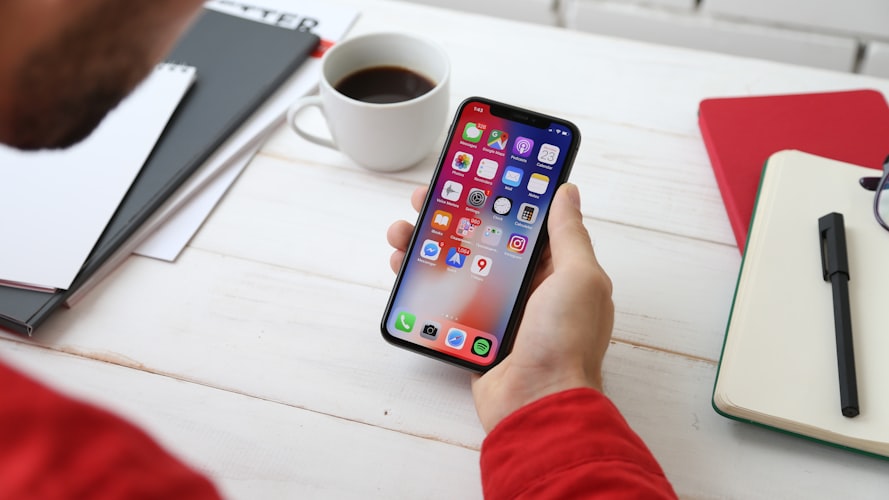
In a world that is constantly being upgraded, streamlined and enhanced by software and technology, is it possible that teaching will no longer be a human profession? What if A.I. progresses to the point that it is unfathomable that humans could even compete? What we are seeing now is the early evolutionary stages of the technology that will soon make these progressive ideas commonplace.
In many ways, this future is already here, as there are numerous applications that already teach us a variety of skills. The platforms and social media applications that we interact with have highly advanced algorithms that are programmed to provide us with the latest news and information. In our pockets at all times, is a highly advanced computer that is capable of executing numerous tasks. Whenever we wish, our smartphones can be used to teach us any task or skill. Let’s have a look at some of the ways technology is currently replacing teachers as we know it.
Phone applications
One of the most amazing things about our generation of technology is phone applications. These small software programs are often overlooked and taken for granted. To imagine such technology would be so readily available, even just 20 years ago, would be astounding.
Continue Reading
 There’s never been a more exciting era in the healthcare IT space than now. The intersection of disruptive technological innovation and a more tech-savvy generation of customers provides endless opportunities across a wide range of medical applications.
The healthcare industry has traditionally been reluctant to embrace tech. Given the strict regulations, the sensitivity of healthcare, and the potentially deadly consequences if something does go wrong, this reluctance is understandable. Slowly but surely though, healthcare is embracing IT, thereby unleashing new levels of efficiency and customer satisfaction.
Here’s a look at some of the key tech trends that are fast establishing a foothold in healthcare.
Continue Reading
Lenovo introduces Lenovo Virtual Care, a full patient-to-provider virtual solution to remotely monitor, guide and educate patients with various chronic health conditions. In partnership with Vianova Health, Lenovo Virtual Care combines trusted Lenovo hardware with advanced biometric devices and AI-powered software to virtually coach patients through their individualized care plan and drive better overall outcomes.
Virtual Care joins the recently launched Virtual Rounding as part of Lenovo’s growing portfolio of Virtual Health solutions to accelerate intelligent transformation in healthcare. Demand for virtualized access for patients to their health data and providers will persist as healthcare systems transform to meet the evolving demands of more patients with chronic conditions, stressed care teams, and payers searching for more value-based care. Lenovo remains committed to building innovative devices and solutions that support and adapt to the changing healthcare landscape.
Using Lenovo Virtual Care, clinicians provide patients with a customizable, in-home technology kit equipped with a digital assistant, “Rosie,” that guides the patient through an individualized, daily care plan incorporating patient education, behavior modification and family engagement. Providers prescribe the use of the service and pre-configure the easy-to-use kit, allowing patients to plug it in at home and immediately start following their individualized care plan.
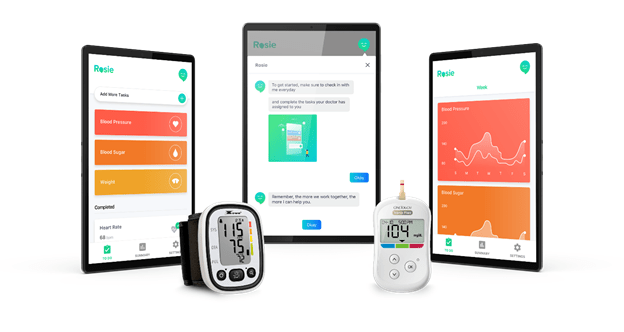
Lenovo Virtual Care with digital assistant – “Rosie”
Lenovo’s Virtual Care solution allows clinicians to continually assess and engage with enrolled patients, reducing the need of multiple in-person visits and readmissions. Patients use in-home biometric devices, such as blood pressure cuffs and glucose monitors, to take their vitals and transmit the data to their care teams.
Continue Reading
A business degree opens the door to a variety of opportunities, but it’s not the graduation ceremony that marks the starting point in one’s professional journey. It all begins with choosing your future alma mater.
Many schools around the world can serve as a perfect springboard for your lucrative career path, but some truly mastered this art. They can promise state-of-the-art business knowledge and practices, great entrepreneurship outcomes, and hefty return on investments in the form of higher post-graduation salary rates.
Harvard Business School
Since its foundation in 1908, Harvard Business School has become a perpetual trendsetter when it comes to the standards of business education. In fact, it was Harvard University that launched the world’s first MBA program setting the high benchmark for others to follow.
The HBS is one of the pioneers in applying the case method of teaching. The main point of this approach is to place students in the role of decision-makers right from day one. With about 500 cases read during the two-year MBA program, novice professionals learn to identify pressing issues, exercise appropriate judgment, become adept at countering their ideas, and develop their business instincts.
Continue Reading