 Water dispensers are becoming a vital appliance in our homes today; in the recent past, they were only found in offices and public places.
Today water dispensers are offering a healthy alternative to tap water. A consideration embraced by homeowners who thrive on having healthy families in the long run.
Clean and hygienic water plays a significant role in human health. Its recommended for a human to take eight glass of water per day, this keeps the body healthy and refreshed.
However, the kind of water one drinks determines how healthy they are. In most cases, tap water is exposed to dirt and bacteria, which contributes to 90% of the illness today.
Most infections affecting children and adults are brought about by the clean but contaminated tap water.
Continue Reading

By Adam Herbst, senior vice president, chief legal, compliance, planning and government relations officer for Blythedale Children’s Hospital and adjunct assistant professor, and Ira Bedzow, Ph.D., associate professor of medicine, New York Medical College.
We continue to see how states are responding to the multiple challenges that the COVID-19 pandemic presents – trying to ensure there is hospital capacity for patients, protective equipment for healthcare workers, money in the hands of the unemployed, and food in the mouths of those who are hungry. All these endeavors have been responsive, by which we mean that even when states are preparing for problems, state leaders are enacting temporary solutions with the hope to return to the status quo ante.
Yet there is one major area of healthcare that the pandemic is forcing state and health leaders to confront, which can fundamentally change healthcare delivery in the future – telemedicine. While telemedicine has begun to replace office visits to primary care physicians and in certain specialties, it can be a major disruptor for behavioral health, where changes made now could last long after the pandemic. That will be a good thing. It would allow healthcare to meet the increasing needs for behavioral health, both because of the pandemic and in general. It would also serve as a paradigm case for how healthcare can and should adapt to meet the economic, social, and technological needs and opportunities of the future.
Because of the pandemic, states have loosened regulatory requirements, such as HIPAA and other privacy protection measures, so that patients can access clinicians through Skype and Facetime. This has created access to conventional clinical care, such as diagnosis and monitoring, as well as patient education and wellness promotion, among other services.
Telehealth has also benefited from the easing of restrictions, but states can and should do more. For example, while states have suspended border restrictions for telehealth due to the pandemic, the suspension is temporary, like all other responses so far. But it shouldn’t be. Public officials and health leaders need to find ways to maintain the increased and flexible access to telehealth even after the pandemic, especially in behavioral health.
Continue Reading
 At Electronic Health Reporter, we take innovations from healthcare companies very seriously. For nearly a decade, we’ve featured their work, products, news and thought leaders in an effort to bring our readers the best, most in-depth insight about the organizations powering healthcare. That mission lies at the heart of all we do, for the benefit of our audience.
For the first time, we are officially naming some of the most progressive companies in healthcare technology, in our inaugural class of the best, most innovative brands serving health systems and medical groups. Our call for nominations for this “award” series received hundreds of submissions. From these, we selected the best companies from that class. The work these organizations are doing is forward-thinking; award-worthy, we think. We think you’ll agree with all of our choices.
In each of the profiles to come in this series, we’re share their stories — from their own perspective, through their own responses to our questions about what makes them remarkable. Some of the names featured here you’ll recognize, some you won’t. But we believe you’ll agree – all those profiled are doing innovative, groundbreaking work! That said, here’s a member of our inaugural class:
Mieron VR
Continue Reading

Because of the increasing number of patients who turn to opioids for pain treatment, many researchers and clinicians have been searching for other alternatives. If you often find yourself taking pain medication, you’ve come to the right place. We rounded up new technologies developed for pain relief.
#1.Radiofrequency Ablation Device
Date Released:
This device was developed many years back. It is expected to get some attention because more people are reporting suffering from chronic pain.
Companies:
Halyard Health, Diros Technology, St. Jude Medical, and Boston Scientific
Uses:
Geriatric pain, chronic pain
Description:
Heat produced from an alternating current with a medium frequency of 350 to 500 kHz is used by RF or radiofrequency. This is done to cut off the nerve supply from the tissues that are in the peripheral nervous system.
Doctors perform the procedure, called radiofrequency catheter ablation, with the use of a catheter. There is a low risk of complications because the surgery is minimally invasive. According to a Transparency Market Research report, there is an expected increase in demand for this technology as the geriatric population continues increasing across the world.
Continue Reading
By Artur Meyster, CTO, Career Karma.
 Even though the inclusion of technology is apparent in many aspects of our lives, the healthcare industry was hesitant about incorporating some forms of technology until recently. But things have changed, and the utilization of tech in the medical sector today is more extensive. More doctors today use apps to consult with patients. And that’s where you come in.
The tech skills we list in this guide will help you land a job in the healthcare industry and allow you to make a tangible impact on this fairly new tech sector. Plus, you will have the opportunity to make a difference that will possibly save lives in the future.
These new developments in the healthcare industry are known as telemedicine, which is a series of apps, wearable devices, and software that improve the consultation experience for patients and health professionals. These innovations open many opportunities for tech workers and allow people in the sector to learn certain tech skills.
The Internet of Medical Things
The internet of medical things (IoMT) refers to all of the devices, software, and applications that help to monitor, detect, and manage diseases or treatments. These can be connected to other devices, servers, systems, and the internet. The IoMT also collects data and stores it in a cloud or server for doctors or physicians to visualize later. It allows a direct connection between patients and health professionals.
For example, there is a mobile app that can detect when a patient collapses. When it happens, the app will allow your phone to send a stress signal to a healthcare provider or other emergency contacts. Also, there are wearable devices like smartwatches that allow people to monitor their health, this is especially helpful for patients with heart problems.
Other companies are developing smart pills that will monitor the patient’s health from the inside the body. The potential for these technologies are endless and are just in the beginning stage. This market is projected to reach $254,233.6 million in 2026, so if you learn to be a software developer or app developer, you will find a job in no time.
Continue Reading
 There is no decisive role for consumers to choose an oxygen extraction rate. The data of molecular sieve procurement and production used by each manufacturer are not disclosed. It can only be what people advertise.
If it were not the purchasing and project manager of the oxygen maker, the people working in the factory would not know what molecular sieve was used.
The decision to write this article is to force myself to study, and can also help the medical device peers in the industry. Many people may also want to know, but no one writes about them.
- First review the basic knowledge
Molecular sieve composition: It is a synthetic zeolite material with precise and uniform structure and pore size. This allows them to preferentially adsorb gases and liquids based on molecular size and polarity.
Zeolites are naturally occurring, highly porous crystalline solids and belong to a chemical category called aluminosilicates.
There are four main types of molecular sieves: 3A, 4A, 5A and 13X. The type depends on the chemical formula of the molecule, which determines the pore size of the molecular sieve.
Continue Reading
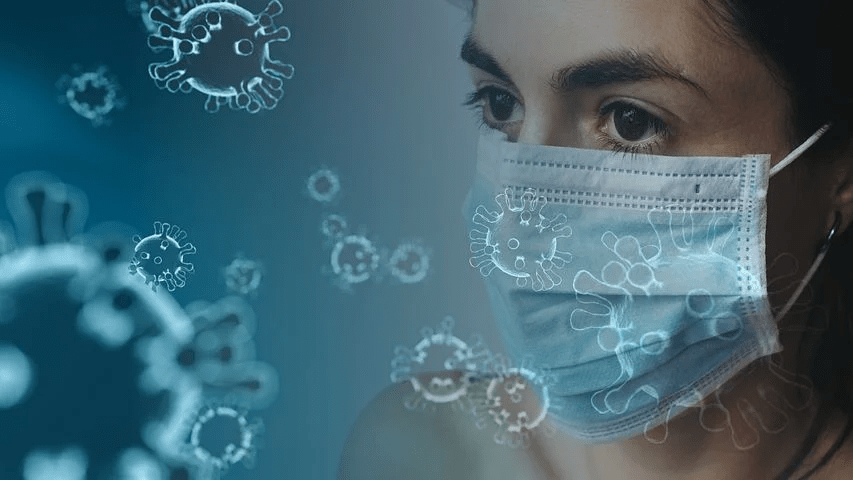
As the COVID-19 pandemic sweeps across the country, science and technology are racing towards a cure. In the meantime, the face of the world has changed. Millions of citizens are under quarantine orders, businesses are closed and intensive care units are running out of beds in every country.
This new virus continues to be a mystery to the medical and scientific fields. With no known remedy, doctors are trying to save lives while battling a virus that displays different effects on every patient.
As citizens follow social distancing protocols to stay safe, professionals in the medical field are relying on technology to help keep themselves and their patients healthy. With so many people staying at home and sheltering in place, new norms have been established in how they care for themselves. Wearing masks, washing hands often, and even taking first aid classes through newcastletraining.com are empowering the public to face this unknown enemy.
On the medical front, it’s the responsibility of doctors and other professionals to do everything that they can to ease concerns, promote healthy practices, and protect patients from infection. Let’s take a look at how technology is helping the healthcare field to deal with the COVID-19 pandemic.
Continue Reading
An industry that grows with each passing year is certainly one that you should look into for a career that offers lots of growth. An industry like that has a big demand for specialized skills and is often not able to meet the demand.
The industry in question is the healthcare industry. As the population in the US grows older, there is more of a demand put on the system which means that more people are required to make it work.
If you have already heard about the demand but dismissed it because you don’t want to be a nurse or doctor then there’s good news. You can work in healthcare without having to go to medical school or even deal with patients. There is just as much need, if not more, for people to administer healthcare.
Which means that you should be looking into the healthcare industry if you want to change careers or are just starting out. In this article, I will go over several jobs in healthcare administration for you to consider.
Continue Reading