If you’re looking to reach your fitness goals in 2022, you might want to adopt the latest trends that will define next year’s fitness culture. From losing weight to gaining muscle mass, emerging technology is making it easier for you to reach your goals.
There’s a lot to expect as 2022 rolls by with new tools and approaches to keeping fit. It pays to know how you can make the most of these as you update your wellness regimen for the new year. Let’s check out a few tech-driven fitness trends you can leverage.
Widespread use of wearable tech
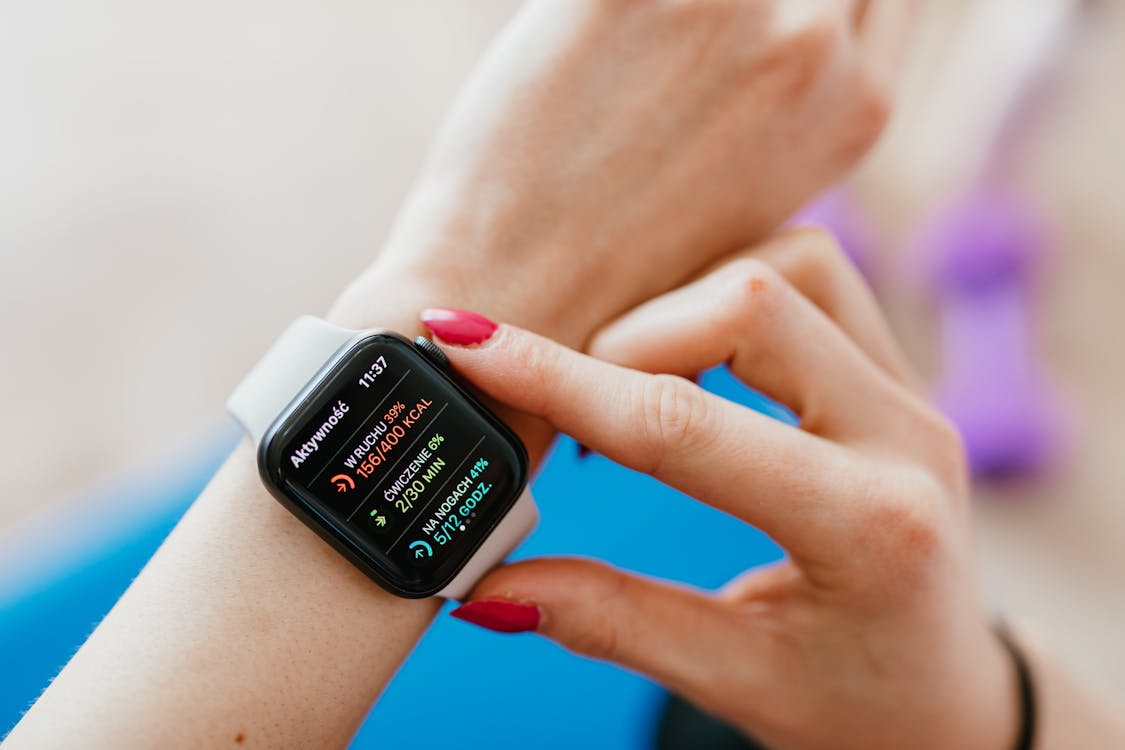
If you haven’t invested in a smartwatch yet, now is the best time to do so. Wearable technology has become almost prevalent in people’s fitness routines. Using a smartwatch like FitBit or Apple Watch, you can monitor your fitness gains and your overall condition during an intense workout.
As new models and updates roll in, wearable technology can help take your fitness routines to a whole new level. Manufacturers are now working on more sophisticated wearable devices that can measure vital signs and detect symptoms of serious illness, so keep an eye out for smartwatches with such functionalities.
Working out at home is the new normal
Things are looking up for the fitness industry as restrictions are gradually being lifted. However, many people have gotten used to working out at home through online fitness courses. If you want to focus on cardio or train for better flexibility, these courses allow you to work out at your own convenience so you won’t have to travel anywhere. You can subscribe to fitness classes and watch them through a smart TV or your mobile device. If you don’t want to spend money on these classes, you can check out fitness channels on YouTube.
Providing telehealth solutions for your patients is one of the best ways for you to increase your patient’s health outcomes. Today, it’s easier for you to provide healthcare services to your patients with the advancement in telehealth technology. However, maintaining telehealth services for your healthcare organization is not as easy as it sounds. It needs a good workflow system that can help you handle the patient’s requests each day. Here are 4 best practices for building a long-term telehealth workflow:
Get Updated on the Staff Appointment Availability
First, you need to understand that the success of your telehealth services will depend on your staff availability. In your healthcare organization, you need to have some staff ready for telehealth appointments, whether via live video conferencing or instant messaging, and you need them to handle the patient’s requests right away. It’s important for you not to let your patients wait for too long just to get them connected to one of your healthcare professionals.
It’s no secret that dental technology has improved in leaps and bounds over the past few centuries, dramatically changing the landscape of both our oral health and prosthetic restoration options. We’ve come a long way from trying to replace our own teeth with improvised dentures made out of animal bones and trying to treat an area of decay with a makeshift stone drill and a small dollop of tar. While these archaic techniques once served a purpose, the need for improved restorations is long overdue.
Fortunately, science has risen to the challenge, paving the way for brand-new techniques and devices. While it can sometimes seem as though we’ve finally reached the limitations of what it can do for us, dental researchers and innovators never cease to amaze us with their new technology and methods of treating a wide variety of oral health concerns. Indeed, some of the more incredible discoveries have occurred even in the past decade, opening the doors to a myriad of fresh and exciting techniques and tools for maintaining a healthy smile.
From advanced methods of performing routine diagnostic tests, to custom-fitted restorations crafted through the aid of artificial intelligence (AI) and 3D printing, there’s no shortage of ways dental healthcare providers are transforming the way we care for our teeth. And with these four incredible and highly beneficial inventions now made commonplace and used in dental clinics around the world, having a winning smile no longer has to be an impossible goal reserved for just the noble elites and royalty among us.
There’s a lot of innovative technology that people with hearing loss can now use from day to day. If you’ve never experienced hearing loss, being able to hear properly is probably something you take for granted. But for people who don’t have that luxury, the latest breakthroughs in hearing aid technology are making a real difference to how they live their lives. To find out more about these developments, read on now.
Data Logging
Hearing aid devices are now able to make use of what’s known as data logging. This is when the device is able to store data regarding your environments, meaning that your settings and how the device responds to environmental sounds can be tweaked by your hearing aid professional. Your surroundings dictate your needs as much as the quality of your hearing when using a hearing aid.
Impulse Noise Reduction
Impulse noise reduction is something that hearing devices can now do automatically. It can identify transient sounds in the environment and chooses not to highlight them. It could be a loud background noise or something dropping on the floor. Those unimportant environmental sounds that in the past might have been unnaturally emphasized for hearing aid users. Impulse noise reduction ensures that doesn’t happen anymore.
A few decades ago, very few people had imagined technology being incorporated into the health care industry besides the usual hospital technology. But thanks to scientists and innovators, the narrative has changed.
Technology in the health industry has enabled society to handle health and wellness better and with more precision than ever before. For instance, in the past, one would have to physically go to the doctor’s office to get their vitals checked. This is not the case anymore. More options are now available, thanks to technology.
The adoption of technology by the health and wellness industry has become a game-changer for the industry. If you want to lose weight, there are fitness trackers, calorie counters, smart scales, online exercise programs, and meal delivery services to help you out. If you’re in Toronto, for example, there are meal plans Toronto available online if you want to get nutritious meals delivered right to your doorstep.
Here are six ways in which technology is helping the health and wellness industry:
Better Diagnosis
Diagnosing a patient is the most critical step in providing proper care and treatment. The evolving technology has made this part easier. Artificial intelligence (AI) can now diagnose you as an individual, rather than relying on common symptoms to diagnose an illness. It looks at your genetic composition, potential hereditary diseases, immune system, and other vitals. With this information, an AI can offer a more precise diagnosis for patients.
Previously, it was difficult to get a patient’s complete medical history due to the amount of paperwork involved. Some records could get lost in the storage, which could result in the possibility of diagnostic errors. However, technology has enabled an online storage system where no physical records are required, apart from using them as backup storage. Once you visit a hospital, all your records—including prior visits to the hospital and medications—are updated in the system under your name. This makes it easier for your doctor or any other doctor with access to your records to learn your medical history, properly diagnose you, and prescribe the right treatment.
With such a hustle and bustle around cryptocurrencies, spot trading, or margin trading at Bitcoin Broker, could you ever imagine that blockchain technology can be helpful in the healthcare domain?
Possibly, the first thing that comes to mind once you hear blockchain is a virtual currency. However, this is not the only sphere where blockchain technology is applied. We have prepared for you the list of healthcare use cases. Read on to discover them.
Electronic health records are getting more and more accessible with blockchain
Blockchain for healthcare is most popular at the moment because it keeps our medical records safe and secure. In the healthcare industry, security is one of the biggest concerns. In the period between 2009 and 2017, over 176 million patient records were exposed as a result of data breaches. Data stolen by the perpetrators included credit card and banking details, as well as health and genomic testing records.
As technology is able to keep an incorruptible, decentralized, transparent log of all patient data, blockchain is rife with security applications. As well as being transparent, blockchain is also private, concealing a user’s identity with complex codes that can protect sensitive medical data. Patients, doctors, and healthcare providers can also share information quickly and safely due to the technology’s decentralized nature.
Managing electronic health records (EHR) can be challenging. Healthcare providers may have different EHRs for the same patient, depending on their location. CareCloud hopes to change that with APIs and blockchain technology. Their goal is to give patients more control. Patients will have the ability to authorize the exchange of medical records between doctors. An API that runs on the Hyperledger blockchain platform is currently available.
Data of all patients is kept secure
One more example of such a blockchain-based program is Akiri. This company provides the healthcare industry with a network-as-a-service that protects patient data while transporting it. As a network and protocol, Akiri does not store any data; instead, it establishes policies and configures data layers in real-time with the goal of verifying the data’s sources and destinations. Akiri makes sure healthcare data remains secure and is only shared with authorized parties when they need it.
If you are reading this, you already know that the fee-for-service model conflicts with the delivery of quality healthcare and the ongoing optimal management of chronic conditions. The model incentivizes the quantity of services rendered and disincentivizes preventive care. As a result, fee-for-service is highly inefficient for payers and not aligned with the sustainability of healthcare delivery systems.
Value-based care has presented a better model for providers, payers, self-insured employers, and patients alike. However, it was not until recently that value-based care was positioned for adoption at scale. The challenge in adoption has always been the realignment of financial incentives and focus on long-term optimization of patient outcomes. New technology platforms have had to evolve to the point they enable fully integrated analytics, population health management, and administrative capabilities to realize the transformational opportunity we have in front of us.
Value-based care is the path to translating early intervention into healthcare savings. In 2016, a study on primary care spending in the United States showed total healthcare costs increased from $810 billion to $1.6 trillion.Specialty care accounted for 75% of healthcare spending in the United States. According to the CDC, four in 10 Americans have two or more chronic conditions requiring continued treatment by specialists.
Comprehensive value-based care requires identifying health risks and chronic conditions early. It necessitates consistent monitoring of an individual’s health and the earliest possible interventions through primary care, and specialists when necessary. In value-based healthcare, getting patients to high-performing specialists, backed by clinical outcomes data, must be prioritized to avert severe conditions and their corresponding high costs. Early intervention is proven to drive the most optimal patient outcomes while significantly reducing cost. Meaningful, specialized intervention is one of the most powerful strategies for saving lives—and therefore, it should be at the heart of advancing healthcare.
Value-based Models are Ready for Adoption
Why isn’t there complete adoption of value-based care, given its alignment with patient outcomes and cost reduction? The factors are varied, but the perceived financial risks and lack of technology enablement have held back adoption – until now.
By Mark Clements, MD, PhD, CPI, FAAP, chief medical officer, Glooko, Inc.
Seemingly overnight, healthcare discovered and fully embraced digital health solutions. Just months after the 2020 nationwide lockdown, telehealth visits, virtual clinical trials and countless remote patient care technologies became the new normal.
Most of these technologies addressed what the American Medical Association calls “an epidemic” of chronic diseases. RPM solutions are especially suitable for these complex conditions, which typically require the frequent collection of physiological and/or patient-generated data from self-reporting tools, mobile devices, fitness wearables or other biosensors.
Diabetes has long been a focal point for technological innovations to personalize at-home patient care, beginning with the first glucose meters for patients in 1980. The need for such solutions has never been more urgent. A 2020 CDC report estimates that 122 million U.S. adults – one-third of the population — either have or are at risk of developing diabetes.
Here are three noteworthy recent advances in personalized diabetes care management that show the vast potential of digital health solutions to revolutionize both care management for chronic diseases and clinical research.