What is that one factor that separates one patient from another? Can one identify why two patients with the same illness but from different regions respond differently to a particular treatment? Do we need to cater to the needs of patients even after they leave the clinic?
These questions have always intrigued not only the physicians but every member who is involved in the care journey— care teams, communities, social workers, even patients themselves. And the answer lies in just one fact— even if these two patients appeared similar on paper, their lifestyles are very likely to differ: socioeconomic status, gender, race, ethnicity, family structure, and education.
All of this comes down to just one term: Social Determinants of Health.
This is one of the prime problems that has kept healthcare organizations in a situation of dilemma.
We are way past the statement that SDoH is just another hype
Have you ever tried to score a home run with one hand tied behind your back? This situation is similar to the condition of healthcare organizations in the value-based ecosystem. They are trying to get 100% of the task of healing a patient done with just 50% of the insights.
Social determinants matter because they can affect the health of the population residing in a particular region, for better or for worse. We have countless studies that show the importance of social determinants, yet we are not able to properly address them because we are not able to answer these questions:
How do we address the challenges that we don’t even know exist?
Who is responsible for addressing these challenges?
Is there any ideal strategy to address SDoH?
No matter how famous they are in healthcare, working with SDoH requires a drilled-down approach and something that we have in abundance- healthcare data. This data can be leveraged, and with the use of predictive analytics, organizations can accurately measure the at-risk population and advance preventive care methods in the ecosystem.
The best way, I think, is to look at this picture with a magnifying glass. Traditionally, the endpoint is the state-level analysis of SDoH. However, it is not the end but the beginning of the study that should go to the zip code level.
Here are some of the most interesting stories of how the leaders in the field of addressing the Social Determinants of Health addressed the populations’ needs and did the undoable.
What was the Humana way to deal with the non-clinical factors?
Humana has the Bold Goal Initiative, which is a population health strategy that is aimed at improving the health of the communities and making them 20% healthier by the year 2020. Their Healthy Days surveillance process is a robust and scalable metric. Based on this, they found that food insecurity and loneliness were among the top contributors to the total unhealthy days among the population they serve.
With their holistic and comprehensive approach, they built an analytic intervention pipeline to address these issues. One instance is their intervention with Papa Inc., where they connected college kids to seniors who needed companionship. As a result, 94% of members stated that the Papa Program helped them to feel more socially connected.
Humana was able to reduce the number of unhealthy days from 2015 to 2018 by simply addressing the non-clinical aspects of care delivery for their population.
Performance of Humana’s seven original Bold Goal communities (2015-2018) – Humana Medicare Advantage members
How MercyOne PHSO took the understanding of non-clinical factors from the zip code level to an individual patient level?
MercyOne PHSO, one of the largest ACOs in the Midwest, wanted to know the factors affecting their patients. They took the simple concept of asking the right questions and leveraged it to understand their patients.
While their patients entered the hospital or examination room, they asked them to complete a survey consisting of questions that depict the factors that affect their patients’ health, such as:
In the last 12 months, were you worried that your food would run out before you got money to buy more?
What is your living conditions today?
Do you face any difficulty in reaching out to your doctor?
Cloud technology application in healthcare is not new. Back in 2015, we created a post on cloud usage in healthcare, where we researched this topic and predicted that we will see the growth of this industry. And now in 2019, we see that we were right. Let us see what as changed in this area with time.
What are the benefits of using cloud technology in healthcare?
Although not yet fully implemented, cloud computing is popular with healthcare because it offers a lot of positive features that are essentials for improving the medical industry.
Improved data management and storage
It goes without saying that the healthcare industry deals with a lot of data that needs to be stored somewhere. And cloud data storage capacity is one of the biggest advantages of adopting cloud technology in this industry. Plus, keeping records on the cloud allows analyzing the data, which in its turn can help prevent major disease outbreaks.
Mobility and speed
For hardware servers, we run a speed test to verify if the connection is speedy enough, but it is a fact that cloud computing offers faster connection and access to required information, which oftentimes is key in healthcare. Additionally, storing data on the cloud allows healthcare professionals to be able to access it from anywhere at any given time. It also enhances more efficient collaboration between them, as information is synchronized in real-time. This way doctors can easily view samples, lab results, and share notes, which significantly improves patient care.
Lower cost
Compared to supercomputers, cloud computing costs far less. Also, upgrades of any of the various features of cloud tools are both faster and cheaper than those done for hardware solutions.
Challenges and risks of cloud application in healthcare
Even though cloud technology has many advantages for healthcare, nevertheless, there is a number of risks and challenges that slow down the transition process to the new system completely. The biggest ones of them are the following:
HIPAA compliance
Whatever cloud solution healthcare organizations decide to use, it must be compliant with the Health Insurance Portability and Accountability Act (HIPAA) for secure data portability. It means that these principles should not only be understood and followed by medical facilities, but by cloud technology vendors as well. However, there are many cloud providers on the market now who offer HIPAA compliance.
By B.J. Boyle, vice president and general manager of post-acute insights, PointClickCare.
B.J. Boyle
In my last post, I discussed how our healthcare system is approaching a critical time in which the looming “silver tsunami” will drive baby boomers into hospitals and post acute care facilities in record numbers. Similarly, we will see dramatically increased patient transfers between care facilities, as an aging population moves between hospitals, skilled nursing facilities and senior living facilities in unprecedented numbers. At the same time, a seamless and accurate patient data transfer process is critical, given our current and predicted future nursing shortage, and the time-consuming and error-ridden nature of manual data transfers.
In order to determine if our system is optimized to deliver what is needed, PointClickCare recently conducted a Patient Transition Study in partnership with Definitive Healthcare, which found that alarmingly, many facilities haven’t yet fully embraced all of the possibilities of integrated electronic health record (EHR) platforms and are, instead, still relying on manual-based processes to handle patient transfers.
Respondents to the survey, which included c-suite executives from acute and post-acute care facilities, explained their current data sharing policies, interoperability issues, as well as other care delivery and coordination concerns in this important blinded voice-of-customer quantitative study. The data shows that while EHRs are nearly ubiquitous in hospitals and skilled nursing facilities, many healthcare professionals still struggle with — or have reservations about — sharing critical patient information with their care partners.
Instead of relying on secure, simple, HIPAA-certified technology to streamline patient transitions, providers have been utilizing manual processes like phone calls and faxes — systems that require a human touch and are prone to inefficiencies, mismatched details, and omissions.
The Over-Reliance on Manual Processes = Inefficiency
As patients move from acute-care facilities to LTPACs, the sharing of critical patient information and associated data safely and securely is extremely important for coordinating care. But despite best efforts and intentions, many providers still aren’t sharing all patient data and information.
The most startling findings from the survey dive into the number of acute care and LTPAC facilities that still use manual-only strategies to coordinate patient care. In fact, thirty-six percent of acute care providers use manual-only strategies to coordinate patient transitions with the LTPAC community, compared with only 7 percent of LTPACs with acute care providers. Although a majority (84 percent) of LTPACs use a mix of digital and manual strategies to manage processes, only 56 percent of acute care providers do.
One respondent to the survey, a CEO of an LTPAC facility, explained that their local hospital “uses faxes to accommodate HIPAA and [to] be confidential.” He (or she) found this particularly frustrating as it creates more work and slows down care delivery: “Almost everything we touch is obtuse. You have to search it out, figure it out, and confirm it by phone,” adding that the absence of standardized forms and data-entry fields makes faxes especially inefficient.
Bill Gates once said, “The two areas that are changing … are information technology and medical technology. Those are the things that will be very different 20 years from now than it is today.” Already, advances in electronic health technologies have saved many lives, with the number of heart attack fatalities reduced by over 50%, according to the National Center for Health Statistics. Upgrading basic equipment at home, offices, and schools can help cope with emergency situations, save lives, and improve the quality of life of patients.
Defibrillators for Cardiac Arrest
Roughly 610,000 people die of heart disease in the US, making it is the leading cause of death for men and women according to the Centers for Disease Control and Prevention (CDC). Each year, around 735,000 Americans have a heart attack. Responding to a heart attack swiftly is essential to saving a life. Using automated external defibrillators (AED) to deliver electric shock, reset the cardiac rhythm, and restore circulation can be a great help to victims. In combination with cardiopulmonary resuscitation (CPR), an AED improves the chances of survival of a person who is experiencing cardiac arrest.
Smart Insulin Pumps and Glucose Monitors
Another leading cause of death in the US is diabetes, with over 80,000 diabetes-related deaths occurring per year, according to the CDC. Although there is no cure, diabetes is a manageable disease and smart devices enable patients and healthcare providers to control it’s symptoms properly. Monitoring glucose levels is important when planning meals, activities, and medications. It also allows for timely and quick responses to high or low blood sugar levels. In this regard, continuous glucose monitors can keep an eye on a patient’s levels, day or night. Treatment devices include smart insulin pumps and glucagon formulations. Pumps can also collect valuable data to prevent insulin overdose, as well as connect to a mobile device using an app to monitor the status of the pump.
Bluetooth Enabled Smart Inhalers
There are more than 25 million adults with asthma, and 1 out of 12 school-aged children also have the condition, according to the Asthma and Allergy Foundation of America (AAFA). Inhalers are the primary treatment options for those with asthma and if taken correctly, will be effective for 90% of patients. However, research indicates that only 50% of patients have their condition under control. Using Bluetooth-enabled inhalers can improve asthma management. A tiny device fitted to the inhaler will record the date and time of each dose and data will be sent to the smartphones to enable patients to monitor and keep track of their condition.
Electronic health technologies have an important role in the diagnosis, treatment, and management of diseases. By using them properly, they can also save more lives and help those with chronic conditions.
If you are looking to run a successful healthcare business, be it a small office or a clinic, you need to ensure your patients always receive high-quality services. To be able to deliver the best possible care services to your patients, you will have to create the appropriate environment and focus on the training of your staff, not only in terms of medical care, but in terms of customer service as well. Oftentimes, the ones that you will have to take care of the most are not patients, but their loved ones, so being able to comfort them and establish trust is paramount.
If you want to ensure your medical facility has what it takes to make patients feel valued, cared for and safe, it’s time to start elevating some of the aspects of your business.
Improve patient safety
Patient safety should be your number one priority, not only to provide better services, but also to ensure you keep up with government rules and regulations. People need medical services when their health is threatened, so the last thing they wish is to start being more concerned with their well-being.
Ensure that the rooms are always clean and sanitized, as you may be aware of the fact that most of communicable diseases spread through touch. Infections can spread quite easily when hygiene protocols are not followed properly. Urinary tract infections caused by poor management of catheters, for example, are among the most common infections associated with poor healthcare services.
Make sure your staff always wears gloves and gowns for protection and, when necessary, advise family members to do so as well. Remind them that they need to throw away the disposable gear once they leave the patient’s room and use a new one for every visit.
Manage resources efficiently
Most of the utensils used in healthcare are disposables, meaning they need to be thrown out after every use. If they are not used efficiently, this can result in increased costs, which could better be directed towards better patient care. Plastic applicators, bandages and all materials that are being used on a daily basis need to be properly managed, to avoid unnecessary waste.
When it comes to waste management, healthcare facilities are subject to some strict rules and regulations issued by the government. Healthcare waste can be hazardous and could expose those who come in contact with it to serious danger. Waste and recycling solutions experts at Mil-tek België advise to ensure that waste is properly divided into four categories when disposed of: general, infectious, hazardous and radioactive medical waste. This way, you will ensure that disposal is taken care of in the best possible way.
Focus on customer care
Running a healthcare facility does not only revolve around providing good medical services, but also on customer care. After all, patients are still customers that come to you for a certain service that you provide.
Instruct your staff to treat patients the same, no matter their background, economic status or other factors. Pay close attention to the people you hire, from the receptionist to the nurses and doctors, and ensure that they all know what your business culture is.
Keep communication open with both patients and relatives, answer their questions and treat them with respect, no matter what. Remember that some of them come to your clinic worried and seeking help, so you need to provide them with compassion and kindness.
Build trust with the patients’ family
Oftentimes, the people that give you the most trouble are no the patients, but their friends and family, so make sure you work on establishing trust and build a connection with them. When discussing with family members, be very careful how you choose your words and how you deliver news, be them good or bad.
Don’t make promises you can’t keep and don’t build up false hopes, especially in difficult situations. It is only natural that you want to save everyone’s life, but sometimes it may not be possible. Set realistic expectations for family members and give guidance and counseling on how to deal with patients, both inside the hospital and at home.
Be open to questions and encourage relatives to come to you whenever they need help. Advise them not to make decisions regarding treatment or care without consulting with you or another professional, as they can often unwillingly make things worse.
Invest in technology
The healthcare system is always evolving and part of that evolution lays in technology. To provide high-quality patient care, you need to ensure that you have access to the best equipment possible. From staff training to the way you store patient data and perform procedures, all processes can be improved with the use of proper technology.
Recent technological improvements allow you to collect and store vital information about patients, from their medical records to family medical history. Information like this can literally save someone’s life at a certain point.
This type of data can also help with preventive care, when certain information can show a patient can be predisposed to more health issues. You can create personalized healthcare plans for each patient, without having to go through the same discussions over and over again. Reports can be drawn to see how a patient’s condition evolved and what measures need to be taken further on.
Ask for feedback
There is no way to improve your services without receiving feedback from those who benefit from them. Asking for feedback may not always be easy in certain situations, but it is the only way you can know for sure what goes well and where you can improve. A simple follow-up call or email should be enough to give you an idea about their experience at your clinic.
Draw out a few questions regarding their level of satisfaction and relationship with staff members that you can ask in a short discussion with each patient. Ask if they experienced any kind of issues and encourage them to tell you if they have any ideas for improvements. After a while, you will be able to identify patterns and improve service quality.
By Tim Dubes, vice president of marketing, Ocrolus.
Tim Dubes
Human error at healthcare organizations is often associated with physicians unintentionally harming patients. While this scenario is common and serious, it’s not the only form of human error that takes place. Human error also happens in administrative roles. And sometimes, the mistakes can be just as damaging as those made in a clinical setting.
To improve patient care, healthcare organizations must root out human error in all its forms, whether it takes place on the operating table or in the back-office.
Medical Error: 5 Ways to Combat Mistakes Made by Clinicians
There’s a reason most people associate human error in healthcare organizations with medical error. In 2016, the CDC estimated that 251,454 deaths were caused by medical error, making it the third leading cause of death in the US, behind only cancer and heart disease.
James Lieber, author of Killer Care: How Medical Error Became America’s Third Largest Cause of Death and What Can Be Done About It, has identified five treatment reforms that can reduce medical errors across healthcare organizations:
Integrate pharmacists into patient areas — Erroneous pharmaceutical orders and doses cause thousands of deaths every year. Research shows that embedding a pharmacist in patient areas can cut medical errors leading to death or severe harm by 94%.
Loop multiple healthcare experts into key decision making — Misdiagnosis, delayed diagnosis, and other diagnostic errors often result from a physician’s blind spots. Lieber suggests looping other doctors and healthcare professionals into diagnostic decisions to combat bias and limitations.
Adopt structured handoffs — Two thirds of all deaths related to medical error are caused by miscommunication during care transitions. Adopting structured handoffs that combine input between the patient, the new team, and the retiring team can eliminate confusion about the patient’s condition.
Enforce CDC guidelines for disinfection — 75,000 patients die every year from hospital infections. The CDC has explicit guidelines for cleaning medical tools, patient rooms, and other items in healthcare facilities. Lieber believes these guidelines should be mandatory.
Share patient data across healthcare organizations — Only 14% of clinicians share data with healthcare professionals beyond their organizations. Healthcare facilities must make sharing patient data a mutual priority to ensure quick and effective care.
As Lieber’s research shows, healthcare institutions can make concrete treatment adjustments to reduce medical error. But a less talked about form of human error also lurks within the medical bureaucracy. Human error in the back office, though less visible, can sometimes produce results that are no less damaging than medical error.
The Invisible Threat: Human Error in the Back Office
Administrative tasks, particularly processing paperwork, have always been an issue for healthcare organizations. Doctors in clinics perform nearly two hours of desk work for every one hour with patients. That’s why human error is often more likely to occur in the back office, as opposed to in a clinical setting.
Take, for instance, human errors that are made while determining Medicaid claims and eligibility. Medicaid eligibility errors, such as misapprising a patient’s income, can result in the rejection of qualified applicants and acceptable expenses. Since many Medicaid recipients are low-income patients that require intensive and complex care, any delay in coverage is potentially devastating.
Most healthcare organizations use human review to manually classify and extract data from Medicaid documentation, such as hospital bills, tax forms, and bank statements. This is a costly and time-consuming process, with error rates for data entry as high as 4%. That comes out to 400 errors per 10,000 data points, a significant number that could jeopardize care for a significant number of Medicaid applicants.
As you may already know, the placenta is one of the most incredible organs out there. It is mainly responsible for the nourishing of babies while they are in utero.
As a matter of fact, the placenta helps unborn babies in so many ways, that some mothers decided to get all of the nutrients that the organ contains back into their body.
Obviously, they do so by taking supplements, such as the Purtier Placenta Supplements, with some of them claiming that these pills increased their milk supply and even helped them avoid postpartum depression.
Let’s see if women should really take placenta pills after birth.
Placenta Encapsulation
This is a process which implies a whole placenta being transformed into pills which can be taken postpartum. Reportedly, it is one of the few ways through which new mommies can eat the placenta.
However, placenta encapsulation is the most popular way, with 70 to 80% of mothers choosing this option – if they already decided that they want to eat their placenta.
Is Encapsulation Safe?
Theoretically, eating your placenta and placenta encapsulation should not come with any real downsides. However, taking such pills may imply some health risks, mainly due to the fact that there are no standards in place for the placenta encapsulation process.
For example, if the placenta is not properly encapsulated, you may come in contact with dangerous bacteria that can make both you and your baby sick.
According to the Center for Disease Control and Prevention, improper encapsulation may cause an infection to be passed on to the baby when breastfeeding.
The Benefits of Placenta Encapsulation
The placenta comes with many benefits simply because it is rich in iron, vitamin B12, and vitamin B6. On top of that, it is also loaded with several reproductive hormones, such as progesterone and estrogen.
The two mentioned hormones are known to drop after birth, which is why many women consider taking placenta pills – mainly to restore the levels of estrogen.
People who have taken placenta pills also state that they can help you boost milk supply, prevent anemia, lower the chances of postpartum depression, and balance hormones, as mentioned above.
A small survey showed that 40% of women involved in it showed mood improvements, while 26% reported less fatigue and more energy.
By Rahul Jain, director of sales; and Zeena Ojjeh, marketing, OODA Health.
A Kaiser Health News analysis found that from June 2012 to 2018, the University of Virginia Health System and its doctors sued former patients more than 36,000 times for over $106 million, garnishing wages, and forcing families into bankruptcy.[1] The nonprofit health system isn’t alone as new stories emerge weekly of providers suing patients over collections–sometimes for bills as small as $13.91.
But how did we get here, and who is to blame? A new study conducted by HIMSS in partnership with OODA Health reveals how patient payment dysfunction echoes across the ecosystem, adversely affecting financial and clinical outcomes for patients, payers, and providers.
While initially it may appear that payers are insulated from the issues around patient billing, a closer analysis reveals that patients who are unable to pay their bills are non-compliant in their care — which leads to additional downstream hospitalization costs. Also, the unpaid bills are factored into successive rate negotiations between payers and providers, which increases the reimbursement amount that payers owe providers. In fact, according to the study, 67% of providers use patient collections as a justification for rate increases in payer negotiations, with 21% of providers using low patient payment rates as a prominent negotiation tactic with payers.
For providers, patient billing reverberates past financial performance to impact their primary mission and purpose: patient care. The study found that the prospect of dealing with medical billing distracts patients from complying with their care, and lower compliance is likely to lead to even more medical bills down the line. Eighty percent of patients reported that billing and payment concerns resulted in a lower level of compliance and adherence to medical plans. More to the point, 65% of providers admitted that billing impacts their ability to provide ideal patient care as they are distracted by clerical/financial tasks that limit time with or take time away from patients.
For patients, the rise of high-deductible plans has had unintentional consequences, as new plan designs were meant to reduce premiums and incentivize consumer shopping. However, patients are now buckling under this new health insurance structure in which 50% of workers have an individual deductible of at least $1,000. What’s worse, providers are not equipped for patient billing as the payment experience itself leads to confusion. According to the study, 72% of patients are confused by their explanation of benefits and 70% are confused by their medical bills. The provider billing process is so confusing that 65% of patients would switch to a new doctor if the payment experience was easier.
The blame for our patient billing problem gets passed around between patients, payers, and providers. We need a systematic change, so providers aren’t sacrificing clinical care to get paid; a solution that makes it easier for patients to understand their bills, and a payment process that doesn’t artificially inflate the cost of care for everyone. Most of all, patients deserve a system where they can focus on their health and recovery, not lawsuits and liens on their property.
 Is there any ideal strategy to address SDoH?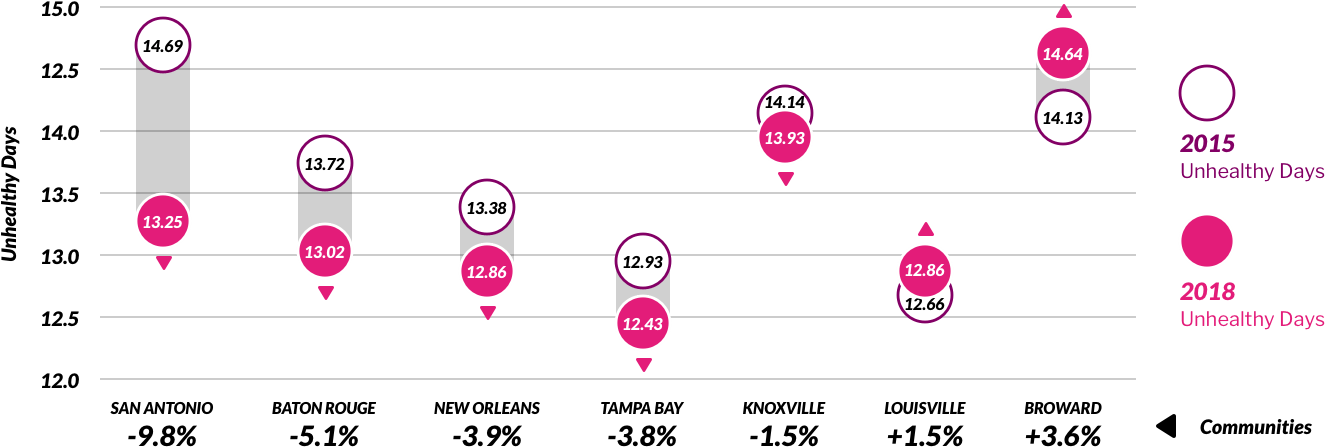
 Cloud technology application in healthcare is not new. Back in 2015, we created a
 Bill Gates once said

 As you may already know, the placenta is one of the most incredible organs out there. It is mainly responsible for the nourishing of babies while they are in utero.
 A Kaiser Health News analysis found that from June 2012 to 2018, the University of Virginia Health System and its doctors sued former patients more than 36,000 times for over $106 million, garnishing wages, and forcing families into bankruptcy.