Mobile health apps have raised the healthcare industry to a new level. Now consumers have an opportunity to track their blood pressure, pulse rate, input their symptoms that will then be analyzed by the ML app on the go. Without visiting the doctor’s office, we can now monitor our health condition and even connect with the provider by sending an in-app message and getting the consultation within hours.
No doubt, mobile health apps are now being developed at a high pace, however, not without dangers. Probably the most common cause of worry is how the software products approach security and data privacy issues.
With no opportunities to seal users’ health records, can we be sure that the confidential information isn’t exposed?
7 tips to help deliver a secure mHealth app
Collect only the needed data
The main tip is: don’t collect the data you don’t need. Collect the information with the clear purpose and regularly dispose of the data you no longer need.
Check the legal regulations (GDPR, HIPAA, COPPA, etc.)
Check the legal regulations your app is subject to. It is important that the app is developed in compliance with security and privacy requirements defined by the GDPR that outlines the procedures of handling EU citizens data, HIPAA and COPPA (a new child-oriented edition of which will come into force in 2020) in the US. According to all this, users, for example, have a right to ask you to delete any data you’re storing or explain the reason what you need this or that piece of data for.
Include a section with Privacy Policy practices
Make sure your app has a section including Privacy Policy practices that comply with Human Interface Guidelines (for Apple) and Developer Guides (for Android) standards. Also, if you’re storing users’ data, you should get their consent to do so. Also, users should be able to revoke the consent at any moment.
Make sure users’ data is not shared with any third parties
Ascertain that you don’t share the data of your users with any third parties, e.g. social media companies or advertising agencies. Enhancing user experience and monetization are the natural goals of any app developer but be careful with this. Recently a number of mHealth apps have been accused of sharing user records with Facebook. You don’t want to be among them, right?
Send push notification without confidential data
If you send push notifications, ensure they don’t include confidential health data.
Protect the app code
Different vulnerabilities may exist in the source code and may be caused by the developers’ error or lack of code testing. What can be done about this? Protect the code with encryption and run constant code scanning.
Run security and penetration testing
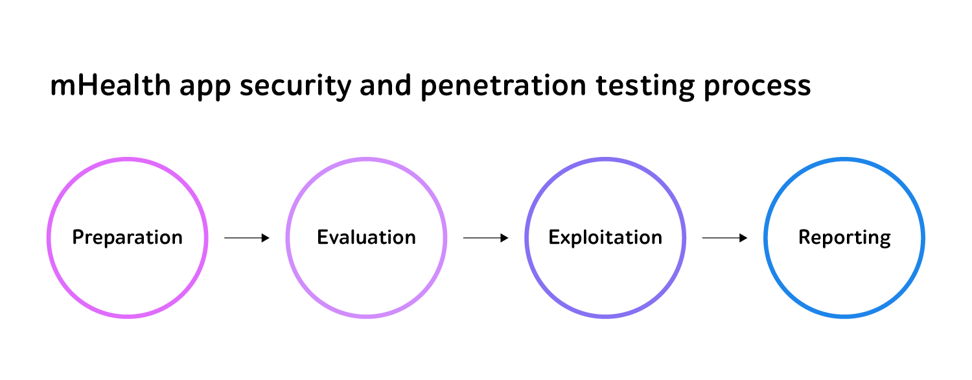
Proper mobile app security and pentesting will include the following stages.
Preparation – the testing team gets information about the software product and possible events that may lead to its successful exploitation as well as prepares test documentation.
Evaluation – the QA specialists evaluate the current security level of the app and recognize the potential vulnerabilities.
Exploitation – security test engineers act as hackers trying to make use of the discovered bottlenecks.
Reporting – the team presents the results to the stakeholders and gives recommendations on how the security level may be improved.
Future technology is changing the world of health. As a result, new ways on how health research is conducted and performed are beginning to emerge. Major Contract Research Organizations or CROs are starting to employ AI in pre-clinical tests, thus revolutionizing the role of technology in healthcare.
Artificial intelligence is a type of intelligence displayed by machines and computer systems. Nowadays, there are several ways how pre-clinical CROs use AI in their studies. But, first, what are pre-clinical CROs?
Pre-clinical CRO Defined
Pre-clinical CROs, otherwise known as Pre-clinical Contract Research Organizations, are companies that provide knowledge, skills, and experience needed to transform a medical or pharmaceutical idea concept into a final product. There are a lot of processes involved before the final product is revealed, which include the discovery and development stage, pre-clinical research stage, the clinical research stage, and, lastly, the FDA review.
The period between pre-clinical tryouts and the unveiling of the product is where the role of a pre-clinical CRO is most critical. Drug ideas and prospective products may fail within this period; hence modern pre-clinical CROs, like Ion Channel CRO, continue to dig deeper into the capacity of future technology to increase efficiency in health research.
Reasons Why Pre-clinical CROS Are Using Future Technology/AI To Conduct Health Research
Reduces uncertainty in pre-clinical experiments – AI is now being used to reduce the improbability that comes with pre-clinical trials. This will go a long way in reducing time spent on research, cutting down financial costs, and optimizing data gathering.
Gathers data and obtains actionable insights – Researchers now use AI to streamline data collection and selection of recipients of pre-clinical tests. Data collection and analysis are an integral part of health research, and keeping up with the zillions of data available is impossible for the human researcher. However, with the aid of AI tools, such as deep learning and machine learning, it is possible to analyze, select patterns, and connect relevant data that can lead to drug discovery.
Researchers also make use of reports generated by AI to gain actionable insights during their pre-clinical studies. AI tools can also improve recipients’ selection by choosing the most appropriate group capable of responding to pre-clinical research and tests.
By Kali Durgampudi, chief technology, innovation officer, Greenway Health.
Kali Durgampudi
The electronic health record (EHR) industry continues to undergo a significant transformation, with many physicians asking themselves whether they consider their EHR a friend or a foe.
In too many cases, medical staff feel their EHR works against them, not for them. In fact, according to Medical Economics’ 2019 EHR score report, 60% of physicians said their current EHR system was harming their ability to engage with patients. In addition, The National Academy of Medicine found that as many as half of American physicians and nurses experience substantial symptoms of burnout. And, the same study found that poorly designed technology is a major contributing factor due to the increased amount of time needed to keep systems properly updated.
This should not be the case, and it’s time to change this narrative.
As we near a new year and a new decade, it’s time to focus on advancing EHRs to make the lives of physicians easier, while assisting in improving the patient experience, increasing engagement, enhancing administrative burdens, and more.
Required features and functionalities of EHRs in the next decade include:
Adaptability
Legacy EHR’s are typically thought of as outdated and lacking customization. Custom forms take months to build, cost extra and users ultimately lack control over the functionality. This is not acceptable by today’s standards. Every healthcare practice and specialty is different. So, the EHR must be customizable to fit each practices’ needs in order to optimize efficiency in data entry and management.
In addition, medical trends and challenges are constantly evolving. For example, opioid addiction has risen to epidemic levels in the United States, with the Centers for Disease Control and Prevention (CDC) estimating that more than 130 people die from an opioid overdose every day. Fortunately, health information technology has emerged as a powerful tool for tracking prescription activity.
EHR’s hold a tremendous amount of data – data that can help physicians provide better care to a specific patient or population. Armed with these analytics, a practice can gain insight into population health — along with reporting requirements for government incentive programs and data to optimize billing and cash flow.
According to the CDC, six in 10 Americans live with a chronic condition such as heart disease, cancer, or diabetes, and about seven in 10 deaths each year are due to a chronic condition. Through its analytics capabilities, a population health management solution can help a practice determine its highest-risk patient groups, identify gaps in care, and reach out to patients to engage them in their care.
The EHR of the next decade should be a tool for decision making. EHRs need to utilize advanced artificial intelligence (AI) and machine learning to make smart suggestions based on data.
An EHR should not just track if a patient is following their care plan, but alert providers when a patient has missed certain critical elements and make suggestions on how best to proceed. As such, the technology can be used to play a larger role in lowering no-show rates and helping predict which patients will have the most success – or biggest challenges – with certain treatment plans.
EHR’s should also be capable of helping physicians make the best financial decisions for their practices. In addition to increasing practice efficiencies and costs, EHRs assist in offering reduced drug and treatment plans with expected costs.
Healthcare providers continue to find themselves with more initiatives and opportunities for innovation than actual capital to deploy to IT projects. Health IT projects have become more integrated with clinical and business areas, which is driving more complexity and alignment than ever before. 2020 will bring a continue focused on the following trends and one growing concern:
Defining and rightsizing AI for your organization. Additionally, organizations will begin and expand the ethical debate as to how broadly to use AI within their organizations. RPA/robotics will continue to expand, followed by deeper machine learning opportunities.
Big data and advanced analytics will continue to be a strong focus as clinical and business users seek the right data at the right time to help make the best decisions possible.
Back office and shared service technology means many organizations have not modernized their ERP platforms in 15 or 20 years. Organizations have gone through numerous transitions, mergers, consolidations, etc., with no core technology changes. Healthcare organizations now have the ability to adopt and deploy next-generation and cloud-based ERP solutions. After spending five to eight years deploying EMR/RCM solutions, organizations now need to focus on ERP modernizations and enterprise data standardization.
Data interoperability will continue to be at the heart of clinical care and enhancing healthcare operations. No one vendor can offer all the necessary functionality needed for healthcare providers; as such, organizations need to spend the necessary time and investment in not only deploying leading clinical, revenue cycle, and ERP solutions, but also an enterprise data interoperability platform. Point-to-point interfaces must be phased out in order to manage the complex enterprise multi-cloud ecosystems that all healthcare providers find themselves living in today with an enterprise data interoperability platform. These platforms offer APIs to help reduce development / connection time, but they don’t always lessen the complexity of business.
With the continued trend toward cloud and hybrid cloud environments, cybersecurity needs to be front and center in all conversations. Organizations need to continue to invest in the development of the correct skills and partnerships to effectively manage cybersecurity in 2020 and beyond.
Health IT resourcing will continue to be in a short supply. The IT resources of 2020 and beyond are not your traditional database administrators or network engineers – they need to have project management skills, business / clinical skills, the ability to manage third parties and actual knowledge of the applications and tools the business uses. Health IT resources need to transform into health IT partners, helping the operations transform by supporting technology enablement.
Jordan Pisarcik, vice president of account management and business development, DocASAP
Providers and health systems will look to more unified, omnichannel solutions to close gaps in care. Health systems will invest in tools and technologies used to streamline the patient journey, including elastic provider search, navigating patients to the right care setting and engaging with patients between visits.
Gone are the days of the adversarial position between payers and providers, replaced now by integrated “payviders.” Through collaboration, “payviders” are expected to reduce financial risk, increase profitability and provide higher quality medical care to patients. Payers also represent a digital channel for providers to improve access to care that can help them meet these objectives.
Health systems will continue to see an increased demand for non-traditional visit types, such as telehealth/virtual appointments, walk-ins, home visits and phone appointments.
In 2019, voice search dominated the news as a major trend; however, consumers won’t see mass adoption of this new technology quite as quickly as anticipated. Still, healthcare systems are working to utilize this new medium as a way to close gaps in care.
Sean Price, EMEA industry solutions director (public sector and healthcare), Qlik
There has been a shift in focus from a traditional use of data and analytics where it has been used for compliance and performance, to a use where operational users are driving decision making and better outcomes at the point of service. The Analytically Powered Command Centre is a great example of this. Healthcare organizations will look to maximize the value of their data by bringing patient flow information into a near real-time environment command center to efficiently manage the end to end process of patient safety, experience and cost. This will enable strategic and tactical management of demand, resource and capability that can lead to process improvement, improved outcomes and notable efficiency savings.
However, moving data to the point of operational front-lines does challenge traditional support and continuity for these systems. Traditionally they would not require 24/7 support – this shift moves big data systems into a new support and maintenance style model.
As more data and insight is being provided to staff, there is the topic of data literacy. A key trend this year will show when you skill up staff in analytics it provides better outcomes and realizes significant productivity gains. Sometimes data literacy is channeled towards just using a system, rather than understanding statistical significance in data. Arguing with data means you present a case with data, and this requires an understanding of significance and goes way beyond system training.
By Rahul Mehta, senior vice president and head of data management proficiency, CitiusTech.
Rahul Mehta
The sheer volume and variety of data, such as claims, EMRs, lab systems, and IoT now available to healthcare organizations is mind-boggling. The potential to pull data from these myriad sources to work for real-time care intervention, clinical quality improvement, and value-based payment models is unfolding fast.
Yet, as organizations seek to aggregate, normalize and draw insights from large and diverse data sets, the importance of data quality becomes apparent. Consider an activity as fundamental as identifying the correct patient. According to Black Book Research, roughly 33 percent of denied claims can be attributed to inaccurate patient identification, costing the average hospital $1.5 million in 2017.
For example, the average cost of repeated medical care due to inaccurate patient identification with a duplicate record is roughly $1,950 per inpatient stay and more than $800 per emergency department visit.
As data quality become more important, healthcare organizations need to understand the key characteristics that affect quality: accuracy, completeness, consistency, uniqueness and timeliness. However, data reliability and integrity also depend on other key factors, including data governance, de-duplication, metadata management, auditability and data quality rules.
With a strategic approach, healthcare organizations can employ a unified data strategy with strong governance for data quality across all data types, sources and use cases, giving them the ability to scale and extend to new platforms, systems and healthcare standards. The result is an approach that uses a combination of industry best-practices and technology tools to overcome common challenges and assure data quality for the long term.
Understanding Data Quality Challenges
Historically, providers and payers alike treated data quality as a peripheral issue, but that is no longer viable in today’s complex data ecosystems. First, there are a diversity and multiplicity of data sources and formats: EHRs, clinical systems, claims, consumer applications, and medical devices. Add to that, challenges associated with legacy applications, automation needs, interoperability, data standards and scalability.
Lastly, there are increasing numbers of use cases for clinical quality, utilization, risk management, regulatory submission, population health, and claims management that need to be supported.
Considering the current data environment, the downstream effects of data quality issues can be significant and costly. For example, in the case of patient matching as referenced above, something as common as two hospitals merging into the same health system, but following different data-entry protocols, can lead to duplicate and mis-matched patient records. It can also lead to critical patient data elements, such as date of birth, being documented differently by different facilities and then made available across multiple systems, in varying formats.
When it comes to waste management in hospitals, it’s easy to imagine old needles, bags of toxic organic waste, and a broad range of other disturbing materials. However, many hospitals also have other issues when it comes to effective waste management.
Just as with any other large building, complex, or organization, the amount of standard MSW and non-medical waste that is generated is staggering, and without proper waste management systems, there is always the potential for it to end up in landfill.
Today, as the world wakes up to its mounting waste problem, some hospitals are at the forefront of a technological revolution that’s streamlining recycling systems and ensuring reduction across a range of waste streams. Here, we look at how new technology is helping hospitals to reduce waste and what that means for the third decade of the 21st century.
Multiple Locations, One Waste Management Plan
Among the many issues surrounding waste management in hospitals, the “siloed” nature of the buildings themselves present a significant challenge. Hospital campuses can be vast, containing multiple buildings, sometimes spread across entire cities. Additionally, each building may produce a range of waste, and each has varying requirements when it comes to collection and disposal.
Managing these sprawling campuses is complex, in both economic and logistical terms, but consolidating waste management strategies through centralized platforms can help overcome significant admin hurdles.
One point of contact can ensure the efficient collection of a range of waste materials from different locations at different times. This kind of approach has been fueled by the advances in app-based connectivity, meaning that operations managers working from different areas of the city can simply log their requirements and arrange collection and disposal directly from a smartphone or tablet device.
Smart Waste Management
Tracking, measuring, and assessing the variety of products used and the waste created by their use is key to reducing the amount of material that requires management. Advanced recovery solutions and RFID/GPS tracking are seen as key technologies in this sector, providing more accurate data on stock usage, discarded materials, and where waste is disposed in relation to a broad range of hospital consumables.
Tracking waste provides transparency and ultimately allows hospitals to ensure waste is delivered to the correct facilities—boosting recycling levels and improving sustainability goals. However, it also allows hospitals to better manage stock levels and daily needs, reducing waste through better management of consumables.
Today’s technologies are cutting waste off at the source by gathering data on how hospitals use products and materials and how they are dealt with after use. A simple scan of a RFID code is usually all that is required to track stock levels and usage, while GPS tracking of waste allows hospitals to provide full transparency on how waste is deal with.
Nurses play an all important role in healthcare’s shift from sick care to wellness-based models as the front-line professionals closest to patients. Always an intricate balance of art and science, nursing practice most continue to evolve to place patients where they should have been all along—in the center of care.
An independent survey commissioned by Wolters Kluwer of nearly 2,000 consumers, nurses, doctors, and healthcare executives in the U.S. provides insights into the top trends that will shape priorities over the next few years – for care teams, hospital leaders, health systems and consumers.
The below infographic details key findings related to challenges and opportunities impacting the nursing profession including perspectives on:
the impact of professional shortages
the growing importance of holistic care that addresses social determinants of health
generational differences between practicing nurses
More than ever, nurses need to demonstrate knowledge, confidence, competence, professionalism, empathy and kindness. And they need to be equipped with the right evidence-based tools and education resources to thrive in a changing healthcare landscape.
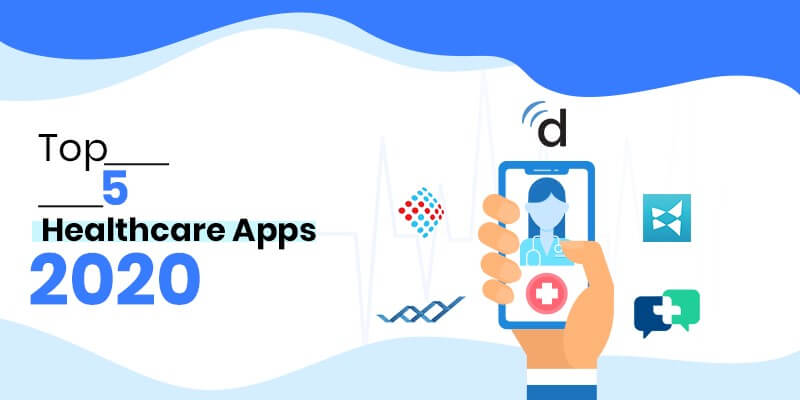
The technology that has made you stagnant and lazy is the same technology that will help you get back in shape. Today we’ll be learning about the five most innovative health apps that you must use in 2020.
If you have some amazing healthcare app ideas, leave that in the comments.
There exists an old proverb, “Health is the true wealth of a man.” We’ve heard it countless times from our teachers, parents, and our doctor, so much that now we have forgotten the meaning of it. But to remind us of the importance of health comes the very same source that people blame these days for ruining it; smartphones. Thus, healthcare software becomes an integral part of your daily routine.
Just as E=MC2 was not created by Einstein to build an atomic bomb, it was for the growth of humans and not for their destruction. Similarly, smartphones were built for the ease and growth of humanity, but several people have a notion that smartphones are the issue.
The real reason is that they are only looking for such people that have engrossed themselves in the mobile world and lost track of their health. But, you can’t blame a piece of technology for the decisions that you make about your health.
So to prove all those ignorant people wrong, we are here with the list of five most innovative health apps of 2020.
ClotMD
The name of the app itself gives an idea of what the app is related to. This healthcare app idea is concentrated on a niche audience. The ClotMD app connects patients needing anticoagulation medication with their healthcare providers and allows them to communicate in real-time via the medical app.
Besides the means of being the contact source between the patients and the medication providers, there are several other features that the healthcare app offers, such as:
Manage INR Levels
Dosing Calculations
Testing Schedules
Consists of a built-in diet library
Able to manage different dosage levels and schedules
Track your results and share the history with any healthcare professional
Offers real-time alerts regarding the testing schedule and other appointments
Doximity
By using this Doximity healthcare application, users get access to the largest medical professional network, which consists of more than 70% of physicians as members. This healthcare mobile app was developed by the same team that built Epocrates, another marvelous medical app for mobiles.
With Doximity, you can search for doctors with a wide range of filters like location, hospital affiliation, experience, clinical interests, publication, specialty, or language.
Some of the key features of the Doximity app are:
Access to the largest directory of Medical Professionals
Users can send their HIPAA-compliant faxes securely from anywhere
Personalized Medical News & Articles
Annotate your Healthcare Documents Directly in the App
ACT.md
ACT.md is an exceptional healthcare application that offers several tools to allow healthcare service providers to view the complete information of a patient’s requirements and manage them accordingly.
With Act.md, medical professionals can serve each patient with different parameters according to their individual needs and work simultaneously with other medical experts across the healthcare sector.

 Future technology is changing the world of health. As a result, new ways on how health research is conducted and performed are beginning to emerge. Major Contract Research Organizations or CROs are starting to employ AI in pre-clinical tests, thus revolutionizing the


 When it comes to waste management in hospitals, it’s easy to imagine old needles, bags of toxic organic waste, and a broad range of other disturbing materials. However, many hospitals also have other issues when it comes to effective waste management.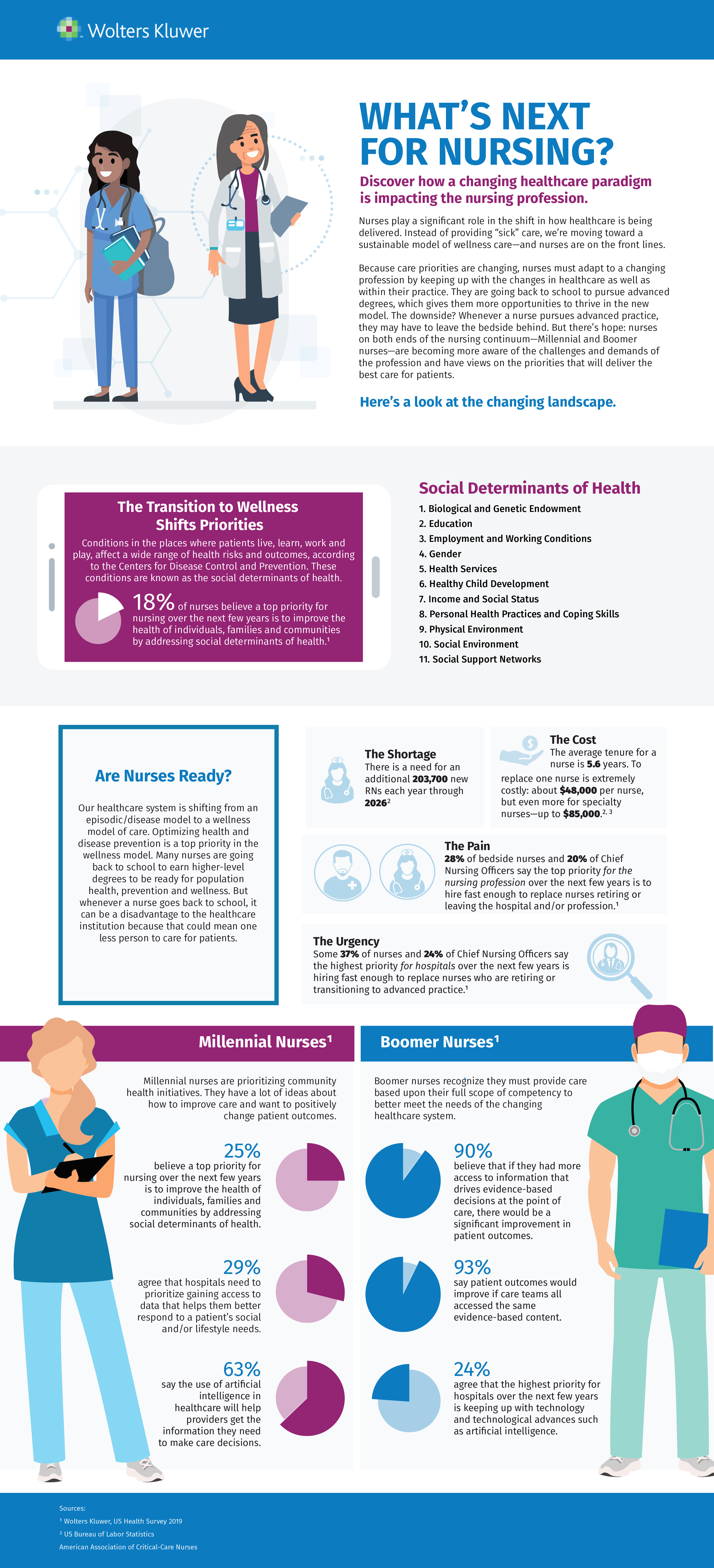
 By Paresh Sagar, CEO,