The health plan market is undergoing a drastic transformation. In the past, the competition had been lean with just a small number of payers. However, the market dynamics are changing. Since 2017, the number of MA plan choices per county has increased by 49%. The competition is said to grow even more in the coming years as more health plans are set to enter the market, owing to the fact that nearly 26 million baby boomers will age into Medicare through 2030.
Rising cost burden on health plans
With additional members, the “paperwork” and administrative costs are also increasing. A recent report revealed that there was almost a 6% increase in administrative expenses for MCOs in 2017. The substantial rise in membership with soaring costs means many health plans might find themselves in a financially untenable situation.
Along with the growing administrative burden, the compliance requirements are also weighing on the workload and costs. The push towards improving accuracy, completeness, and timeliness of the data is intensifying to “ensure that provider claims for actual health care spending matches the health plans reported financially,” said Seema Verma. To fulfill the reporting requirements and avoid financial penalties, health plans will have to improve their data submission process to align with the specific rules, formats, and regulations of a given state, which also ensures an increase in cost.
Payers don’t have much control or influence on the administrative and compliance costs. The member population will increase, and so will the requisites by regulatory authorities. The costs are likely to keep increasing on these fronts in the future.
The growing financial pressure has made it inevitable for payers to explore measures to contain costs from spiraling out of control. Since operations account for around 50% of an insurer’s base cost, reducing expenses on this segment can result in cost savings of significant proportions.
Resolution for cost pressures: Operational efficiency
There are certain operational activities such as claims adjudication, reprocessing, and post-call documentation which are highly repeatable and are executed manually. With the addition of more members each year, the burden of these tasks ought to grow even more. Automating these tasks can give a significant boost to operational efficiency; at the same time, it can help reduce overall costs. According to an article, automation technology can lead to an additional operational cost savings of up to 30 percent within five years for many payers.
Outcomes of automating operational activities
Apart from cost savings and reduced utilization, automating operational tasks has multiple other advantages. Automating routine tasks can ensure that the tasks that previously took days to finish are completed in minutes. The accelerated service delivery can build more synergy between members, providers, and internal stakeholders.
There is tremendous pressure on health systems to serve more patients, particularly as the need for services rises and insurance disbursements decrease. Adding new facilities to accommodate demand is often not a feasible option due to budgetary/capital constraints nor is adding more doctors with nowhere to put them. As a result, healthcare leaders consistently ask whether they are getting all that they can out of existing resources.
Operating rooms are a prime example. They serve as the economic backbone for health systems, and organizations need to maximize the use of OR capacity if they want to achieve their fiscal and patient access goals. Yet effectively managing OR blocks and scheduling in the face of volatile weekly demand patterns can feel like trying to squeeze blood from a stone.
If a significant portion of OR time has been reserved as dedicated blocks for surgeons or service lines, unless time not needed is released efficiently, ORs end up both not being used during business hours and yet working late into the night. Patients wait longer than necessary for scheduling procedures and organizations lose revenue.
Additionally, poor OR utilization makes it extremely difficult to accommodate the new surgeons that health systems want to attract. Current providers have a lock on ORs far in advance, regardless of whether they may need the time or not and/or later release these blocks. Such practices leave few opportunities for new surgeons to secure time when needed.
To remedy the situation, health systems are turning to data to look for insights into what can be done to improve OR utilization. After all, small changes in utilization translate to big differences in patient access, revenue and profitability.
The Role of EHRs
As data insights move to the forefront in organizational decision-making, there is some confusion about what EHR systems do and the role that they play. In a nutshell, EHRs tell you what’s already happened. They are vital systems, absolutely necessary for describing problems within organizations and supplying the data to back up assessments.
Breaking this down further, the purpose of implementing an EHR is threefold:
Reservation system: EHRs provide health systems a way to reserve resources, whether it be rooms, infusion chairs, or clinic time. EHRs do this as well as enable scheduling of specific equipment or providers.
Single source of truth for patient encounters: Organizations need a way to maintain records for every patient encounter — a single instance for each enterprise deployment — and EHRs provide this.
Descriptive reporting: Health systems require reporting. EHRs generate reports based on what was done, sort of like how Charles Schwab tells you how your portfolio performed.
While these functions are all essential to running a successful health system, there are several things EHRs are NOT designed to do no matter how much teams may wish they could. For example:
By Valerie Barckhoff, principal and healthcare advisory practice lead, Windham Brannon.
Valerie Barckhoff
Hospitals and health systems throughout the country are constantly looking for ways to streamline finances and fine tune operating margins. Many are now looking outside the box for solutions to help increase their operating revenue and combat the continued pressure to stretch budgets to include data security, attracting top talent and facility upgrades. Artificial Intelligence (AI), as an example, is showing promising results in healthcare to more effectively address revenue cycle inefficiencies.
AI has penetrated nearly every touchpoint in medicine, from the way emergency medical technicians (EMTs) are dispatched to assisting physicians during surgery. AI is enabling smart devices to detect cancer or a stroke, and consumers can even get help to quit smoking or address opioid addictions with the help of AI. So, it was only a matter of time to apply AI to tackle health revenue cycle inefficiencies. But how?
RCM Represents Prime Opportunities for AI
Even as revenue cycle management (RCM) becomes increasingly more complicated, there are a number of repetitive and predictable processes involved that make it an area perfect for the efficiencies that AI and intelligent automation offer?for instance, prior authorizations.
Prior authorizations, the process by which insurance companies and payers determine if they will cover a prescribed procedure or medication, are meant to help patients avoid surprise bills and unexpected out-of-network costs. However, this largely manual process is time-consuming and error-prone, resulting in $30 billion in annual costs for wrongful denials, inefficiencies and clerical errors. AI can reduce the need to assign resources to repetitive, “simple” pre-authorization requests, allowing healthcare leaders an opportunity to deploy staff to more complex, acute requests that require additional clinical information, peer-to-peer review, and/or other payer required information
Studies show that 84% of physicians surveyed said the burdens associated with prior authorization were high or extremely high, and 86% said the burdens associated with prior authorization have increased significantly (51%) or increased somewhat (35%) during the past five years.
The ability to apply AI to the revenue cycle provides yet another tool to identify inefficiencies, then allow hospitals to redesign their processes and re-allocate internal resources to maximize their net revenues going forward? to focus on more patient care instead of administrative burdens. There is a huge opportunity to gain 25- to 50-percent efficiencies for hospitals and health systems.
Across the U.S millions of Americans live their lives with implants in their body, designed to help them overcome medical problems. So many Americans still are treated with medical devices that have not been rigorously tested.
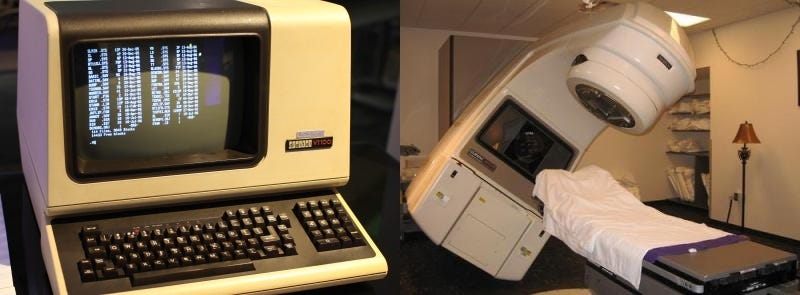
There are hundreds of horror stories on the internet of what happens when these medical devices go wrong. From cases like the well-knownMedtronic class action lawsuit to the Therac-25, which gave patients morethan 100 times the radioactive dose they were meant to receive. Tthe side effects from the following infamous devices make you wonder how they ever passed the testing phase at all.
Therac-25
Possibly one of the most shocking cases of medical devices going wrong theTherac-25 was a device designed to administer radiotherapy to patients in the 1980s. Controlled by a computer, the machine accidentally administered radiation doses that were hundreds of times stronger than what they were meant to be. Between 1985 and 1987, six accidents happened where, because of computer programming errors, patients ended up being given severe radiation poisoning. This resulted in the death or serious injury of each patient. Three of the patients died from this poisoning.
Two of the accidents happened because a fault in the machine because the radiotherapy was administered in the wrong mode. In previous models, there were locks in place that had to be overridden by a real person, in the Therac-25 these locks were removed; instead, the locks were controlled by a computer program. These accidents happened when a flaw in this programming, allowed for the machine to activate in the wrong mode.
Medtronic Bone Graft
In 2018, Medtronic paid out a settlement of more than $42 million dollars over claims that theprocedure leads to serious complications for tens of thousands of patients. Since 2008, the company has had to set aside $300 million dollars to resolve all of the lawsuits leveled against the company.
The Medtronic Infuse Bone Graft was a treatment that was pushed upon patients by doctors, despite a lack of rigorous testing over the long term complications. The fuse was lit in 2008 when a 78-year-old woman died as a result of the surgery. Since then, thousands of patients have claimed that the procedure has given them lifelong complications, ranging from unwanted bone growth to cancer and in some cases, even death.
By Dena Bauckman, vice president of product management, Zix.
Dena Bauckman
When you go to the hospital, you want to be under the care of the best personnel and state-of-the-art technology. It’s easy to assume that’s the case when you’re surrounded by astronomically expensive devices like MRI machines, CT scanners, and surgical robots.
Behind the scenes, however, systems might not be on the cutting edge. According to a report from the Institute of Global Health Innovation at the Imperial College of London, the National Health Service is plagued by inadequate cyber defenses that could put the service system’s patients at risk. The picture isn’t any rosier on this side of the Atlantic Ocean. In September 2019 alone, just shy of 2 million records were breached in American healthcare hacks.
Antiquated computers, insufficient funding, and a lack of necessary expertise in cybersecurity are all combining to create a dangerous situation in healthcare. Sensitive as patient data may be, its theft isn’t even the biggest risk. “A cyberattack on a hospital’s computer system can leave medical staff unable to access important patient details — such as blood test results or X-rays, meaning they are unable to offer appropriate and timely care,” one of the aforementioned report’s authors wrote. “It can also prevent life-saving medical equipment or devices from working properly.”
A Typical Diagnosis
Despite the plethora of healthcare cybersecurity breaches in the headlines, most organizations still aren’t prepared to defend themselves against the latest generation of cyber threats. That’s no surprise because the number of threats they must contend with is increasing each day. In order to provide the best care possible, healthcare organizations must also collect some of the most valuable data available to enterprising cybercriminals.
Birthdays, Social Security numbers, payment information, and health records all add up to an identity theft gold mine. Once they have the information, hackers can steal even more with targeted phishing campaigns (a practice called spearphishing) that are almost impossible for the average user to detect. If all else fails, the granular detail associated with healthcare information means that the data can fetch a large sum on the dark web — especially when records are stolen by the millions.
As healthcare organizations adopt exciting new technologies, the problem only becomes worse. Those new technologies come with new vulnerabilities, some of which won’t be discovered until they’ve caused a breach. With so many digital devices (including those owned by employees) being used to access, store, and transmit sensitive data, it’s no wonder hackers are having an easy time finding an entry point.
By Glenn Day, chief sales officer and practice leader of healthcare, HUB International.
True Story: An employee at one New England medical practice stayed after hours to search patient records for gossip on her neighbor. She found what she was looking for – evidence that the neighbor was seeking psychiatric counseling. She posted it on Facebook. As soon as the clinic discovered what happened, the employee was terminated.
But, the damage had already been done. The practice was named in a lawsuit for failing to properly supervise the employee and safeguard patient medical records. Without cyber coverage, the medical clinic was on their own for legal fees and settlements.
Healthcare data breaches are complex and this story is just one example. It doesn’t matter who the perpetrator of the breach is, the responsibility for regulatory-compliant breach response almost always falls upon the original data collector.
With more than half – or 63% – of healthcare cybersecurity breaches caused by criminal or malicious activity; hacking accounts for 20% and ransomware represents 10% of healthcare breach claims.
Data breaches have also brought new regulations and guidelines to healthcare, like the HIPAA and ransomware guidelines published by the Department of Health and Human Services. The rule requires HIPAA-covered entities that have suffered a ransomware attack to prove thorough a documented investigation that their data wasn’t actually acquired, but only frozen by the hacker.
These forces have contributed significantly to healthcare’s rising data breach costs. According to the Ponemon 2017 Cost of Data Breach Study, healthcare has the highest per capita data breach cost.
Having a robust healthcare cybersecurity policy, and understanding what’s covered and what’s not can help alleviate losses and put your healthcare institution into the driver’s seat post-breach.
Here are seven things you need to know about healthcare cybersecurity coverage:
By Robin Cavanagh, chief technology officer, GetWellNetwork.
Robin Cavanagh
We’ve come so far in the medical field, from a treatment perspective. Over the past twenty years, major breakthroughs have occurred in all aspects of the healthcare industry, from pharmaceuticals to minimally invasive surgery. Isn’t it time we saw that same type of revolution, when it comes to the patient journey?
The “Patient Room of the Future” sounds futuristic, but many of the technologies needed to create an innovative space for optimal healing already exists. To make this patient-centered environment a reality, hospitals must find new ways to seamlessly integrate technology, like cloud computing, machine learning, artificial intelligence and IoT – doing so will facilitate better patient engagement, improve communication, and offer patients more control over their surroundings.
The Medical University of South Carolina (MUSC) is one hospital that recently recognized the need to revolutionize their patients’ experience and decided to reimagine a futuristic environment, combining technology with human-centered design principles to give patients choice, control and comfort—key components in the healing process.
Based on MUSC’s experience, here are seven tips for success when it comes to other organizations looking to create the next iteration of the patient room:
Involve patients and families in most, if not all decisions.
Creating the best patient room requires a team of people working collaboratively and bringing different perspectives to the table. While it’s critical to include doctors and nurses on this team, it’s also important to engage patients and families and hear what they’re looking for firsthand. In creating MUSC’s new children’s hospital, the organization formed 26 teams made up of doctors, nurses and family members, and collectively these teams – not architects – designed the new patient rooms. Involving patients and families in this process was invaluable and brought up conversations that the hospital’s team wouldn’t have had otherwise.
Develop a set of guiding principles for what your vision is and then stick with them.
Before getting started, organizations should hone in on their vision for the project and think through how they are going to get there. It may take multiple visioning sessions to come to an agreement on these guiding principles, but it’s important to think deeply about what the ideal experience will look like and how each decision will tie back to the patient. Organizations also must consider which vendors will help them achieve their goals and objectives. When MUSC began the process, they discussed the need to partner with vendors that believed in the hospital’s vision and could help them seamlessly integrate technologies from various vendors to create an enhanced experience for their patients.
Establish strong, trusting relationships with your leadership team and your strategic partners.
Constant communication and transparency are keys to success when undertaking this type of project. The closer that strategic partners work with the leadership team, the more likely the partners will understand the leadership team’s vision and, therefore, more likely to align on recommendations. As part of the technology planning at MUSC, vendors constantly mapped out and presented different use cases to the leadership team, providing opportunities to confirm how the team envisioned the technology functioning or bring up other barriers that the vendors needed to consider.
Though vision is one of the most important of all five senses combined, most people don’t think about their eye health until something goes wrong. Each year, millions of people are diagnosed with vision problems and eye diseases that alter their way of life. The unfortunate part is that many of these complications can be prevented with the assistance of an optometrist. While seeing the eye doctor is the responsibility of each individual, eye centers can do more to spread the word to encourage patients to make appointments.
So, how do you get people interested in their eye health and visiting places like Sharper Vision Centers? Here are some digital marketing solutions that have proven effective:
Have a website
A company website serves as the “first impression” of the brand. Patients need to have a place they can visit to get to know more about who you are, what services you provide, and how said services benefit them. Your optometry website should provide a professional yet inviting presence that encourages visitors to schedule an appointment for an eye exam, surgery, or other treatment solution.
As technology has come a long way, simply having a web address with your company contact information on it isn’t quite enough to keep visitors engaged. Your website needs to be user-friendly, easy to navigate, provide detailed information on your practice and services provided, and also engaging. Adding resources like company blogs, explanation videos, or customer reviews can also help to build your authority and strengthen the trust between your practice and the community it services.




 True Story: An employee at one New England medical practice stayed after hours to search patient records for gossip on her neighbor. She found what she was looking for – evidence that the neighbor was seeking psychiatric counseling. She posted it on Facebook. As soon as the clinic discovered what happened, the employee was terminated.