The healthcare industry is ripe for disruption and transformation. According to McKinsey & Company, U.S. pharma is “in a state of flux.” Seismic shifts are happening, from significant merger and acquisition (M&A) activity to pharmacy store closures to changes in strategic partnerships between major health insurers and pharmacy benefit managers (PBMs), and the seemingly inevitable entry of Amazon into the market. Moreover, the healthcare ecosystem continues to face challenges as it attempts to comply with regulations like HIPAA and HITECH.
During this period of change, McKinsey’s research establishes three imperatives for healthcare businesses to consider. The first is to pursue business models that deliver a lower total cost of care for consumers and employers. The second involves leveraging data aggregation and big data analytics to generate insights and create value, and the third is to put the consumer at the center of everything by creating innovative ways to bring more consumer-driven insights and actions into the business.
The growth in digital health indicates that many businesses are acting on these imperatives and are finding commercial success. The digital health sector currently is estimated at $86.4 billion and is predicted to grow by almost 30 percent year-over-year through 2025. But with such a vast and complex industry like healthcare, it is challenging to appreciate the realities of digital disruption without drilling down into specific sub-sectors and profiling some of the disruptors that are in the process of altering their landscapes.
Following are some examples of how the “value pool” is shifting in this industry, resulting in cost savings for patients through the elimination of waste.
Pharmacy benefit management value pool shifts by removing inefficiencies
Pharmacy benefit management (PBM) includes third-party administrators for prescription drug programs at insurance companies, businesses, self-insured employers and government health plans. PBMs have a vast market valuation of $368 billion, as of 2018, within the U.S. healthcare system and an expected annual growth forecast of more than 9 percent.
Despite the size of the market, however, many PBMs do not have the technical sophistication to flourish in the digital world, which has given rise to companies such as RxSense. Previously a PBM, RxSense pivoted to meet the real-time needs of customers by providing a business-to-business (B2B) digital platform for the whole PBM industry. Its goal is to bypass problems with legacy PBM systems, including a lack of innovation, inefficiencies, inflexibility and challenges around accuracy and transparency.
The next step beyond digitization for players such as RxSense will be the application of artificial intelligence (AI) and machine learning technologies to further increase administrative efficiency, drive down costs and, ultimately, improve clinical outcomes.
OneBlood, the not-for-profit blood center serving Florida and other parts of the southeastern United States, will soon begin collecting plasma from people who have recovered from the coronavirus so it can be transfused to people with life-threatening coronavirus infection in hopes of aiding their recovery.
The experimental treatment is approved by the FDA to be used on an emergency basis and is called “COVID-19 convalescent plasma.”
People who recover from coronavirus infection have developed antibodies to the virus that remain in the plasma portion of their blood. Transfusing the plasma that contains the antibodies into a person still fighting the virus can provide a boost to the patient’s immune system and potentially help them recover.
OneBlood is working closely with the Florida Department of Health to identify people who have recovered from COVID-19 to be potential donors. In addition to local efforts, OneBlood is also cooperating with the federal government and anticipates participating in a national-level initiative to be able to provide convalescent plasma when and where it is needed.
OneBlood is working quickly to implement the new protocols to meet the FDA criteria for COVID-19 convalescent plasma. OneBlood plans to begin collecting plasma from qualified donors in the coming weeks and also plans to start offering the therapeutic agent to hospitals to treat severely ill coronavirus patients. As one of the largest blood centers in the country, OneBlood already has the technology in place to be able to collect, test and process plasma from donors.
The potential donors will need to meet all the usual screening criteria for blood donation, plus pass additional FDA criteria, including:
COVID-19 convalescent plasma must only be collected from recovered individuals if they are eligible to donate blood
Required testing must be performed and the donation must be found suitable
Prior diagnosis of COVID-19 documented by a laboratory test
Complete resolution of symptoms at least 14 days prior to donation
Have a negative result for COVID-19
Meet all standard FDA blood donation requirements
As with all transfusions, the donor and the patient will need to have compatible blood types
In addition, the recipients of the plasma will also have to meet FDA criteria in order to qualify to receive this therapy for treating life-threatening COVID-19. (Click here for FDA report).
By Brian Kirkendall, vice president of product management, Digi International.
Brian Kirkendall
In 1847, Hungarian physician Ignaz Semmelweis theorized that hand washing could limit the occurrence of puerperal fever among new mothers. But despite the obvious success of his proposal, he faced significant opposition from his colleagues in the medical community, many of whom flatly rejected his theory.
Of course, today more than ever, we’re acutely aware of the importance of Semmelweis’ game-changing understanding of hand washing, and we are tracking it more closely than ever before. Fortunately, our modern healthcare industry is equipped with far more than mere chlorinated lime solutions that our forefathers had in the 19th century. And the Internet of Things (IoT) is stepping in to support healthcare providers with breakthroughs that can enhance our preparedness to fight and prevent infections and mitigate the spread of contagions such as COVID-19.
Can IoT help keep us safe?
The healthcare industry has long been a careful early adopter of lifesaving and life changing innovations, so it comes as no surprise that the IoT has made steady inroads into all types of clinical settings: doctors’ offices, hospitals, clinics, ambulances and more. From patient-connected devices for accurate and vigilant patient care to medical equipment such as pain medication management and hygiene monitoring devices, the IoT is transforming almost every area of healthcare delivery.
The IoT’s compelling combination of compact and low-cost hardware and software creates a far-reaching impact for caregivers and patients alike in the form of improved accuracy, greater efficiency, lower costs, and enhanced health and safety.
Today, one application that’s gaining wide notice is the use of wireless technology to monitor and report on hygiene compliance in the medical industry. The implementation of wireless sensors and flexible gateways are bringing unprecedented precision, including temperature and pressure monitoring in surgical suites, monitoring cryogenic environments or something as routine – but life-saving – as hand hygiene.
A real-life use case: Sanitize your hands
We usually think hospitals are some of the most hygienic places of all. However, given the high traffic of sick people, hospitals that aren’t rigorous and vigilant can be home to greater infectious risks. Due to the number of immunocompromised patients present, hospitals face an ongoing mission-critical challenge to prevent the spread of bacteria and infectious diseases. Long before the COVID-19 global pandemic, the Clean Hands Safe Hands (CHSH) initiative recognized this importance of this issue and promulgated hand washing strategies that use wireless technology to help healthcare institutions promote health and safety.
As simple as it sounds, in a hectic environment like a healthcare facility, simple vigilance in washing hands can be the No. 1 factor in keeping medical workers and patients safer. What a better way to improve hand cleanliness than by providing hospitals with internet-connected hand-sanitizing stations?
As COVID-19 closes in the on U.S., the need for longitudinal health data and interoperability have never been greater. Providers need access to the full picture of every patient they treat, and epidemiologists need to consolidate data from multiple sources to track the spread of the disease and determine where more aggressive containment strategies need to be employed.
For many organizations already overwhelmed, fragmented systems lead to an infrastructure bottleneck, resulting in degraded data quality, gaps in care coordination, medical errors and burdensome workflows. Lack of comprehensive medical data impairs a provider’s ability to know how many people have the virus, the geographical location of confirmed cases, and the effectiveness of treatment.
Even as capacity restrictions force organizations to work without barriers—via drive-thru screenings, make-shift tents or by way of telehealth—real-time access to data can help streamline care management, whether fast tracking admissions or empowering patients at home through online portals.
Here are just five ways data interoperability plays a pivotal role in addressing the epidemic:
Coordination of Care: COVID-19 provides a sobering reminder of just how dire an integrated, scalable and interoperable healthcare infrastructure is. Coordination among first responders, public health officials, labs, acute and post-acute facilities will be critical to efficiently deal with the explosion of cases. Insurers will also be a key player of the care coordination team as to not slow down or hold up prior authorizations and patient discharges. Access to information about hospitalizations and test results among healthcare participants will be vital for enhanced continuity of care across settings and transitions. Real-time data afforded by interoperability bypasses the need for phone calls and faxes, which create delays and information inaccuracies.
Patient Identification: A complete view of one’s medical history can be a matter of life or death in the face of COVID-19. Bringing disparate medical records together into a cohesive story enables those on the frontlines insight into an individual’s pre-existing medical conditions, medications, allergies, etc. to make the most informed decisions under insurmountable circumstances. Patient demographics and data standardization play a huge role. Accurate patient identification ensures data about an individual is correctly linked, updated and shared, for improved clinical decision-making and enhanced care quality and safety. As health officials look to track and predict the spread of the virus. A complete view of the patient population can only be done with a firm understanding of the patient’s identity, and the key relationships the patient has to their next of kin and to their providers of care.
In this, the day and age of the global coronavirus outbreak, the job of the medical translator and interpreter has never been more relevant. Resolving this global crisis involves a great deal of research and analysis, much of it in the form of clinical trials. All of the requisite research and analysis must not only be reported and published but accurately documented as well. Once all of the research from the clinical trials has been completed, the information must be made readily available.
The document translation must be completed by certified medical translators and disseminated globally in order for the research to be relevant and helpful. This is an absolutely crucial role during any medically related global crisis but the medical translation of the clinical trial documentation will ultimately be the key to bringing the COVID-19 global pandemic to a successful conclusion before it can get any worse for the people of the world.
In tandem with the need for medical translation is the localization of clinical trials, which requires additional paperwork that the medical translator must make accessible to the world.
Document Requirements for Domestic and International
According to the National Institute of Health, “One of the most common inspection findings in investigator site inspections is lack of reliable, accurate and adequate source documentation. This also happens to be the most common pitfall identified during sponsor audits. The importance of good documentation practice needs to be emphasized to investigator sites to ensure that the study results are built on the foundation of credible and valid data.”
One of the biggest concerns during the current global medical crisis is that many of the clinical trials will not be properly published at all. Of those that are, many will suffer due to the improper documentation and document recordings, and all this before medical document translation begins. Among the biggest culprits of under-reporting, clinical trials were many academic institutions where certified medical translators should be readily available, and clinical trial document requirements should not be a challenge.
A study from the US Food and Drug Administration which is responsible for the oversight and investigation of Clinical Trials in the United States, inadequate documentation records were one of the top causes of clinical trials being brought into question or having them dismissed completely.
Clinical Trial Audits were most commonly required according to the FDA because of the following reasons:
failure to follow the investigational plan (34%)
inadequately informed consent form (28%)
inadequate/inaccurate records (27%)
The amount of documentation required to conduct a clinical trial is overwhelming on the best of days. Every one of the documents is absolutely relevant to the successful conclusion of the clinical trials being conducted by medical researchers.
This is especially true in terms of the current global Covid-19 pandemic. In terms of global clinical trials, translation services should work in support of the global effort, though this also requires that all of the documentation is in order, to begin with. Further, it relies on medical researchers working with a certified medical translation agency that also has the capacity to integrate and implement successful localization strategies to ensure the accuracy of the medical translations before they are distributed globally.
We all know that getting a good night’s sleep is highly beneficial to our bodies. It makes us feel happier, enhances the way our body functions, improves our productivity and concentration, and even decreases the risk of health conditions, such as heart disease and strokes.
A healthy amount of sleep is said to be between seven to eight hours every night. Unfortunately, during this modern day and age, many of us are losing out on essential hours of sleep and the quality of our sleep has seen a massive decline. To improve the way we sleep, many companies are doing their best to develop sleep aid technologies.
Alongside taking the steps to change our sleeping habits for the better, using these technologies could work to our advantage by increasing the amount of sleep we get and enhancing our sleep quality. Today, we will be taking a look at how technology is revolutionizing the sleep industry and some of the technology that is available to us today.
Healthcare has always been one of the largest industries out there, and it certainly won’t be going anywhere anytime soon. To break into this field, a healthcare degree is a must. Here are just five great reasons to study for a healthcare administration degree.
Making a Positive Impact
Retail, hospitality and many other jobs such as this do not provide the moral and emotional benefits that a healthcare administration role can bring. For those with a caring nature who perhaps aren’t suitable for the front lines of healthcare, administrators can still make a huge difference in healthcare systems and go home feeling fulfilled every day. Some of the ways in which you can make a positive impact include:
Influencing future healthcare policies (see below)
Helping others
Improving public education
Contributing to medical investigations and studies
If you are looking for a worthwhile and fulfilling career, healthcare administration may be for you.
Positive Outlook and Salary
Healthcare facilities are always expanding, and with the breakthrough in technology and medicines, people are living for far longer and with much more complex conditions and diseases than ever before. This means that no matter what route you go down in healthcare, you will always be needed.
In fact, in the next four years, the projected growth of healthcare administration and management is 17%, which is larger than many other occupations. Going into healthcare administration in starting roles can see you earning around $29,000 a year, but this can soon increase as you climb the career ladder and get into managerial roles within healthcare administration.
Healthcare is a growing field and one which will provide you with great pay and a positive career outlook.
Dimensional Insight, maker of Diver Platform, the 2020 Best in KLAS healthcare business intelligence/analytics platform, today announced it is providing a complimentary* COVID-19 toolkit to healthcare providers.
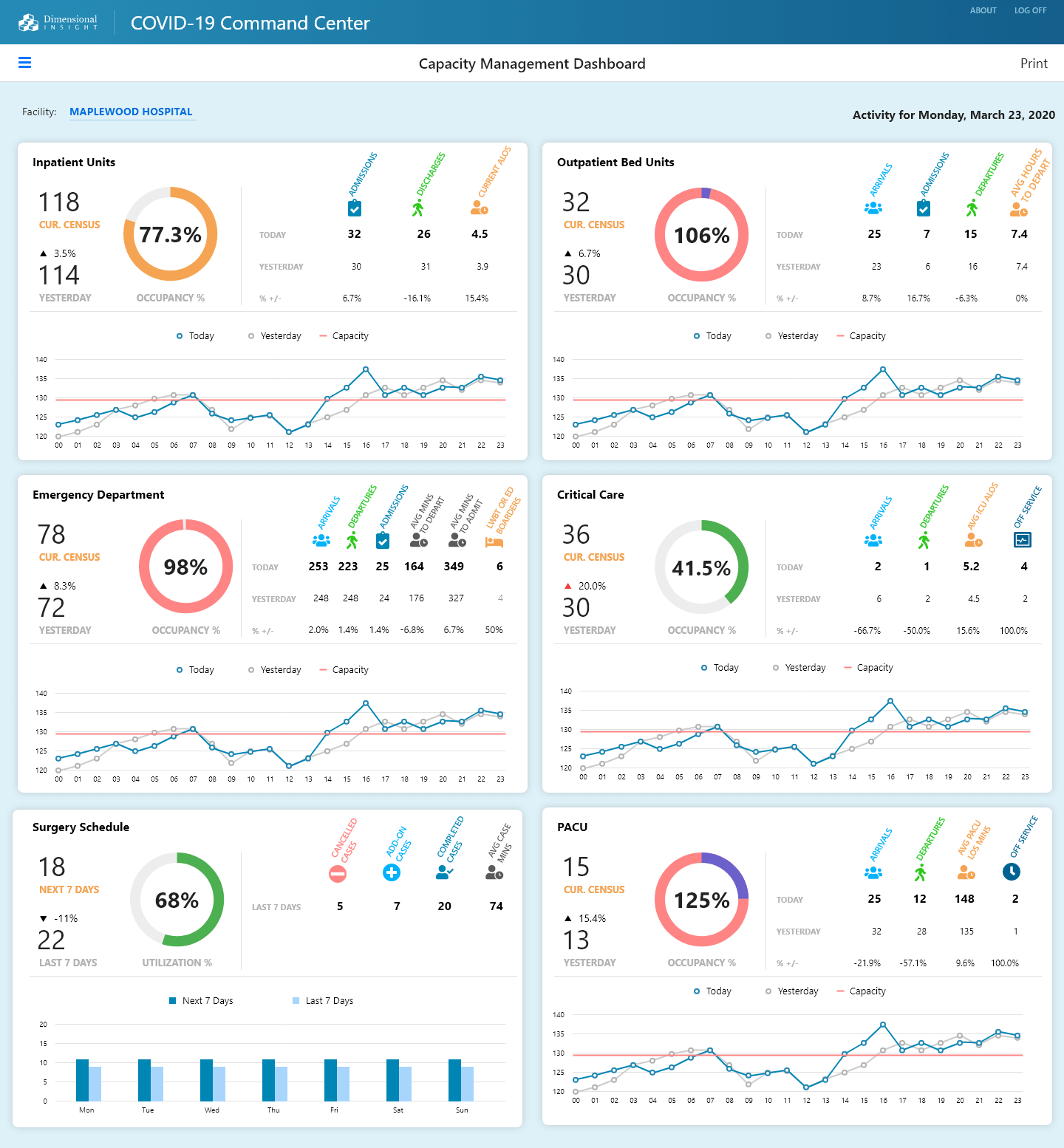
This kit will provide critical measures or KPIs that hospitals and health systems need to track to better manage their COVID-19 patients, as well as the rest of their patient population. It will also include a capacity management dashboard that displays these current measures in an easy to understand format. In addition, the toolkit will include the logic to implement COVID-19 specific measures based on criteria provided by the CDC. This will result in better, more informed decisions in order to improve patient outcomes.
“As healthcare providers mobilize in their response to the COVID-19 pandemic, their data is an important guide in helping them understand where their resources are being used and what their capacity is as new patients come in,” says Fred Powers, CEO and co-founder of Dimensional Insight. “We are glad to share our expertise with healthcare organizations and provide this toolkit to them when it’s needed most.”
Some of the measures that the new COVID-19 toolkit will contain are related to:
COVID-19 specific (Confirmed COVID-19 cases, Potential COVID-19 cases, COVID-19 ALOS)
Inpatient Units (Census, Occupancy %, Admissions, Discharges, ALOS)
Outpatient Units (Census, Occupancy %, Arrivals, Admissions, Departures, Average Hours to Depart)
Emergency Department (Census, Occupancy %, Arrivals, Departures, Admissions, Average Minutes, LWBT)
Critical Care (Census, Occupancy %, Arrivals, Departures, Average ICU ALOS, Off service)
Surgery Schedule (Utilization %, Cancelled Cases, Add-On Cases, Completed Cases, Average Case Minutes)
PACU (Census, Occupancy %, Arrivals, Departures, Average PACU LOS Minutes, Off service)
 The healthcare industry is ripe for disruption and transformation. According to McKinsey & Company, U.S. pharma is “in a state of flux.” Seismic shifts are happening, from significant merger and acquisition (M&A) activity to pharmacy store closures to changes in strategic partnerships between major health insurers and pharmacy benefit managers (PBMs), and the seemingly inevitable entry of Amazon into the market. Moreover, the healthcare ecosystem continues to face challenges as it attempts to comply with regulations like HIPAA and HITECH.


 Dimensional Insight, maker of