Andreessen Horowitz, one of the most well-known venture capital firms in Silicon Valley, having made notable exits including Airbnb, Facebook, Box and Slack, is often at the precipice of significant software trends, including those signifying industry disruption. The firm is taking some of its focus on the rapid innovation occurring within the digital health space.
For example, Julie Yoo, general partner at Andreesen Horowitz, recently issued a report defining “The New Tech Stack For Virtual First Care.” In the report, Yoo says API-first solutions are, and will continue, helping telehealth companies rapidly build more scalable, efficient operations.
Digital Healthcare Surges As the World Focuses On Patient Care
For obvious reasons the recent growth in the overall digital health market has been explosive. Yoo points out that 2020 was a record-breaking year in the number of digital health companies that got started and funded, as well as the extensive growth these platforms achieved in both patient utilization and revenue. In her analysis, more than 1,000 full-stack digital health companies began in the past three years.
“We’re truly entering into a new golden era for healthcare technology,” she noted in her report.
Legacy Healthcare IT Fails Digital Health
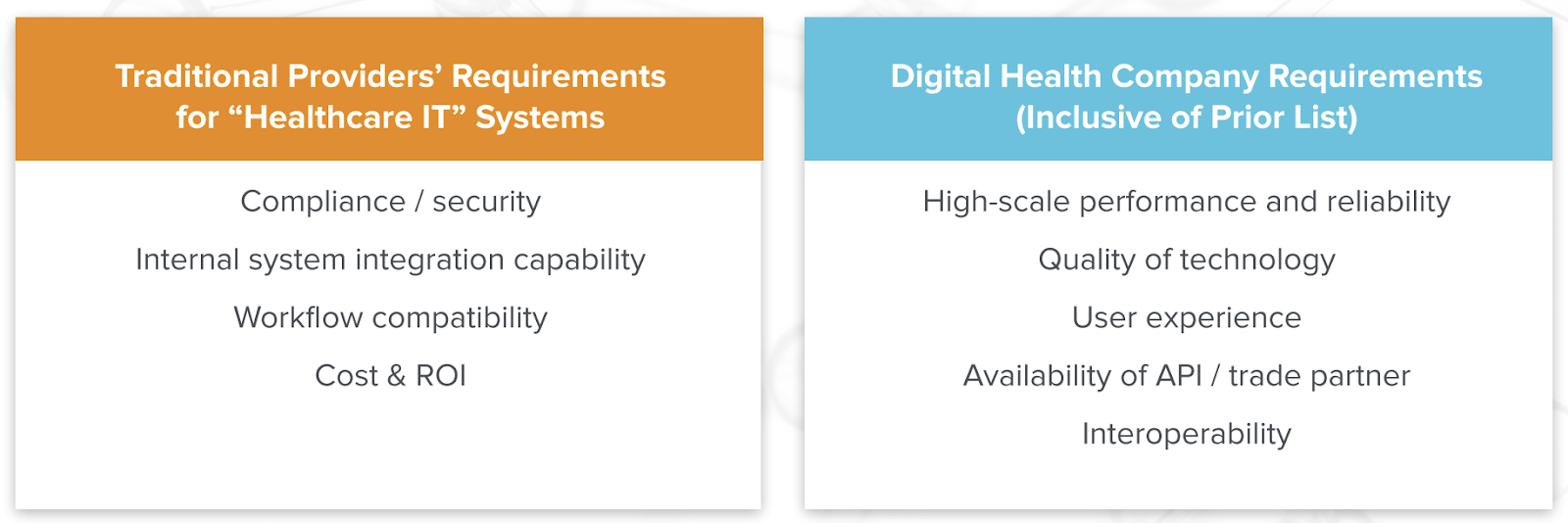
New virtual care companies require much of the same back-end infrastructure as traditional healthcare providers; however, legacy healthcare IT solutions lack flexibility, interoperability, and scale required. Many digital health companies are trying to build their tech stacks or outsource manual operations — either approach is a mistake.
(Image source from “New Tech Stack of Virtual Care Delivery,” Andreessen Horowitz)
The “New Tech Stack For Virtual First Care”
Yoo point out that “in the same way that Plaid, Stripe and AWS abstracted out entire layers of infrastructure and dramatically reduced the cost and time to stand up a new tech business, these health-tech companies are now allowing digital health startups to accelerate their time to market and really focus on the higher-order elements of their products and services to deliver game-changing care to patients.”
If you’re itching to travel, love meeting new people, and are passionate about healthcare, it might be time to consider becoming a travel nurse. Travel nurses fulfill all of the regular duties a traditional RN would. However, instead of sticking to one facility long-term, nurses bounce from destination to destination, helping understaffed hospitals. Currently, there is a massive demand for qualified nurses everywhere, which means traveling staff often have a leg up in the competition.
If you’re looking for location flexibility, a challenging experience, and long-lasting memories, take a look at this complete guide on beginning your career as a traveling nurse.
Traits of a successful travel nurse
If you are itching for adventure and have a passion for the medical field, travel-based nursing may offer you the best of both worlds. However, how do you know if you’re cut out for the role? Flexibility, trust, compassion, and reliability are just a few attributes that will make you shine as a travel nurse.
Additionally, an essential quality is being comfortable with change. As you can imagine, nurses’ day-to-day is not routine, consisting of emergency calls and unpredictable conditions. If constant movement and excitement make you tick, this may be the career for you. Once you’ve made up your mind, search sites like Fusion Marketplace to take the stress out of the hunt and jump right into your career.
Physical and mental activity keeps elderly people alive. It boosts their memory and mental capacity, slowing down aging and enhancing their quality of life. Experts view gadgets as the best tool to engage these seniors because they come with familiarity and will help them to maintain a global view of life.
Two of the major concerns for the seniors is their health and safety. By monitoring their health, caregivers can respond quickly before a situation deteriorates, averting a health crisis. Their frail bodies also make their lives risky especially when they are exposed to sensitive conditions like strange places, water, or lost memory. Visit this site for homework help and engaging discussions on homework topics in different disciplines.
While each senior has unique needs, here are common tech tools that will cover the health and safety needs of seniors at home or in care facilities.
Most of the laboratory practitioners lose millions of dollars just because of inefficient management of lab billing services. Usually, it happens because of the lack of a sufficient workforce, equipment required for billing, and more importantly time. If you are finding it difficult to keep your claims process optimized then you must acquire the assistance of professional laboratory billing companies.
A reliable lab billing company stays well-versed with the recent evolutions in the healthcare industry. They provide a dedicated workforce that follows up on all claims. They try to collect maximum revenue for your practice to achieve mutual business success goals.
For this purpose, they implement every preventive measure to submit clean medical claims. When error-free claims are submitted in a timely manner, you can get quick reimbursements. This leads your practice towards long-term financial stability. Moreover, you get complete control of your lab revenue cycle management.
In addition to this, you don’t need to spend your time on hectic and time-consuming consuming tasks of lab billing and coding. Because outsourced billing experts eliminate the responsibility of your laboratory staff. And you can also get rid of the constant monitoring of your staff.
You and your healthcare staff can utilize the saved time in enhancing your patients’ encounters at your lab practice. Sometimes, laboratory practitioners feel hesitation in hiring a third party for their financial management.
If you are one of them, stop thinking like this. Because you don’t lose control over your finances because professional laboratory billing companies keep you updated with regular analytical reports.
Moreover, hiring lab billing agencies can help you to drive maximum profitability to your business in the following ways:
Nursing may not be one of the oldest professions out there, but it is undoubtedly one of the most esteemed and well-regarded ones. However, it wasn’t always this way. It has evolved immensely since its conception because of the likes of people such as Florence Nightingale and continues to grow to this day.
Nightingale, the daughter of a wealthy and aristocratic family, defied odds and entered a profession that was seen as lowly and revolutionized it entirely. So, while nursing may have evolved immensely over the years, some core tenants remain the same. Human dignity, altruism, honesty, and empathy are just a few of these core tenants that guide nursing as a profession.
However, one fundamental tenant is good communication. Much of the nurse’s work relies on effective communication, to which there are many layers. Nurses act as mediators between healthcare administration and doctors and the patients, ensuring that all parties are satisfied. If you’re looking to enter this profession, you need to have your communication skills on point. Below, we’ve listed the top communication skills each nurse needs to have.
Verbal communication
Verbal communication is the most well-known form of interaction and often the most stressed upon. Nurses need to be eloquent, clear, and precise when communicating with patients and medical staff members alike. Nurses need to know their audience and how they can communicate effectively and clearly. Ineffective communication can affect health outcomes severely, so it’s essential to keep the tone and words in check at all times. Nurses need to understand their patients and offer them help, even when the clients might be challenging to deal with.
In the past mental health has sometimes been ignored and even today it indeed carries something of a stigma in certain walks of life and even different cultures. Addressing mental health issues and the effects of trauma is paramount to helping a person to come to terms with what is happening and to recover their health.
Trauma can impact the quality of life for a person and something that happened in childhood can even carry on through to adulthood and affect someone their entire life. Therefore it is important to understand the effects and health implications of someone who has suffered a mental health trauma and to aid them in their recovery.
What is mental health trauma?
When considering what are mental health problems you would think of emotions and psychological effects on a person. Mental health problems can affect mood, behavior, and the way someone thinks. They can make it difficult to process and deal with stress and lead to anxiety and depression among many other symptoms.
If someone experiences a traumatic event then this can have a profound effect on their mental health and cause a range of negative effects. Someone doesn’t necessarily have to be part of a traumatic event either, they may have witnessed one or they could be living in a traumatic environment for years.
How do you define a traumatic event?
A traumatic event could be defined as an event or series of events that put someone in harm’s way or at risk of death. This could mean living in a war zone, witnessing a violent crime, being in a car accident, or being cared for by someone with substance abuse problems.
A child living in a neglectful situation or being emotionally, physically, or sexually abused could suffer from deep-rooted trauma that carries on for the rest of their lives. The environment someone lives in can cause trauma too. For instance, if you lived on a crime-ridden estate you may spend much of your time in fear, ironically in the one place you should always feel safe, your home.
Though healthcare CFOs still occupy a traditional role in many organizations, the role has significantly expanded in recent years. No longer can a CFO of a major healthcare system simply focus on cash flow, financial planning and balancing the books. Today, the role must be more strategic and visible, both inside and outside the organization.
Here are three ways a modern healthcare CFO can add more value to his or her organization.
1. Be More Visible
Visibility within the organization is critical. Today’s CFO can’t be holed up in her office. She must be more visible, walking the hallways, meeting people and taking her leadership outside of the finance department. From physician network teams and registration/scheduling to telemedicine and population health departments, the CFO must take an active role to ensure she has her pulse on what is going on, always with an eye to ensuring that patients have access to quality, affordable care throughout the system.
Healthcare today is broader than the four walls of the hospital. Its reach includes the emergency room, the physician’s office, the home, and the community. Because the CFO often weighs in on where money is best spent, the CFO needs to have visibility to every aspect of the system. The CFO can play a critical role in helping deliver the best healthcare experience for a health system’s patient population.
2. Focus on Community Health
Health systems are a community asset and sometimes even the crown jewel of the community. A dynamic CFO works with community leaders to ensure that the healthcare needs of the community are being met. Much work has been done around the Social Determinants of Health, so we know that where people live, learn, work, and play affects a wide range of health and quality-of life-risks and outcomes. Being ever-present and building strong bridges to the community can preserve or even grow market share. But most of all, it can lead to better clinical outcomes, with happier and healthier patients. Community involvement allows people to have frequent positive experiences with their local healthcare system, which ultimately supports the system’s success and competitive advantage.
Even before the pandemic, rural hospitals were closing at record rates. According to a report by the Chartis Center for Rural Health, 19 hospitals in rural America closed in 2019. By 2020, one in four hospitals were at risk of closing — and COVID-19 has only worsened their financial challenges. This is particularly problematic for aging populations and the rural communities that already face barriers to proper healthcare.
As a result, many healthcare organizations are left wondering how they can improve the patient’s journey in healthcare and overcome major obstacles moving forward. They’re handling the drastic increase in telehealth visits, rescheduling clinical trials, promoting digital relationships with doctors, re-evaluating health portfolios, and more.
Given the various challenges healthcare providers and professionals face, what is the best path forward? It starts with establishing a patient-first approach. The industry has to take what it’s learned from an unprecedented 2020 and consider how to reach more patients in 2021 and beyond.
Digital Transformation and the Patient-First Approach
This starts with the role of digital in the changing industry. Advancements and shifts in the digital healthcare experience are likely here to stay. Many of the new tech-based processes brought about by the pandemic (e.g., telehealth, virtual check-ins, new technologies for remote intake) will become standard elements of the digital patient journey.
While industry professionals initially scrambled to adopt these tools, the benefits of digital transformations in healthcare were immediately apparent: convenience, reduced exposure to illness, and increased accessibility. Healthcare organizations became more proactive in reaching their patients, which led to better treatment and quality of care.
But digital transformation is not happening in a vacuum. The push to implement more technology in healthcare processes has also created a push for a more local, results-based approach to healthcare. Decentralized healthcare systems work to improve efficiency and quality of care; they can also enhance communication between a referring provider and the partner organization, ensuring a smooth continuation of care when it’s needed.
The ultimate goal of this push is to open up a “digital front door in healthcare.” This strategic and patient-first approach creates engagement during every interaction with the healthcare system. Why? A well-rounded healthcare strategy doesn’t rely on one component of the patient experience to determine the quality of care — and neither should a digital strategy. Instead, it must take a comprehensive approach that keeps patients engaged and informed.
The marriage between a patient-first approach and a digital front door strategy has the potential to be incredibly powerful. A digital-first, patient-centric approach can propel your organization into the future of healthcare. Here are three suggestions to get you started: