Fortified Health Security released the 2022 Horizon Report. The report reveals how, as the industry continues to recover from a tumultuous 2020, cybercriminals continued to relentlessly target and attack providers, health plans and their business associates. The report goes on to explore how federal and state regulatory agencies along with cyber insurance companies are taking notice of breaches and the increasing number of ransomware attacks in the healthcare industry, adopting comprehensive cybersecurity policies and procedures that increase compliance and mitigation costs.
The report leverages a comprehensive cross-section of information, expertise, and statistical analysis to highlight industry-wide trends, insights, and predictions. Horizon Reports have been published by Fortified Health Security since 2017 and are designed to help healthcare stakeholders navigate the exceedingly complex cybersecurity landscape by sharing best practices and actionable guidance.
Significant findings from the 2022 Horizon Report include:
DeliverHealth, a global provider of technology-enabled solutions for hospitals, health systems and group practices, announced today that its mobile-first patient engagement software has earned top customer satisfaction scores in a KLAS Emerging Technology Spotlight report.
KLAS states in its recent Emerging Technology Spotlight on DeliverHealth’s Gemini digital health capability, “Though the software is relatively new, early adopters highlight DeliverHealth’s close partnership, proactive customer service, and strong go-live execution.”
Mac Boyter, research director, KLAS Research, said, “Of the clients we spoke with for our report on DeliverHealth’s Gemini Digital front door solution, 100% of the respondents when asked about their overall customer satisfaction reported being ‘highly satisfied.’ They also reported A+ metrics on all key performance indicators like supporting integration goals, and executive involvement.”
In addition, 100% of the customers surveyed said they would buy the patient engagement solution again. KLAS, now in its 26th year, publishes unbiased customer data and insights on software, services, and medical equipment. Read more about DeliverHealth’s report here.
By Chris Evanguelidi, director, enterprise healthcare market, Redpoint Global.
In a new survey of more than 1,000 U.S. healthcare consumers conducted by Dynata and commissioned by Redpoint Global, more than 80% of respondents said that they prefer to use digital channels (online messaging, virtual appointments, texts, etc.) to communicate with healthcare providers and brands at least some of the time, and 40% prefer digital communications most of the time.
Along with digital-first communications and experiences becoming a standard expectation, consumers are also on record that they want their providers to display a deep, personal understanding across the full spectrum of engagement touchpoints and channels. In the survey, 60% of consumers said they would choose a provider based on how well the provider understands them, beyond patient data, so that the experience is relevant and personalized. Beyond patient data means that a provider has a single view of the healthcare consumer, to include clinical and claims data, consumer and social determinants of health (SDOH) data such as economic stability, access to health care, etc.
Furthermore, 66% said the selection of a provider was dependent on the provider’s ability to communicate in a timely and consistent manner.
Examples of the depth of understanding that patients now expect – and that are also indicative of the digital-first mindset – are a provider’s ability to proactively contact patients at the right time and in the right context (e.g., via text, email or online portal). Nearly half (44%) of respondents expressed that this ability is now the expectation. And 36% said they expect communications from their provider to match their in-person experiences in terms of relevancy, consistency and outcomes.
In a recent Harris Poll survey about marketer and consumer perceptions about customer experiences across various industries, consumers consistently ranked healthcare third (behind retail and financial services) in terms of providing a consistent experience that demonstrates a thorough understanding of the customer. Yet when consumers were asked which industry should provide the most consistent experience that demonstrates a thorough understanding, healthcare polled first.
In 2020, healthcare providers quickly implemented new solutions in response to the COVID-19 pandemic. This year, providers evaluated their ongoing needs and optimized their patient engagement and operational processes.
As we enter a new year, the pandemic and its effects continue to influence the healthcare landscape. The consumerism of healthcare continues to drive the deployment of virtual care technology and paperless solutions, as providers focus on increasing patient engagement. At the same time, providers continue to experience challenges with revenue loss and burnout, placing strain on both budgets and staff alike.
As a result, some of the biggest priorities for healthcare providers in 2022 will revolve around how they can best engage patients without burdening staff. Healthcare technology will rise to meet the challenge, supporting providers with solutions to help them increase efficiency, streamline operations and continuously improve the patient experience while reducing time spent on administrative tasks. Read on for three healthcare technology trends we can expect to see in 2022.
Telehealth Will Grow As Hybrid Care Models Develop
However, in-person appointments are still important and even a preferred option for many patients—in a recent poll by NPR, Harvard University, and the Robert Wood Johnson Foundation, while 82% of respondent households that used telehealth reported being satisfied with it, 64% of households that have used telehealth said they would have preferred an in-person visit over telehealth in their last visit with their provider.
The Federal Communications Commission approved an additional 100 applications for funding commitments totaling $47.89 million for its COVID-19 Telehealth Program. This is the FCC’s sixth and final funding announcement of approved Round 2 applications. The FCC’s COVID-19 Telehealth Program supports the efforts of health care providers to continue serving their patients by providing reimbursement for telecommunications services, information services, and connected devices necessary to enable telehealth during the COVID-19 pandemic.
“The pandemic has forced us to think differently about how to deliver health care services and the FCC has risen to the challenge through a number of telehealth programs, including our COVID-19 Telehealth Program,” said FCC chairwoman Jessica Rosenworcel. “From offering remote behavioral health services in Decatur, Illinois to supporting the underinsured and those living below the poverty line in Dade City, Florida, the healthcare providers announced today offer just a snapshot of the breadth of connected health care services this program has helped support in the past year. I want to commend the work of our team in the Wireline Competition Bureau for their dedication to this program that has made such an impact on our nation’s doctors, nurses, and their patients.”
Round 2 is a $249.95 million federal initiative that builds on the $200 million program established as part of the CARES Act. The FCC took action last year to develop a system for rating applications factoring in the hardest-hit and lowest-income areas, Tribal communities, and previously unfunded states and territories. Over the course of two funding rounds, this program has approved 986 awards to providers in each state, territory, and the District of Columbia.
Below is a list of healthcare providers that were approved for funding in this final wave (listed alphabetically):
We live in a world where technology surrounds us everywhere we go. The public healthcare sector has made great advancements in this digital revolution for the welfare of the people. eHealth offers several health benefits in today’s world as it is equipped with several cutting-edge resources that work towards better patient care.
Ever since the coronavirus pandemic, eHealth has proved to be an evolving resource as it allows authorized medical users to have direct access to patients’ medical records and history. This innovation will also aid doctor-patient communication locally as well as globally as you will be able to exchange health data electronically.
It’s now generally accepted as a fact that robotics will play a much greater role in healthcare across the 2020s and beyond. Indeed, that ball is already rolling and gathering pace.
Estimates vary, but it’s assumed that the value of the global healthcare robotics industry is just under $10 billion (it was just $5 billion in 2017), with the USA as the biggest market. Of course, that’s still relatively niche.
For perspective, $10 billion is around half the size of the plant-based meat industry, and the entire global healthcare industry is estimated to be worth $8.45 trillion.
The technology is coming, and it’s safe to assume that there will be a snowball effect in the next few years. There is, however, something of a disconnect between our perceptions of robotics and the reality. We get our ideas of such things from playing video games with robots or from Hollywood sci-fi movies featuring human-like robots. That’s pretty far from what we are dealing with in healthcare, at least for now.
Repetitive tasks perfect for robots
Indeed, when looking across a lot of the advancements that have been made in the sector over the last few years, the key term that sticks out is “repetition”. By that, we mean robots carrying out repetitive tasks that are normally done by a human. Say, for example, acupuncture or repetitive exercises for rehabilitating a patient. Due to its emphasis on repetition, physiotherapy is one of the most conducive sectors for robotics technology, and we can see evidence of this taking off ahead of more complicated procedures.
Technological advancement has brought the healthcare industry to a new level of progress and revolution. With the development in technology, the healthcare industry comes across improved and complex devices. Advanced technology plays a very important role in the advancements in the healthcare industry. It has given way to easier and quicker treatment of patients. The advancement in technology made it possible for doctors to use digital imaging systems, computerized X-rays, and ultrasound images, to monitor and diagnose patients.
Healthcare has been evolving throughout centuries. In these years, there have been a number of breakthroughs that have revolutionized the treatment of diseases. Nowadays, people are more attentive towards their health. The use of technology has made their life highly easier. Various applications and devices are used to monitor health. Here, we will discuss how technology has made hospitals more advanced and benefited both the patients and doctors.
Diceus provides some of the most dedicated offshore developers in the healthcare industry who can help your business grow and focus on your core competencies.
How Technology helped to bring advancement in the healthcare industry
Technology is making the healthcare industry to be more effective, efficient, and safe for patients. Data and information are stored digitally, making it easy to manage the healthcare industry. Technology is used in almost all aspects of the healthcare industry. From the treatment of patients to the management of the healthcare industry, technology is making things easier.
There are various technological updates and advancements which have been made within the healthcare industry. Let’s look into them.


 We live in a world where technology surrounds us everywhere we go. The public healthcare sector has made great advancements in this digital revolution for the welfare of the people. eHealth offers several health benefits in today’s world as it is equipped with several cutting-edge resources that work towards better patient care.
 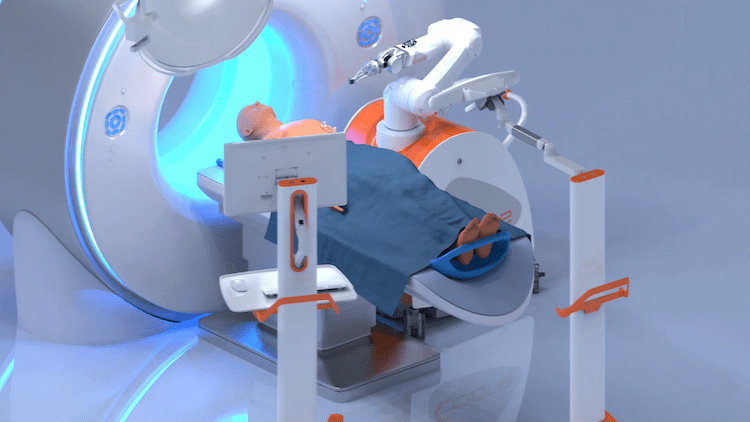 It’s now generally accepted as a fact that robotics will play a much greater role in healthcare across the 2020s and beyond. Indeed, that ball is already rolling and gathering pace.