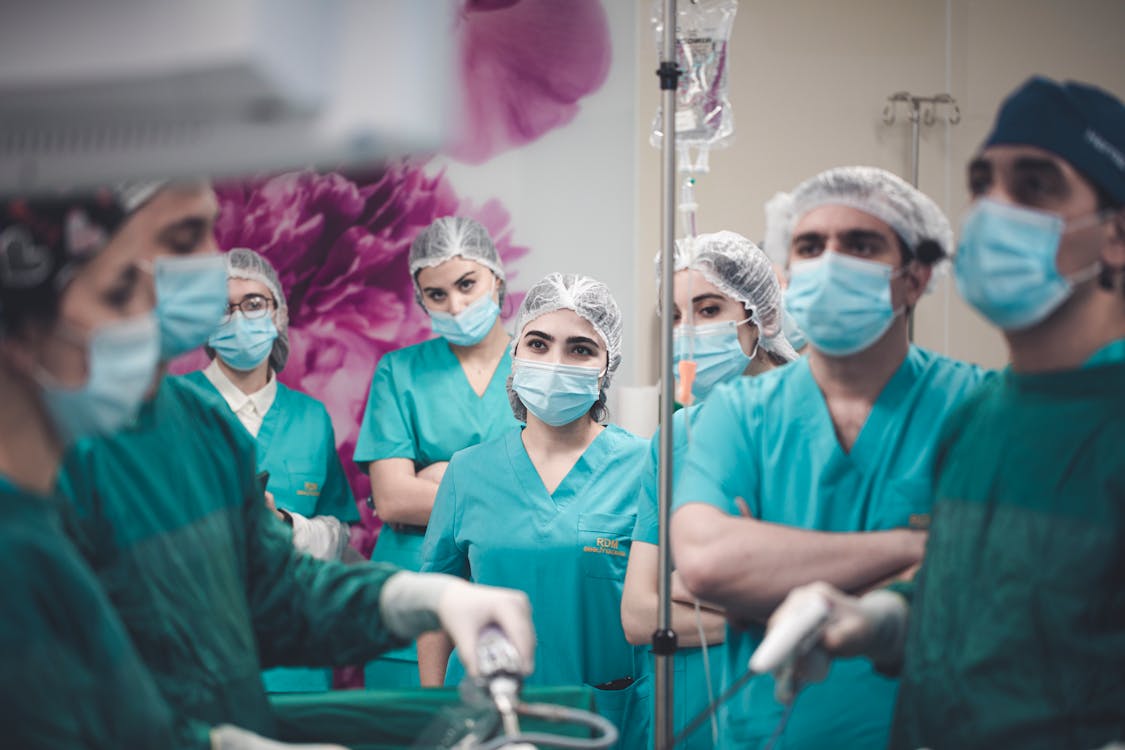
Concussions are a growing concern globally, with many pushing for greater awareness and ongoing research being done with regards to managing the condition.
There are many ways to cure post-concussion syndrome, but in recent years, researchers have made advancements to incorporate technology in managing concussions.
The technology impacts both the prevention, detection, and treatment of concussions. Medical researchers now rely on impact sensors and concussion care apps to enhance healing. Here are a few ways that technology is impacting concussion management:
Impact Sensors
Impact sensors are designed to record forces transmitted to the head-on collision. The sensors can be attached to concussion safety devices like helmets, mouthguards, or on the skin to enhance efficiency. With research still ongoing, impact sensors can now assist in detecting minor concussions injuries.
Besides seeing force transmitted to the head, impact sensors can also detect early-stage concussion and collect data on the severity of the trauma. The devices are finding a place in helping stop post-concussion syndrome. Additionally, products like patches can be worn behind the ear and be used to detect concussions. Most importantly, the products can be integrated with mobile technology to communicate.
The healthcare industry promotes health by providing treatments and ensuring a better quality of patient’s life by preventing health issues. While each healthcare professional serves a vital role in this industry, nurses play a central role. Nurses educate patients on health promotion, preventing health issues and injuries, and providing the necessary care and treatment.
With the evolving healthcare industry and the increased demand for skilled care providers, the need for nurses with advanced qualifications has never been greater before. Today, most healthcare facilities hire nurses who are either RNs (registered nurses) or possess a BSN (Bachelor of Science in Nursing) degree.
Getting a BSN Degree
Nurses are the frontline workers in a healthcare facility as they directly contact the patient. Therefore, it becomes critical for them to have a BSN degree, to gain necessary clinical skills, and enhance their practical knowledge to provide expert care to patients. As a result, most RNs are now pursuing a BSN degree to help them get ahead in their careers.
Several institutions offer an online BSN degree program to help nurses pursue education part-time full-time. This RN to BSN online program helps them expand their knowledge of patients from diverse backgrounds, learn healthcare promotion strategies to improve patient outcomes and use information technology to manage and disseminate information for improved decision-making in healthcare.
This program offers prospective nurses multiple advantages, including high earning potential, career mobility, and career advancements, with advanced skills and knowledge in nursing practice.
As we become more aware of the factors that impact our mental well-being, we also notice an increase in specialists’ efforts to provide people with proper care and solutions. Community mental health services are part of these efforts and focus on providing specialized services outside of a hospital setting.
This way, people who don’t have the means (or knowledge) to ask for help from a mental health specialist will be able to access such services. Plus, community mental health services can provide educational support and consultations to local care providers and partners.
Furthermore, specialists who work with secure platforms like EHR for mental health have the chance to provide better insight into the mental well-being of the community they serve. They do so by collecting data from the field and using it to compile various reports and graphs that can offer a more accurate general view of the area.
Is Community Mental Health Necessary?
When it comes to mental health, we live in an era of discovery. The scientific community is still learning and discovering new aspects of what mental health is for the individual and the community.
However, the need for such a service is overwhelming. According to the World Health Organization, the pandemic triggered a 25% increase in the prevalence of depression and anxiety at a global level.
So, as the world tries to recover from the negative effects of the pandemic, we need all the support we can get. Plus, community mental health services can be a positive factor in the development of collective mental health awareness and understanding. Specialists can identify early signs of mental illness, provide guidance so individuals will know how to navigate their problems, and spread awareness in the community so everyone involved will know how to cope.
This way, we help prevent people who suffer from untreated mental illnesses from being institutionalized, as it used to happen in the U.S. prior to the Community Mental Health Act of 1963. As such, people are able to get treatment where they live (when possible), which is an important factor in a successful recovery.
Shannon Flynn is a freelance blogger who covers education technologies, cybersecurity and IoT topics. You can follow Shannon on Muck Rack or Medium to read more of her articles.
Artificial intelligence (AI) has had major impacts in the health care industry, affecting providers and patients alike. However, it also aids the pharmaceutical sector in finding and creating the drugs that support health care through the treatment and management of diseases. Here’s a closer look at some positive changes AI could bring this year.
1. More Applications of AI for Drug Discovery
Uncovering effective drugs can be a time-consuming process. However, AI could make it faster and more fruitful.
A recent partnership between Roche, its U.S. subsidiary Genentech and clinical-stage biotech company Recursion will involve using AI to find new drug targets and accelerate this phase of development. The arrangement could lead to up to 40 programs for neurology and cancer drugs over the next decade.
However, experts warn that applying AI to drug discovery could also have a dark side. One pharmaceutical company previously used AI to find beneficial therapeutics. However, it also relied on the technology to uncover new toxic nerve agents to use as bioweapons.
In less than six hours, the algorithms had found 40,000 molecules that fit the researchers’ desired parameters. They warned that their experiment should be a wake-up call. Depending on AI to find new drugs is promising, but some people could misuse the method’s potential.
Most people don’t realize that it can take up to 15 years and an average of $1 billion to $2 billion dollars just to get one drug developed, pass clinical trials and ultimately approved by the Federal Drug Association (FDA). In fact, the sobering truth is that up to90% of all clinical drug trials fail.
Considering this, it’s actually nothing short of a miracle that the COVID-19 vaccine was approved within just two years. In truth,COVID-19 changed medical research and drug development radically in that it kick-started a lot of innovations in technology. Today, technological advancements are allowing pharmaceutical scientists and laboratories to reduce the alarmingly high failure rates of clinical drug trials.
Why Do Most Drugs Fail in Clinical Trials?
Faced with the reality that only one in ten drugs pass regulatory approval and clinical trial testing, intense research continues to investigate the reason for this. According to an analysis published by Nature News, researchers determined that clinical efficacy was the culprit for almost half of all failures. In other words, the drugs simply didn’t work or did not render the intended effect in patients.
As if these barriers to approval weren’t enough, another 10% of all drugs never pass muster simply because there is no commercial interest, therefore they lack funding to bring them into the medical marketplace. Last but not least, ineffective planning and poor lab strategies are also factors that thwart drugs from graduating to fully approved status.
By Rondy Jennings, managing director of the not-for-profit healthcare group at Goldman Sachs & Co and a founding member of the Black Directors Health Equity Agenda.
Health equity has taken years to move from the drawing board to the waiting room, but the pandemic has revealed the daunting scale and fierce urgency of moving to value-based care. Consider the cost of disparate access to care as borne in COVID’s severity among Black adults.
In cases where we know the patient’s race, the rate of COVID-19 related hospitalization for Blacks has proven to be 2.5 times that of whites. If that holds true for all cases, racial disparity has accounted for 350,000 extra Black coronavirus patients through 2021. Conservatively assuming a hospital charge of $20,000 for each patient, that translates to about $7 billion. Even that substantial cost does not reflect the implications of tens of thousands of needless deaths in the Black community.
What would it take to eliminate this disparity, and many others that could change the lives of Black populations? Clearly, a more equitable healthcare system would improve outcomes across the board by reducing the impact of infectious diseases, premature birth and chronic conditions such as hypertension and diabetes. But to get Black health outcomes in line with the population as a whole, we must examine the obstacles that stand in the way and the lasting changes a shift to a value-based system will produce in health equity.
Driving to the Center of Health Equity
First, let’s turn to the scale of the healthcare ecosystem. U.S. healthcare spending grew in 2020 to $4.1 trillion or $12,530 per person. As a share of the nation’s Gross Domestic Product, health spending accounted for 19.7%—one dollar in five. This ecosystem labors under entrenched business models that predate digital technology, data analytics and the internet. In 2020 overall, spending on hospital care reached $1.3 trillion; physician and clinical services, $809.5 billion; prescription drugs, $348.4 billion; and home health care, $123.7 billion.
High-tech entrepreneurs have been very nimble in finding opportunities at the margins. While they can’t tackle the whole ecosystem, they can go after various pieces of it and still create an incredibly successful company without addressing the ripple effects outside their domain. If we think of healthcare as a battleship fleet in desperate need of overhaul, think of the tech disruptors as repairing the hull one weld at a time, oblivious to the condition above deck. Where is the central thrust to overhaul the healthcare system as a whole in a way that creates health equity?
Fortunately, the imperative for change is gaining momentum. The Centers for Medicare and Medicaid services, for example, is developing promising, value-based innovation models that reward care for underserved populations. They revolve around taking care of people not only on an episodic basis—as with hospitalization or chemotherapy—but also over time. Costs are lowered because the focus is proactive and preventative. Value-based care is not driven by a person’s quality of insurance. It offers a financial incentive to provide preventive care, which addresses social determinants of health, as well as exposure to personal risks.
Inato, a clinical trial platform for community sites, today announced the appointment of Liz Beatty to its Board of Directors. Beatty brings decades of experience in leadership and clinical trial management, along with over three years of hands-on experience serving as Inato’s chief strategy officer.
Since joining Inato in 2019, Beatty has focused on advancing the company’s corporate strategy, driving commercial growth with sites and pharmaceutical companies, and establishing Inato’s United States organization as the US General Manager. During this time, the company has formed key commercial relationships with more than half a dozen of the top-30 global pharmaceutical companies and added more than 1,300 community-research sites to its network.
“Liz’s vision has been instrumental in shaping Inato’s growth and pursuing our mission of bringing clinical trial access to patients around the globe,” said Kourosh Davarpanah, CEO & co-founder of Inato. “We are thrilled to welcome her to the Board, and I know her deep experience and insights will continue to be invaluable.”
“As a thoughtful leader, Liz has spearheaded conversations on improving inclusivity in clinical trials and worked tirelessly to ensure Inato’s platform is making a positive impact for underserved patients,” said Nan Li, Inato Board member and Venture Partner at Obvious Ventures. “Her passion and unique perspective bring diverse experience and understanding to Inato’s Board.”
“I am honored to join Inato’s Board of Directors,” said Liz Beatty. “I truly appreciate the board’s confidence and look forward to working with the team to continue driving Inato’s mission forward at such a critical time for our industry.”
Beatty has vast experience in trial planning, protocol management, and digital technology. Prior to joining Inato, she headed digital clinical trials at Bristol-Myers Squibb, where she led digital innovation efforts across Global Clinical Operations.
The healthcare industry currently accounts for 14% of all US workers, employing about 22 million professionals across different sectors. However, despite this and the unquestionable importance of the industry, it is underfunded, understaffed, and underappreciated.
As a result, it is crucial that healthcare staff can find as many ways as possible to make their daily lives easier. This will improve workplace productivity and efficiency while also enabling them to care for their mental health.
With that in mind, here are some simple ways in which you can achieve that goal!
 Concussions are a growing concern globally, with many pushing for greater awareness and ongoing research being done with regards to managing the condition.