Dean Stephens is the CEO of Healthline, a media group and a health information technology company. Here Stephens discusses healthcare analytics and how it’s important to providers and patients; the ever-increasing importance of harvesting useable and life-changing information from unstructured big data; analytics in population health; the importance of ACOs and the future of Healthline.
Tell me about your background and your role at Healthline. I grew up in a small, blue-collar town in New England and was fortunate enough to attend an Ivy League college, which was a rare thing for this town. After college and graduate school, I got lucky to land a policy analyst position for the Washington State governor, but in no time, got drafted into management consulting at Deloitte. Much of my consulting time was spent in the healthcare industry learning first-hand how “upside down” the industry was. Thus, I joined other entrepreneurs to re-imagine this muddled industry and joined Healthline as CEO in 2001, not knowing then that I would end up building two companies simultaneously.
What does Healthline do and how has the company evolved?
Healthline’s mission is to make the people of the world healthier through the power of information. And we do this through two business units – our media group, which consists of our consumer health website Healthline.com, and our health information technology group, which includes a range of search and data analytics solutions built on our market-leading medical taxonomy. We are currently working with some of healthcare’s largest brands, including AARP, Aetna, Pfizer, Sanofi, UnitedHealth Group, Microsoft, IBM, GE and Elsevier.
Describe your personal view of analytics and what that means to the rest of us. Why is this important?
Healthcare is the most information-intensive industry on the planet. The number of diseases recognized today and the permutations on the treatment matches to individuals have exploded over the past 20 years. It’s impossible for an individual physician or a large, sophisticated provider or payer institution to deliver effective treatment across all patients without analyzing vast amounts of complicated data. We limped along in the traditional fee-for-service realm. Now as the healthcare market shifts to value-based reimbursement, the value of information and analysis rises dramatically as providers shift from being rewarded for sick care to well care.
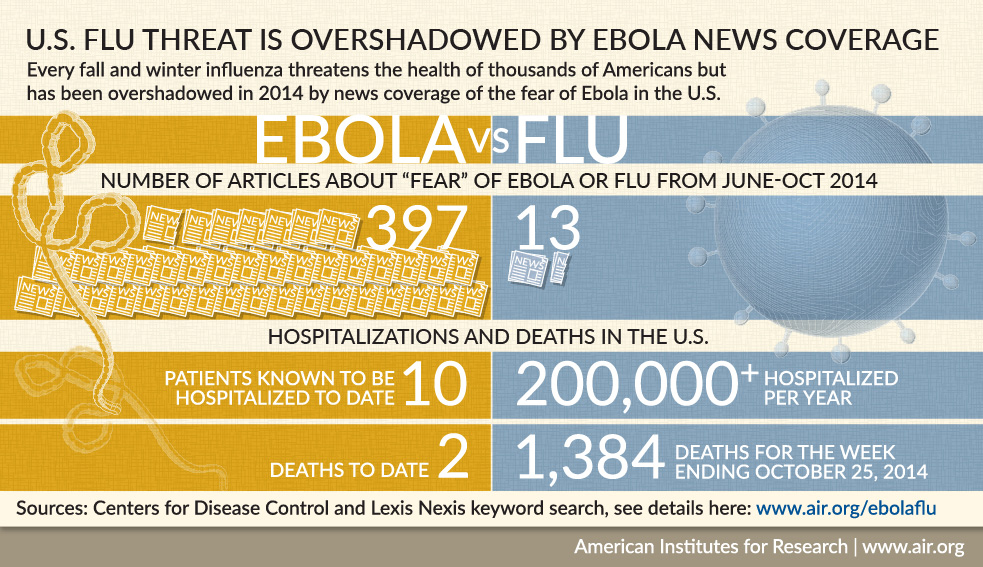
Two big communicable disease scares—Ebola and measles—gripped the attention of the general public recently. They did so with enough strength that the average person on the street spoke out and demanded that actions be taken to protect themselves and families. It was virulent on social media. The total count of Ebola deaths at the end of last year was 5,021 worldwide. The CDC reported 10 Ebola cases treated in the U.S. and two patients died as of January 2015. There were 121 total measles cases in the U.S. this year in 17 states. All but 18 of the measles cases were because of an outbreak that spread from Disneyland in California.
What is remarkable is that these two infectious diseases affected a total of less than 200 people across the nation. Yet it triggered a vigorous response from masses of people who were afraid that they could contract Ebola when the actual chances were significantly lower than dying from a lightening strike. The spread of measles among children erupted into online wars between the vaccinated and unvaccinated.
Contrast this with the lack of concern over the flu vaccine’s low effectiveness against this year’s virus, which the CDC estimates kill 3,300 to 49,000 people in the U.S. every year. Warnings from the CDC that the flu strain this year is worse and getting the flu shot will at least temper the illness seems to have had little effect on increasing vaccinations.
Ebola attracted the public’s attention with such obsessive coverage that the public expected exposed individuals to be quarantined even though an individual had no symptoms to indicate a contagious state. More importantly, contact with fluids of an infected person is necessary to become infected. Contrast this with measles where the air and surfaces an infected person has coughed or sneezed remain contaminated for up to two hours. Measles is contagious up to four days before the telltale rash appears. According to the CDC, about one in every 1,000 children who contract measles will die and 90 percent of the non-immune people close to an infected person will get it.
Fear was the driver for Ebola’s patient engagement. The measles outbreak engaged parents because it raised the issue of the high rate of non-immunized children of a highly contagious and serious disease, but there were no calls to quarantine measles victims and guard them as with Ebola victims.
On Apr. 23, 2015, the Centers for Medicare & Medicaid Services (CMS) issued a proposed rule outlining proposed fiscal year (FY) 2016 Medicare payment policies and rates for the Inpatient Rehabilitation Facility Prospective Payment System (IRF PPS) and the IRF Quality Reporting Program (IRF QRP). The FY 2016 proposals are summarized below.
Proposed Changes to IRF payment policies and rates:
Changes to the payment rates under the IRF PPS. CMS is proposing to update the IRF PPS payments for FY 2016 to reflect an estimated 1.9 percent increase factor (reflecting a new IRF-specific market basket estimate of 2.7 percent, reduced by a 0.6 percentage point multi-factor productivity adjustment and a 0.2 percentage point reduction required by law). CMS is proposing that if more recent data are subsequently available (for example, a more recent estimate of the market basket or multi-factor productivity adjustment) such data would be used to determine the FY 2016 update in the final rule. An additional 0.2 percent decrease to aggregate payments because of updating the outlier threshold results in an overall update of 1.7 percent (or $130 million), relative to payments in FY 2015.
No changes to the facility-level adjustments. As stated in the FY 2015 IRF PPS final rule (79 FR 45872, 45882 through 45883), CMS froze the facility-level adjustment factors at the FY 2014 levels for FY 2015 and all subsequent years, unless and until we propose to update them again through future notice and comment rulemaking. For FY 2016, CMS will continue to hold the facility-level adjustment factors at the FY 2014 levels as we continue to monitor the most current IRF claims data available to assess the effects of the FY 2014 changes.
ICD-10-CM Conversion. In the FY 2015 IRF PPS final rule (79 FR 45872), CMS finalized conversions from the International Classification of Diseases, 9th Revision, Clinical Modification (ICD-9-CM) to the International Classification of Diseases, 10th Revision, Clinical Modification (ICD-10-CM) for the IRF PPS, which will be effective when ICD-10-CM becomes the required medical data code set for use on Medicare claims and IRF?PAI submissions. CMS reminds providers of IRF services that the implementation date for ICD-10-CM is Oct. 1, 2015.
The 2013 report found that there was an increase in participation from eligible professionals and in reporting clinical quality information for both PQRS and the e-prescribing Incentive Program, reflecting both increased use of electronic prescribing as well as increased tracking and reporting of important quality information. The report also indicates progress in CMS’ efforts to improve quality measurements, and to encourage building a national electronic health information infrastructure in the United States.
Report highlights include:
Participation in the PQRS program increased by 47 percent from 2012 to 2013.
In 2013, 641,654 eligible professionals participated either as individuals or as part of PQRS group practices, through at least one reporting mechanism, a 47 percent increase from the 435,931 who participated in 2012. Approximately 51 percent of the 1.25 million professionals who were eligible to participate in 2013 participated in PQRS. The 2013 PQRS incentive payments totaled $214,551,741.
469,755 eligible professionals were subject to a 2015 PQRS negative payment adjustment. Based on 2013 PQRS reporting, 469,755 eligible professionals are subject to a reduction of 1.5 percent of their 2015 Part B Medicare Physician Fee Schedule allowed charges. Of those professionals subject to the adjustment, 98 percent did not attempt to participate in PQRS. In addition, 43 percent of the professionals subject to the payment adjustment treat 25 or fewer Medicare beneficiaries a year.
Guest post by Ken Perez, vice president of healthcare policy, Omnicell.
Bipartisanship is not dead in the United States, and that is good news for physicians as well as Medicare beneficiaries. Building on bipartisan and bicameral support of sustainable growth rate (SGR) reform proposals that emerged at the end of 2013 and again in 2014, on Mar. 26, 2015, the House of Representatives voted overwhelmingly—392-37, with support from 212 Republicans and 180 Democrats—to pass H.R. 2, The Medicare Access and CHIP Reauthorization Act of 2015, also known as “MACRA.” Then on April 14, two days after returning from its spring recess, the Senate passed the legislation in a similarly overwhelming manner, 92-8, and a couple of days later, President Barack Obama signed MACRA into law. Thus came to an end an unpopular legislative provision that had been worked around repeatedly since 2003.
For long-time SGR critics, the passage of MACRA elicited the same kind of feeling of relief one experiences at the end of a long plane flight, when the plane’s wheels finally touch down on the tarmac.
Enacted as part of the Balanced Budget Act of 1997, the SGR formula incorporated medical inflation, the projected growth of per capita gross domestic product, forecasted growth in the number of Medicare beneficiaries, and changes in law or regulation.
The SGR required Medicare each year to set a total budget for spending on physician services for the following year. It also sought to enforce long-term fiscal accountability. If actual spending was higher than the annual budget, the Medicare conversion factor that is applied to more than 7,400 covered physician and therapy services in subsequent years was to be reduced so that over time, cumulative actual spending would not exceed cumulative budgeted (targeted) spending, with Apr. 1, 1996, as the starting point for both.
Partially because of the effective lobbying efforts of physicians, Congress temporarily suspended application of the SGR by passing legislative overrides or “doc fixes” 17 times from 2003 to 2014. As a result, actual spending exceeded budget every year during those years. Because the annual fee update had to be adjusted not only for the prior year’s variance between budgeted and actual spending but also for the cumulative variance since 1996, the next proposed update, effective Apr. 1, 2015, (but in practical terms implemented in the latter half of the month), would have been a dramatic reduction in Medicare physician fees of 21.2 percent.
Health eCareers’ new 2015 Healthcare Recruiting Trends Survey found that the demand for healthcare services is predicted to swell over the next 10 years. Unfortunately, the supply of healthcare providers is unlikely to keep up with this increased demand, creating a shortage of qualified physicians – especially those in family medicine, psychiatry, internal medicine and a variety of other specialties.
Health eCareers offers tips for healthcare employers and recruiters to address the intense hiring challenges created by the gap between physician supply and demand.
Factors Creating Physician Shortage
Bryan Bassett, Managing Director of Health eCareers, says four demand-side factors are driving this shortage: millions of newly insured people entering the system due to the Affordable Care Act, aging baby boomers with increased medical needs, aging caregivers reaching retirement age and a stronger economy.
There are also lifestyle factors at play causing shortages in specific fields, such as primary care. “Although more students are actually entering medical schools and residency programs than a decade ago, today’s young physicians often choose to specialize rather than choosing primary care as a way of ensuring a better work-life balance than their predecessors,” says Bassett.
But there’s also good news for hospitals hoping to hire new doctors.
“In the past two years, we have seen more physicians who want to be employed by healthcare organizations rather than going into private practice,” explains Barkley Davis, Senior Director, Physician Recruitment at LifePoint Hospitals®, a public company with 70 hospitals in 22 states focused primarily in non-urban markets. “They’re looking for a stable environment that has financial backing and a lot of things already in place, such as a built-in practice, electronic records, billing and collections and minimal financial risk. It’s a security thing.”
IDC Health Insights estimates that the combined annual growth rate in the analytics market during the 10 years from 2010 through 2020 will be in the 8 percent to 11 percent range; this places analytics among the top areas of spending growth for hospitals and health systems during this decade. This attractive growth rate has led to numerous new products joining an already-crowded supplier landscape.
The U.S. healthcare provider analytics market has experienced rapid growth and change since the introduction of accountable care with the patient protection and affordable care act (PPACA) of 2010. Analytics are clearly a critical tool that will allow health systems to understand and respond to the business model change and disruption of accountable care, and many types of analytics models and tools will likely be useful to providers. This IDC MarketScape report focuses on analytics platforms that allow providers to examine clinical and financial data together, and to use this data to provide actionable advice for optimizing delivery of care.
Key findings from the report include:
Clinical and financial analytics take many forms. This report examines platforms that allow providers to approach analytics in multiple ways, with agile tools that may include clinical and financial analytics, text and data mining, population health analytics, cost and cost accounting analytics, performance and quality management analytics and dashboards, as well as data exploration tools that can be applied to as-yet-undiscovered questions. This report examines the flexibility of analytics platforms as well as the strength and weaknesses of individual analytics applications available on the platform.
No analytics solution will meet all needs out-of-the-box. Successful analytics programs will develop and nurture platforms that assemble and manage data, offer tools to ensure data quality, and offer applications that allow providers to explore and assemble data on-demand into analytics models that meet business needs, whether they are long-established business needs or spur-of-the-moment questions.
The only valuable analytics are actionable analytics. Analytics are only valuable if they make the right information available, at the right time, at the point of decision making. Solid data and data management approaches are the foundation of analytics platforms, but the rigor of data integrity processes must be balanced.
Guest post by Geoff Zawolkow, CEO, Lab Sensor Solutions.
I woke up this morning, anxious about my doctor’s appointment. I quickly showered, dressed, walked and fed the dog, grabbed my phone, and hopped in the car for the 30-minute drive. As I took my seat in the waiting room I realized that I’d forgotten to set my home alarm.
Because of IoT the solution is now simple. I bring up the app on my phone and set the alarm to “Away”, and while I’m at it I decide to program my DVR to record the season finale of “Downton Abbey.” So, I bring up the DVR app on my phone and click-click-click, Downton Abbey will be recorded. Maybe I’ll watch last week’s episode right now, but with that, I’m called into the exam room for my appointment.
With IoT bringing convenience and luxury like this into the lives of everyone with a smart phone, it’s logical that this same technology has been extended for use by the healthcare community and the clinical laboratory in particular.
In 1999 when the article “To Err is Human—Building a Safer Health System” was published by the Institute Of Medicine, the number and complexity of medical errors shocked the whole medical community. Often, these errors could be attributed to human mistakes. Since that time the medical community has developed systems to help reduce those errors. Checklists during surgery, automated systems for testing blood in the laboratory, better procedures to prevent contamination. Even given these, eliminating errors has proven to be very difficult.