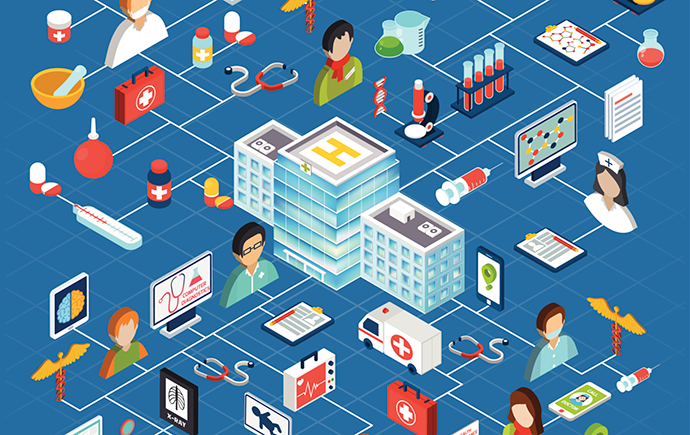
In its general sense, healthcare includes efforts made to maintain or restore a person’s well-being, usually by a trained and licensed medical professional. And because of today’s advancements in technology and research, part of the proper administration of healthcare to patients is healthcare fulfillment.
What Is Healthcare Fulfillment?
Healthcare fulfillment showcases healthcare’s ability to organize pharmaceutical and other medical orders from patients and healthcare providers through item inventory and medical supplies management and shipping.
For example, patients can order their medical supplies online instead of going to a medical branch with the help of a small warehouse or a third-party logistics (3PL) company. Software that administers patient orders can validate the data they receive by checking any recent prescription on file. They can also verify if the patient’s order is required per medical necessity. Furthermore, employees can observe the order’s status without checking a physical warehouse, saving more time.
The healthcare industry is said to be turning digital more quickly than ever before. It’s believed that the chain of major events in recent years has acted as a catalyst for technological transformations in the medical field. For instance, visits to healthcare facilities are transforming into virtual appointments, digital records are replacing paperwork, and others. Further, diagnoses and patient monitoring can now also be done remotely using artificial intelligence.
The mentioned developments are promising and meant to offer convenience, security, and efficiency for both patients and healthcare professionals. However, many regulations, reluctance by healthcare providers to embrace technology, and other factors have become stumbling blocks to the full realization of technological advancements in the healthcare sector.
Information technology (IT) has immensely benefitted the allied health industry, but it has also come with a myriad of challenges. Continue reading to learn more about the multiple hiccups healthcare stakeholders need to overcome.
Upgrading And Updating Data Storage System
Experts agree that the healthcare sector is one of the sectors that deal with large volumes of data daily. Besides, the data collected is supposed to be stored for many years.
It’s said that many healthcare providers are still dragging their feet regarding updating their data storage systems. Even with the advancement of technology, a large number of them are said to rely on outdated systems up to this day.
Embracing new technology isn’t easy, but keeping outdated ones will cost you in the long run. Outmoded technology can expose you to cyber-attacks and cause data loss. Moreover, installing new software on old hardware will cause compatibility issues and crashes.
Advanced equipment and technology, on the other hand, will provide you with advanced storage options, enable you to quickly gather and filter information, get real-time updates and reports, and avoid system overload while adhering to laws. Partnering with IT firms like a Dell authorized reseller can be the answer to your IT woes. They can put an end to your IT challenges by offering a fully integrated IT solution while supporting your digital transformation journey.
Complying With Information Regulations
Since the enactment of the Health Insurance Portability and Accountability Act (HIPAA), the healthcare sector has become heavily regulated. The regulations don’t only affect the healthcare providers but any other party acting on their behalf as far as patient health information (PHI) is concerned.
To enable compliance in the industry, it’ll require that all healthcare organizations have an in-house compliance and security officer conversant with HIPAA laws. Alas, this is a challenge for some organizations.
If your in-house IT department isn’t highly conversant with HIPAA laws, outsource managed IT services from a tech organization that’s an accepted expert with the healthcare industry’s regulations to ensure compliance. Doing so will enable your team to concentrate on providing services to patients while leaving the tech issues for the experts to handle.
Complicated Technology
Healthcare professionals already have their plates full and getting them to sit down and learn a new application will not be easy. Getting patients on board is even more difficult.
Even though technology improves efficiency, many medical computer software applications are believed to be difficult to use. They’ve got complicated interfaces, which become frustrating for healthcare professionals and patients. This makes healthcare professionals reluctant to adopt new ways of doing things and prefer the methods and systems currently in place more. Patients, on the other hand, avoid such systems by all means.
Working with software developers during the development and research stage can help them know the sentiments of stakeholders and users. They’ll, in turn, develop applications that are easy to use when performing familiar workflows, especially now that virtual consultations and remote medical access are becoming the norm.
An easy-to-use cloud-based technological system will enable better patient engagement. They’ll have a better user experience feeding in their details, making consultations and appointments, renewing their prescriptions, and performing other tasks.
Challenge In Interoperability
Securely and effectively sharing patients’ records digitally is one of the main challenges that the healthcare system is currently facing.
Patients’ medical information is distributed across multiple locations in different systems where the individual has received healthcare services and medical care. This makes it impossible to gather a patient’s medical history to give quality treatment because one healthcare provider can’t access a patient’s medical information from another system.
Moreover;
It’s said that there’s still a sizeable group of healthcare providers that use paper-based medical records and are reluctant to adopt advanced technological methods even with incentives;
Varying health laws also hinder the exchange of patient health information across states;
The regulations in place make it difficult for the healthcare sector to adopt technologies that enable data sharing; and
The high costs associated with setting up systems to integrate interoperability are also a deterrent.
Learning to use technological tools integrated into your system will work for your benefit, making work easier and your team more efficient. Uniform but strict security and privacy policies across states should be implemented to make sharing of information accessible. The same should be revised frequently in line with emerging technologies.
Conclusion
Despite the present industry hurdles, technology is and continues to shape the healthcare sector. It’d therefore be prudent to evaluate the multiple challenges present and their impact and deal with them according to priority while seeking possible solutions.
Technological advances in healthcare are saving countless patients and continuously improving the quality of life. Advances in medical tech have had a massive impact on virtually all the practices and processes in healthcare. Even though technology offers remarkable benefits to both patients and practitioners, it also comes with its share of risks. In this post, you will learn the benefits and risks associated with advances in medical technology.
Benefits of Advances in Medical Tech
As with other aspects, technological advances in medicine are rapidly changing things that were done manually in the healthcare industry. As such, developments in medical tech have been a game-changer in the industry. Here are some of the benefits of technological advances in the healthcare industry.
1. Digitization of Health Records
Although paper-based data collection is still in use to some extent, the industry is switching to electronic storage which simplifies the creation of medical history records. The old, paper-based system required medical practitioners to create and complete files for patients often resulting in a long wait time to collect and update data. Apart from the actual digitization of basic patient information, technicians and nurses can input patient data like test results, weight and vital signs into the digital system.
Thus, technology is making it easy to update patient data as time progresses. As well, technology is positively influencing the healthcare administrative side since it provides a way to schedule appointments, update patient records with diagnostic codes and submit medical claims. Medical tech is making it easier to evaluate patients and offer effective treatments.
Healthcare ransomware attacks have become more common in recent years, and in many cases, caused considerable damage. At least 148 U.S. healthcare organizations fell victim to a ransomware attack in 2021, the most attacked industry, according to a March 2022 HIPAA Journal report.
With increasing threats from overseas, growing cybercriminal organizations, and the COVID-19 pandemic, it’s no surprise a sharp rise in breaches and healthcare ransomware attacks has occurred across the healthcare ecosystem.
As the situation grows more volatile, it’s vital to understand why threats like breaches and healthcare ransomware attacks exist and ways ambulatory practices can work to reduce cybersecurity risks.
The Most Valuable Record
It’s not just because the patient health information (PHI) the record contains that makes it valuable to cybercriminals, but the other information that accompanies PHI, such as addresses, birth dates, social security numbers, and even more obscure data such as insurance policy numbers, all of which someone can use to impersonate patients and commit identity theft.
With this stolen information, a cybercriminal can more easily steal someone’s identity because they now know important information no one else does. It’s what makes health records so valuable — not always the record itself, but what can be done with the information.
The average healthcare industry breach is so expensive because of the costs of remediation, recovery legal actions, and regulatory fines. In 2021, the average cost of a healthcare breach was $9.23 million, up 29.5% from $7.13 million the previous year, according to IBM Cost of a Data Breach Report 2021.
Taking it a step further, by failing to keep patient records private, an ambulatory practice could face substantial penalties under HIPAA’s Privacy and Security Rules, cause potential harm to its reputation, and patient safety can be severely impacted. A hacker’s access to private patient data not only opens the door to steal information but they can possibly even alter the data — severely impacting patient health and outcomes.
Greenway Health launches the Greenway’s 21st Century Cures Academy to serve as a resource center for providers navigating the 21st Century Cures Act, its legal requirements, and its effects on the entire healthcare industry. Greenway’s 21st Century Cures Academy is a free resource available to anyone looking to learn more about the 21st Century Cures Act and its requirements.
The 21st Century Cures Act aims to improve the healthcare ecosystem and empower patients by requiring healthcare provider interoperability and patient data access for both patients and providers. The bipartisan legislation will require all healthcare providers, healthcare IT developers, and health information exchanges (HIEs) to be 21st Century Cures Act-compliant by Dec. 31, 2022.
“We consistently heard providers and industry leaders voice concerns and confusion surrounding the 21st Century Cures Act and its future requirements for compliance,” said Dr. Michael Blackman, Chief Medical Officer at Greenway Health. “We knew we needed to create the 21st Century Cures Academy as an educational series and resource center aimed to alleviate confusion, guide providers, and highlight the benefits this legislation will have on the entire healthcare system.”
Greenway’s 21st Century Cures Academy resource center provides easy-to-digest materials including checklists, quick guides, webinars, and other resources to assist healthcare providers in discovering the value the 21st Century Cures Act has to offer their practice.
Whether they are receiving care for a chronic condition or a more immediate disease, patients undergoing treatment are financially, mentally, emotionally and physically maxed out. As a result, healthcare payers must toe a delicate line when approaching their member engagement strategies. For something as significant as an individual’s health, it’s critical to provide tailored experiences that are contextually relevant and avoid inundating members with extraneous information. Above all, engagements must provide value if payers are aiming to establish lasting healthy habits and create members for life.
Engagement, as defined in this context, is the way in which brands intimately connect with their members; consistent engagement affords endless opportunities to establish valuable and meaningful relationships. Until now, transactional experiences – such as onboarding, appointment reminders and claims information – have been the primary focus of member engagements. However, if payers want to serve a more unified experience, they must demonstrate ongoing care and understanding of their specific patient needs through personal interactions served during pivotal moments in each unique healthcare journey.
In 2021, healthcare payer website portal usage fell to 32% while only 16% of U.S. adults with health insurance used their provider’s mobile app, according to research from Forrester. Mailchimp puts the average email open rate for healthcare at a bleak 22%. If meaningful engagements can improve sentiment, lower costs and drive member retention, it’s obvious why 57% of healthcare payer executives seek better service and engagement as one of their top three outcomes of digital transformation.
But if portals, apps and email marketing aren’t the answer – what is? Feeds are quickly becoming the medium and channel of choice for meaningful digital engagement. Intuitive, easy to use and designed with consumer habits in mind, feeds are familiar and comfortable for users as many have been exposed to their scrollable nature through social media platforms such as TikTok or LinkedIn. Feeds offer personalized content via tailored algorithms, value users’ scarce time and present low barriers to entry. By implementing feeds, healthcare payers can harness the positive benefits of an engaged patient population. Below are some of the advantages of engaged members for life:
The healthcare industry utilizes many technologies to offer a more streamlined service to its patients. Most healthcare providers have shifted to digital means in providing the much-needed medical assistance to whoever needs it. So, a failure in any system, no matter how small, can bring about many inefficiencies and unnecessary disturbances to the medical processes, including possible deaths. Due to the high risks surrounding IT in the healthcare industry, it’s advisable to outsource these services to experts in the IT industry. These services are often referred to as managed IT services.
As a healthcare facility manager, are you wondering whether to seek managed IT services? This article will help you make this decision by discussing the benefits of outsourcing your IT services. Read on for this insight!
When you hire one, you’ll benefit from:
Access To Quality Resources
Independently managing the IT aspect of your healthcare facility requires many resources. For instance, you must invest in technology to help your IT team fulfill their resources. You’ll also need to hire an in-house IT team. Initial acquisition of these resources isn’t always the issue. The issue arises with the scalability aspect of your facility. Once your operations increase, you have to acquire more tools.
In addition, developers are upgrading theirs for better efficiency. So, you might find it challenging to keep up with the changes, forcing you to utilize old technologies, which isn’t ideal. Scalability also means hiring more workers, which can be challenging if you don’t have the resources to accommodate them.
The healthcare industry plays an important role since it impacts people’s lives in various ways. As innovations continue to evolve, they have brought about significant changes in the quality of health services, particularly in delivering dependable and high-quality patient care.
Apart from advancements, the healthcare industry has faced many challenges. Most of these challenges result from regulatory or legislative mandates, security threats, and process changes brought about by new technology, to name a few.