By Keith C. Kosel, PhD, MHSA, MBA, vice president of enterprise relationships, PCCI.
Aligning groups that have very different backgrounds and agendas, for the good of the community, is no easy matter. Whether at the city, state, or federal level, governmental or civic entities are tasked with trying to build consensus among various stakeholder groups to affect an outcome that works for the constituents they represent. It is no different for those tasked with leading a Connected Community of Care (CCC).
The Role of Governance
The premise behind the CCC is that by bringing together healthcare providers, community-based social service organizations (CBOs), faith-based organizations, and various civic entities, a community can establish a network of care providers focused on addressing residents’ social and/or clinical needs. While the premise is straightforward, establishing the governance group and governance structure to set up and manage a CCC is anything but straightforward. Before we look at how we might bring entities with different missions and agendas to the table, let’s understand what we mean by a governance group and a governance structure, and why these are essential to form a successful CCC.
The nucleus of a CCC is its governance group? those organizations that have come together to establish the CCC and to form the rules by which it will operate (the governance structure). As most CCCs form from scratch, the governance group is typically made up of one or two organizations we refer to as Anchor Organizations. These are typically large, well-established, and highly respected organizations within the community.
They could include national social service organizations such as the United Way or Salvation Army, or they could be philanthropic funders, faith-based organizations or healthcare systems. What all these organizations have in common is a mission to improve the health and well-being of their community’s residents. As such they lie at the heart of the governance group (Figure 1).
Figure 1. Connected Communities of Care Including Governance Structure
In addition to the Anchor Organizations, the governance group typically consists of four to six additional Partner Organizations. These may be somewhat smaller CBOs (in scale and scope), but they all play a foundational community role in addressing resident’s social and/or clinical needs. Partner Organizations are well-known within the community and historically work closely with the Anchor Organizations. Partners could be regional food banks, housing assistance providers, crisis centers, mental health providers, local school districts, etc.? all defined by the fact they deliver essential social or clinical services within the community.
By Thomas Pace, vice president, global enterprise solutions, Blackberry Cylance.
Thomas Pace
Recently, hacking group Cozy Bear attempted to steal COVID-19 vaccine research from multiple organizations in Canada, the United States, and the United Kingdom. The hackers, reportedly under the employ of the Russian government, scanned targets for network vulnerabilities in an effort to infect them with network tracking and file exfiltration malware. This is not the first time research into the novel coronavirus has been a target and it is unlikely to be the last.
On some level, this news is unsurprising, as healthcare has always been an attractive target for cybercriminals.
Patient data is a valuable commodity on the black market, often containing everything one would need to know in order to commit various types of fraud. Access to critical systems can be a literal case of life and death, and these systems are often so interconnected that an attack may spread like wildfire. Finally, many healthcare agencies lack the time and resources to prioritize cybersecurity to the degree that they should.
Yet this is also a unique situation. We are currently in the midst of a global pandemic, a period of heightened sensitivity and unprecedented digitization. People in all industries are exhausted and anxious, a combination which makes them particularly susceptible to mistakes.
Moreover, vaccine research is a priority for governments across the world. Each seeks to lessen the virus’s impact on their citizenry and economy, with many employing state-sponsored actors to give themselves a leg up. Rank-and-file criminals, meanwhile, are also perfectly willing to exploit the situation for their own gain.
At all levels, phishing campaigns remain the number one attack vector. There’s no need to waste effort trying to break through an organization’s defenses if one can simply trick an employee into granting access. Agencies researching the COVID-19 vaccine are particularly susceptible to targeted phishing attacks due to the collaborative nature of their work.
By Richard Bailey, lead IT strategist, Atlantic.Net.
covered entity and a business associate. It is a HIPAA law created to ensure that all of the HIPAA compliance risks (administrative, physical, and technical) are identified, and a roadmap is designed to plan the fixes necessary to resolve the issues found.
The risk assessment was not part of the original Health Insurance Portability and Accountability Act of 1996. Instead, it was first introduced in the 2003 Privacy Rule and Security Rule amendments and was then further expanded upon in the Final Omnibus Rule of 2013.
HIPAA legislation defines a Covered Entity (CE) as anyone that handles PHI during day-to-day business operations. Most businesses working in the healthcare industry are considered Covered Entities.
The U.S. Department of Health and Human Services (HHS) officially defines a CE as; Healthcare Providers such as doctors, dentists, nursing homes, pharmacies, health insurance companies, HMOs, Medicare, Medicaid, and Clearinghouses.
A business associate is any third party business or organization that handles individually identifiable health data on behalf of a covered entity, and the risk assessment is often considered the starting point to achieve HIPAA compliance.
What is a risk assessment?
A risk assessment is commonly the first task undertaken when a covered entity and a business associate enter into Business Associate Agreement (BAA). Its purpose is to identify areas within the business that process, store, and transmit protected health information (PHI) that are in the scope of HIPAA compliance.
PHI is patient data that the law is meant to safeguard, such as data that can be used to identify an individual personally. Examples may include patient names, email addresses, social security numbers, insurance certificates, and so on.
Areas of risk are highlighted, and a roadmap is created for the CE to become HIPAA compliant. Most risk assessments follow the NIST cybersecurity framework, and the NIST schema is a straightforward but highly productive process. There are five essential parts of the NIST framework, and these are; Identify, Protect, Detect, Respond, and Recover. The OCR takes this further with the nine essential elements of Risk Analysis but either framework covers similar topics.
Q&A with Matt Fairhurst, CEO and co-founder, Skedulo.
Skedulo is a champion of the deskless workforce, providing a comprehensive productivity platform that improves the lives of the mobile worker. Operating heavily in the healthcare sphere, Skedulo works with home healthcare agencies and organizations including Solace Pediatrics, Eastseals, and New Jersey Respiratory Associates (NJRA). Matt Fairhurst is the co-founder and CEO of Skedulo. Matt’s background is in user experience and user interface design, and, from this, he has a passion for building great products. Here he discusses telehealth, technology innovation and the future of healthcare.
What’s been the experience of the practice or the health system with the technology, and how has its real-world application changed the way they practice or the business of care?
Telehealth is a positive development in the healthcare industry, one that, 20 years ago, people never thought would be possible. It allows patients to “visit” the doctor without having to leave their home via video chats, and it also enables caregivers to visit patients in their homes and still be able to complete the job efficiently.
Pre-pandemic, telehealth was often seen as a backup option for healthcare providers, for example if the patient lived elsewhere and was unable to come in for a physical appointment. Then once the pandemic hit, telehealth became the temporary default and was practiced out of necessity in order to limit potential contamination. Now, providers are beginning to think about how they want to incorporate telehealth into their regular model of care. Practicing telehealth is less expensive and allows more patients to be seen. While it won’t replace in-person care, it certainly will stick around once the pandemic passes and be incorporated into how healthcare systems practice their business of care.
Why were doctors and people reluctant to adopt telehealth prior to the pandemic?
The healthcare industry has always been resistant to adopting technology and interoperability, and that includes telehealth services. Many providers held on to the belief that virtual services were inadequate compared to in-person services. The silver-lining of COVID’s effect on healthcare is that it’s propelling the industry forward and forcing an openness to digital transformation. And technology — thanks to biometric devices and software innovation — is finally catching up to make telehealth a seamless and truly comparable option to certain in-person services.
Understanding the impact that Brexit can have on our way of life can seem very daunting at first, but when it comes down to the finer details such as the distribution of medication, there is a lot that could be about to change. In this article, we will be providing you with insight into how the pharmaceutical distribution process will be affected by Brexit.
Changes To International Regulations
When looking at the impact that Brexit can have on our lives in the UK at the end of this year can seem quite daunting at first. However, within the pharmaceutical sector, there is set to be the most amount of change. Not only are there changes to distribution itself, but there are also changes to international regulations that are set to revolutionize the distribution of medication and PPE between the UK and Europe. Though there has been nothing set in stone regarding these changes in regulation at this time, the end of the year could reveal a deal that has been made.
Trade of Pharmaceuticals with the EU
It is important to remember at this time that the UK has had a long history of trading with the EU for PPE and medication. Figures have shown that in 2016 alone the UK exported £24.9 billion in pharmaceutical goods. With Brexit however, this could be set to change as regulations and tariffs on trading goods could lead to a significant drop in the amount of revenue that the UK brings in every year.
Rural hospitals face unique challenges, as these organizations serve high-risk populations and struggle with limited funding. These hospitals play a crucial role in their communities, but many are facing an urgent financial dilemma that has been exacerbated by the pandemic.
In fact, nearly half of all rural providers were operating in the red even before COVID-19 struck. To keep their doors open and continue serving patients in their communities, rural hospitals need sustainable and affordable solutions to engage patients from the very start of their healthcare journey.
How has the COVID-19 pandemic impacted patients and providers in rural areas?
Although COVID-19 infection rates were initially much lower in rural areas, we’re seeing an uptick in cases. The last Red-Zone Report reflects more than half of the country’s rural counties have reached the Red-Zone level, meaning areas where the rate of new COVID-19 infections is 100 or more new cases per 100,000 residents. From September 27 through October 3, rural counties were responsible for 23.5% of all COVID-19-related deaths with rural cases comprising of 20.5% of all new U.S. infections.
Rural communities are thought to be at higher risk during the pandemic. Rural residents often travel long distances to reach hospitals, healthcare facilities, and physicians which limits access to critical care and testing. Rural occupations often require working closer than the recommended 6-foot distance and are considered critical businesses that don’t allow for remote work.
The infrastructure is also limited including the number of healthcare providers, hospital beds, ICU beds, ventilators, and test supplies, and internet access. Small retail pharmacies encounter supply delays as they are unable to compete with national chains. All of these factors can lead to the perfect storm in rural America, especially as the rural communities were already considered highly vulnerable before the pandemic.
A few decades ago, we never would have imagined a world that looks the way it does today, and that’s all due to technology. Technology has significantly transformed multiple areas in our lives, and it continues to impact different sectors every day.
Today, patients can benefit from state-of-the-art diagnostic tools, groundbreaking treatment, and a wide range of minimally-invasive medical procedures that are less painful and result in faster healing. These developments are just the tip of the iceberg as technology has radically revolutionized the healthcare industry and significantly enhanced its operational efficiency.
Hence, technology has impacted the healthcare industry massively. The following aspects further delineate its impact:
Q&A with Life Image president and CEO, Matthew Michela
Seventy-five percent of consumers are willing to share their health data with their preferred local healthcare institution, according to a recent survey. That is a significant increase from the approximately 53% surveyed pre-COVID-19 who were willing to share data to help a doctor provide better care.
The drastic shift to virtual care and a population focused on the dangers of COVID-19 spurred the acceleration and adoption of technology tools bringing healthcare to the Digital Age. And, as consumers become increasingly more active and engaged in managing risks to their health there is a notion that tools to access and manage their health data remain available in a post-COVID healthcare setting.
How can organizations adapt to the COVID-fueled consumer revolution and exceed patient expectations for healthcare?
Consumer-oriented healthcare technology remains significantly behind other types of services. Not because healthcare technology is inferior but because mature technology present everywhere in our lives isn’t applied to healthcare. The tools and patient portals available today fail to help consumers manage the logistics, payment, evaluation, and coordination of their care. Consider the way medical information is actually available to patients, and try not to be frustrated when you realize that getting rid of faxes and CDs in healthcare will be considered a major industry breakthrough.
Starting from this context, the digitization of healthcare, more specifically, putting healthcare data at patients’ fingertips through the app economy, is now understood by consumers as essential and recognition of its importance has been accelerated by COVID-19. Unfortunately, it took a pandemic to fully realize that giving patients control of their medical data improves interoperability and moves clinical information more quickly to where it is useful.
The pandemic also presented to healthcare organizations a direct need to manage patient records longitudinally. With many more consumers surprised and frustrated to learn that something so seemingly simple as medical records is so difficult to access and share. Patients are waiting for their service providers in earnest for a practical and bonafide digital experience to materialize. COVID-19 has been a catalyst to drive adoption of more comprehensive portals to store and share complex medical data and successful organizations will address these needs.
 Aligning groups that have very different backgrounds and agendas, for the good of the community, is no easy matter. Whether at the city, state, or federal level, governmental or civic entities are tasked with trying to build consensus among various stakeholder groups to affect an outcome that works for the constituents they represent. It is no different for those tasked with leading a Connected Community of Care (CCC).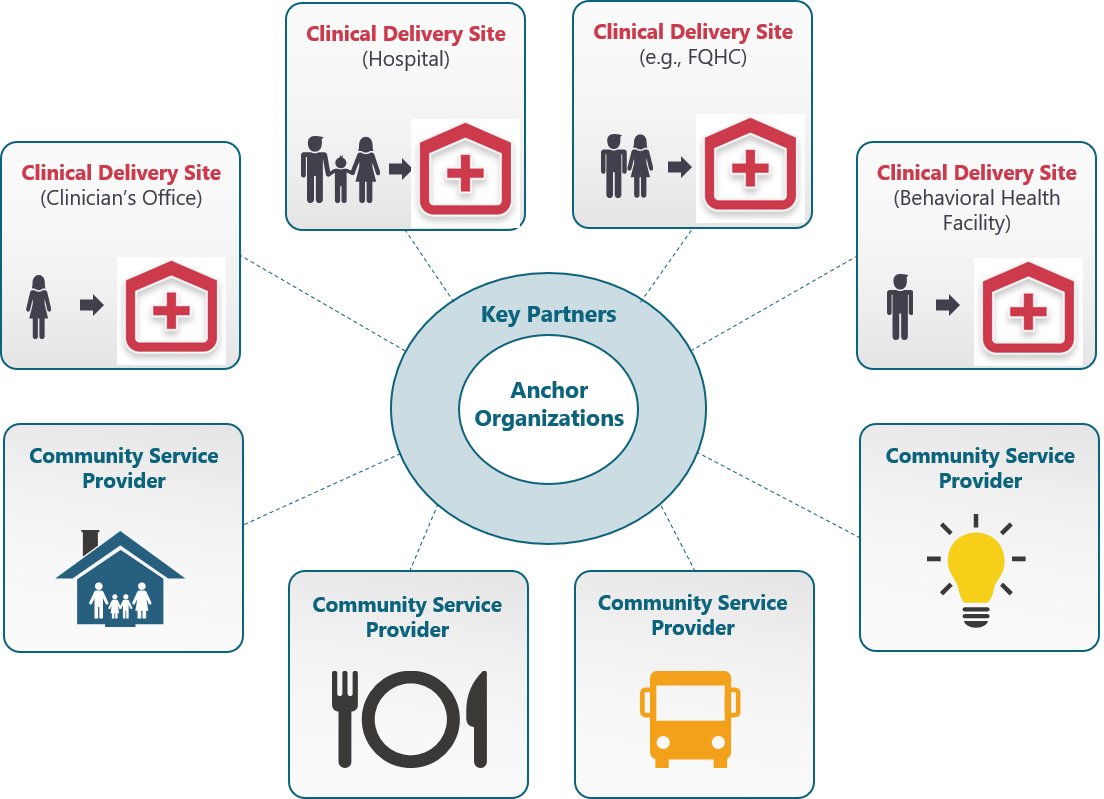

 Skedulo is a champion of the deskless workforce, providing a comprehensive productivity platform that improves the lives of the mobile worker. Operating heavily in the healthcare sphere, Skedulo works with home healthcare agencies and organizations including Solace Pediatrics, Eastseals, and New Jersey Respiratory Associates (NJRA). Matt Fairhurst is the co-founder and CEO of Skedulo. Matt’s background is in user experience and user interface design, and, from this, he has a passion for building great products. Here he discusses telehealth, technology innovation and the future of healthcare.
 Rural hospitals face unique challenges, as these organizations serve high-risk populations and struggle with limited funding. These hospitals play a crucial role in their communities, but many are facing an urgent financial dilemma that has been exacerbated by the pandemic.
 Seventy-five percent of consumers are willing to share their health data with their preferred local healthcare institution, according to a recent