High-demand healthcare providers have no good system in place to drive differentiating value at the time of patient scheduling. With an increase in demand and reduction of time, doctors need to be smarter about how they run their business. Some doctors need to prioritize based on completing a specific surgery. Others need to prioritize based on the greatest opportunity for high reimbursement. But through it all doctors need to maintain a full schedule and optimized revenue while keeping their patients happy and loyal.
Opargo focuses on delivering incremental value to healthcare providers through schedule optimization. Opargo’s patent pending solution takes into account healthcare insurance payment rates, office and procedure activities, historical practice demand and availability to calculate incremental value. This perishable inventory model is similar to how scheduling and payment has been managed for many years in the travel industry to optimize yield for airlines and hoteliers. The Opargo SaaS system seamlessly integrates with a practice’s existing calendar and revenue management systems to make it easy to install and manage.
Elevator pitch
Dr. Aaron Lloyd, co-Founder, president and chief medical officer
Opargo delivers incremental revenue to healthcare providers through schedule optimization. Opargo helps healthcare providers optimize the value of time.
Product/service description
Healthcare providers have previously used a “first come first serve” or “look and book” calendar approaches to schedule patients. This is also how airlines booked passengers in the past. However, as airlines started to incorporate revenue management principles at the time of booking, they saw significant increases in revenue and long-term corporate value.
Opargo is a patent-pending solution that integrates reimbursement rates, reimbursement timing, referral sources, visit types, historical demand and more to determine the value of each visit for healthcare providers. High-value visits are given prioritization to ensure patients don’t look for other providers, as wait times greater than two weeks cause patients to “shop around.” By ensuring high value patients don’t leave, healthcare providers have seen up to a 20 percent increase in annual revenue.
However, there are benefits to the patients of healthcare providers using Opargo, too. First, all patients are seen and no one is denied medical care due to type of insurance. Opargo ensures all patients are seen at the right time. Second, Opargo leverages its proprietary algorithm to ensure patients are seen by the most qualified provider. This helps patients get the most optimal care from the optimal provider as soon as possible.
Bookings made in Opargo’s cloud-based application are automatically passed into practice management systems to ensure all down-line processes remain in-tact. Currently, Opargo integrates with GE Centricity practice solution, Greenway PrimeSuite and AthenaHealth.
The objective of technology is to drive down cost and the commoditization of a product makes it cheaper. That said healthcare doesn’t necessarily need to be a hand-crafted masterpiece. Masterpieces are beautiful, but how many people can afford them? In healthcare, people need affordable processes, procedures and results that they can attain, afford and use to improve their lives.
These are the prevailing sentiments depicted in a new colorful, moving documentary film produced by Health Catalyst. The 29-minute film, “From the Heart: Healthcare Transformation from India to the Cayman Islands,” premiered at the Healthcare Analytics Summit in Salt Lake City late last summer.
The film tells the story of Dr. Devi Shetty of Bangalore, India, who describes his multi-year mission to deliver radically lower-cost heart surgeries to those who cannot afford them in India, allowing families to choose life rather than almost certain death because of the condition. Doing so allows parents to receive affordable care that empowers them to save their young children with heart defects rather than watching them die.
“A hundred years after the first heart surgery, less than 20 percent of the population can afford it. For 80 percent of the worlds’ population, if they ever require a heart operation, they’re going to die. This is unacceptable. Healthcare has to be available to everyone on this planet with dignity and that is what we are trying to do. And it’s going to happen, I’m convinced of that. It’s going to happen in our own lifetime,” said Dr. Devi Shetty, chairman and founder of Narayana Health.
Narayana’s average cardiac hospital to perform thousands of heart surgeries per year for less than $1,400 per case – about 2 percent of the average cost for heart surgery in the US.
“Henry Ford proved that the commoditization of a product makes it cheaper, makes it better and makes it more efficient,” said Dr. Shetty. “I strongly believe that we have to commoditize the delivery of healthcare, and that is the model that Health City represents for the world.”
Dr. Shetty, who was Mother Teresa’s personal physician, replicates his work in India and takes it to the Cayman Islands where the film takes viewers where this year Shetty, in collaboration with business and government leadership on the island, opened a similar, state-of-the-art hospital, Health City, at a fraction of the U.S. cost, producing better outcomes and higher patient safety.
Electronic health records uptake in the U.S. has accelerated dramatically as a result of government initiatives and the considerable resources – both capital and time – healthcare providers have invested over the past five years. Electronic health records have become the heart of health IT, and U.S. clinicians use them on a daily basis.
Frost & Sullivan’s newest health IT analysis, “EHR Usability—CIOs Weigh in On What’s Needed to Improve Information Retrieval,” finds that as the market matures and the volume of EHR data proliferates, ensuring reliable information retrieval from EHRs at the point-of-care will become a priority for healthcare providers.
In spite of significant progress in EHR adoption, the road is paved with pitfalls for many providers. Frequently highlighted customer pain points include:
Slow and inaccurate information retrieval from EHRs, as well as difficulty in finding and reviewing data, both of which result in productivity losses for clinician end-users as well as potential risks to patient safety.
Inability to create targeted queries or easily access unstructured data such as clinician notes.
Time-consuming data entry tasks.
“U.S. regulatory authorities will take notice of the growing chorus of complaints about EHR usability, resulting in a push to devote more resources to solving this issue,” saidFrost & Sullivan Connected Health Principal Analyst Nancy Fabozzi. “Further, the high levels of end-user frustration with usability present strong business opportunities for pioneering technology vendors.”
In a blog post “written” by Dr. Karen DeSalvo (in which she refers to herself in the third person) on ONC’s Health IT Buzz blog, the national coordinator for health IT announced that she’s actually not leaving her leadership roll there to become Acting Assistant Secretary of Health even though on October 23 it was announced she was doing so.
Walking back that announcement, DeSalvo announced that she’ll be maintaining her leadership role at ONC while also serving serve as Acting Assistant Secretary of Health to battle Ebola. According to “her” blog post, she will continue to work on high-level policy issues at ONC, and ONC will follow the policy direction that she has set. “She will remain the chair of the Health IT Policy Committee; she will continue to lead on the development and finalization of the Interoperability Roadmap; and she will remain involved in meaningful use policymaking. She will also continue to co-chair the HHS cross-departmental work on delivery system reform. “
Lisa Lewis will keep DeSalvo’s seat warm in the interim, providing day-to-day leadership at ONC. Lewis served as Acting Principal Deputy National Coordinator before Dr. DeSalvo joined ONC.
In addition, as has been noted in a number of other publications, the ONC announcement likely comes as a result of concern over an exodus of leadership at the organization. The post goes on to pat a few ONC employees on the back for their leadership skills and work.
MGMA announced that Debra J. Wiggs, FACMPE, founder and chief executive officer (CEO), Trinity Management Solutions, Bellingham, Wash., will serve as Board chair of MGMA. Wiggs has provided executive leadership in medical group management roles for private, public and hospital-based organizations in both rural and metropolitan settings. She served as vice president of physician services, St. Joseph Regional Medical Center, Lewiston, Idaho, from 2011 to 2014.
Stephen A. Dickens, JD, FACMPE, senior consultant of organizational dynamics, State Volunteer Mutual Insurance Co., Brentwood, Tenn., will continue to serve as immediate past chair and member of the MGMA Executive Committee. Mickey Smith, FACMPE, FACHE, FHFMA, chief executive officer, Oak Hill Hospital, Brooksville, Fla., will serve as MGMA Board vice chair. Ronald W. Holder Jr., MHA, FACMPE, vice president, medical specialties – Central Texas, Baylor Scott & White Health, Temple, Texas, will serve as the finance and audit chair of the MGMA Board of Directors. Jerard Jensen, MGMA interim president and CEO, will also serve on the MGMA Board of Directors.
New members appointed to the MGMA Board of Directors include:
• Yvette T. Doran, FACMPE, corporate director, Physician Operations Division II, Community Health Systems Professional Services Corporation, Franklin, Tenn.
• Todd Grages, FACMPE, FACHE, president, Methodist Physicians Clinic, Omaha, Neb.
• William R. Hambsh, CPA, CMPE, chief executive officer, North Florida Women’s Care, Tallahassee
The Certification Commission for Health Information Technology (CCHIT) announced that it is winding down all operations beginning immediately. All customers and business colleagues have been notified, CCHIT staff is assisting in transitions, and all work will be ended by Nov. 14, 2014.
Founded in 2004, CCHIT provided certification services for health IT products and education for healthcare providers and IT developers. Five years prior to the passage of the HITECH Act which enabled today’s Office of the National Coordinator certification programs, CCHIT worked in public-private collaboration to pioneer the design, development and implementation of health IT testing and certification programs.
“We are concluding our operations with pride in what has been accomplished”, said Alisa Ray, CCHIT executive director in a statement. “For the past decade CCHIT has been the leader in certification services, supported by our loyal volunteers, the contribution of our boards of trustees and commissioners, and our dedicated staff. We have worked effectively in the private and public sectors to advance our mission of accelerating the adoption of robust, interoperable health information technology. We have served hundreds of health IT developers and provided valuable education to our healthcare provider stakeholders.”
“Though CCHIT attained self-sustainability as a private independent certification body and continued to thrive as an authorized ONC testing and certification body, the slowing of the pace of ONC 2014 Edition certification and the unreliable timing of future federal health IT program requirements made program and business planning for new services uncertain. CCHIT’s trustees decided that, in the current environment, operations should be carefully brought to a close”, said Ray.
As a 503 c(3) nonprofit organization, CCHIT’s trustees decided to donate its remaining assets, primarily its intellectual property, to the HIMSS Foundation.
HIMSS Analytics releases its latest Essentials Brief. The 2014 Patient Portal Study is the first in the HIMSS Analytics series of Essentials Briefs to focus on patient engagement.
In addition to voice of customer (VOC) insight from healthcare IT executives across the country, the 2014 Patient Portal Study incorporates data from the HIMSS Analytics Database to provide a comprehensive view of the market as it pertains to this technology. Topics in the brief include market utilization, vendor market share and trajectory, as well as the relationship between meaningful use Stage 2 and patient engagement.
“Patient engagement is more than just today’s hot topic – it is foundational to the future of healthcare,” said HIMSS Analytics Research Director, Brendan FitzGerald. “The patient portal study is the first in our series of Briefs dedicated to patient engagement, and we wanted to go beyond the statistics and delve into the executive mindset.”
Key findings of the study:
• Show patient portals typically come from the EHR vendor currently used by the organization
• Indicate room for improvement, as IT executives did not display a high level of passion for their organization’s current solution
• Highlight cultural issues within organizations as a major challenge to overall patient engagement initiatives
HIMSS Analytics Essentials Briefs are complimentary for hospitals and health systems, and are available for a fee to all other interested parties. To request a copy, please email consulting@himssanalytics.org from your employer’s email domain.
HIMSS Analytics collects, analyzes and distributes essential health IT data related to products, costs, metrics, trends and purchase decisions, delivering it to healthcare delivery organizations, IT companies, governmental entities, financial, pharmaceutical and consulting companies.
Organizations deemed “better-performing medical practices” by the MGMA Performance and Practices of Successful Medical Groups: 2014 Report Based on 2013 Data excelled in four performance-management categories: profitability and cost management; productivity, capacity and staffing; accounts receivable and collections; and patient satisfaction. The practices designated as better performers in these areas were culled from 2,518 respondents to the MGMA 2014 Cost Survey.
Profitability and cost management
In this category, better-performing multispecialty practices reported a lower total operating cost as a percent of total medical revenue than other groups (55.91 percent compared to 70.42 percent).
“Medical practices that actively monitor their operating costs and use benchmarking data and tools to assess their performance are positioned for long-term success and sustainability,” said Todd Evenson, MGMA vice president of data solutions and consulting services.
Accounts receivable and collections
Medical groups designated as better performing reported collecting receivables more quickly than their peers. Better-performing multispecialty practices indicated that only 8.05 percent of their total accounts receivable (A/R) was in the 120-plus day category.
Evenson asserts that “this metric is a strong indicator of healthy financial management, and better-performing medical practices have the right procedures and processes in place to do this efficiently.”
Productivity, capacity and staffing
Better-performing medical practices in this area implemented operational efficiencies to ensure strong provider productivity, including employing non-physician providers such as physician assistants, nurse practitioners and certified nurse anesthetists, as well as ensuring efficient patient flow throughout the practice. For instance, better-performing multispecialty practices indicated that they leverage work from clinical support staff at a higher ratio, a reported 6.33 clinical support staff per full-time-equivalent (FTE) physician versus 4.31 in other groups.


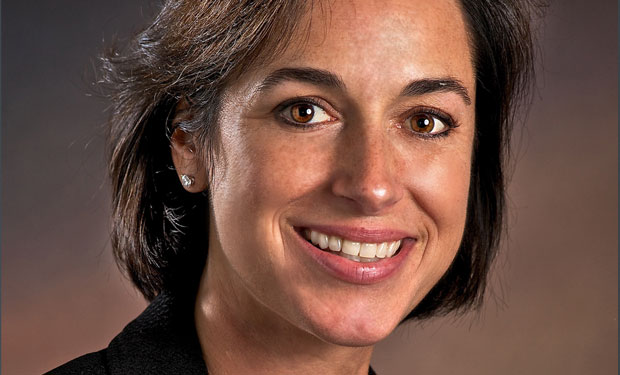
 MGMA announced that Debra J. Wiggs,
  HIMSS Analytics releases its latest Essentials Brief. The 2014 Patient Portal Study is the first in the HIMSS Analytics series of Essentials Briefs to focus on patient engagement.