The Affordable Care Act supports healthcare providers in reducing costs and improving efficiency while delivering quality care. Accountable care organizations (ACOs) achieve these goals by enabling physicians, hospitals and other healthcare providers to create networks and share responsibility to deliver care to Medicare and other patients.
At the heart of the ACO model are three core principles:
ACOs are provider-led organizations with a strong primary care base, and collective responsibility for quality and per capita costs.
ACO payments are linked to improvements in quality that also reduce costs.
Performance measures that support improvement are sophisticated and reliable, and demonstrate that savings are achieved through improvements in care.
Joining an ACO is voluntary, but the federal government encourages participation to reduce unnecessary or duplicated services, prevent errors and keep patients healthier. When providers successfully coordinate services to meet a long list of quality measures, they become eligible for bonuses.
The Current Environmment
Medicare offers several ACO programs, including the Medicare Shared Savings Program, the Advance Payment ACO Model and the Pioneer ACO Model, but many other public and private models exist. Some are sponsored by physicians groups, while nonprofit organizations, hospital systems and health insurers sponsor others. The Pioneer Model was designed for early adopters of coordinated care, and is no longer accepting new members.
To date, more than 600 public and private ACOs have formed; in 2012, the first year of the program, they generated $87.6 million in gross savings. Government support is spurring considerable growth, and ACOs could well become the dominant model in healthcare.
Guest post by Anil Jain, MD, FACP, senior vice president and chief medical officer, Explorys, and consulting staff, Department of Internal Medicine, Cleveland Clinic.
Despite advances in medical education, the proliferation of medical journals and the speed of light retrieval of information on the Internet, the lag time between when researchers identify life-saving clinical interventions and when they are put into practice ranges from 10 to 25 years, averaging 17 years. This lag time between the discovery at the “bench” and its practice at the “bedside” is even more startling when you consider the impact of care at the “bedside” to the “bottom-line.” This “bottom-line” has become increasingly important with the formation of accountable care organizations (ACOs) that aim to reward provider organizations and payers that meet the “triple-aim”: high-quality care for the population, high-quality care for the patient, at the most affordable cost. Unfortunately, current practices at the “bedside” reportedly generate approximately $700 billion in care that isn’t necessary and may even be potentially harmful to the “bottom-line.” Moreover, despite healthcare expenditures of 17 percent of our GDP, the U.S. lags behind most industrial nations when looking at composite measures of healthcare quality.
With the increasing use of health information technology and data we should be able to shorten the time between “bench” to “bedside” and improve the “bottom line.”
Big Data
“Big data” is data that is of high volume, variety and of sufficient velocity that is not amenable to traditional data storage and analysis tools. This “big data” is most typically generated from health systems’ electronic health records (EHRs), laboratory, radiology, financial and billing systems, personal health records, biometrics and smart devices. In addition, patients today are oftentimes utilizing various mobile health and wellness apps and wearable devices which also collect a plethora of data, which only adds to the complexity.
The Bench
The aggregation of de-identified medical information across millions of health records from varying venues of care facilitating a longitudinal view of a person can be incredibly beneficial for researchers focused on net new knowledge discovery. For data from disparate health systems to be aggregated, it is vital that it is standardized and that subjects across health systems can be matched. This harmonization of disparate data coupled with the appropriate analytics software is critical to identify patterns in the data.
In this setting, the larger the data set, the more likely that a signal can be detected through the noise, even in the rarest of conditions. Fortunately, many hypotheses can be conceived and tested through appropriate analytics within this real-world data set in a much more cost-effective manner than conducting full-scale clinical trials. Furthermore, if a signal is detected or a pattern is found, researchers can then design a more focused explanatory or pragmatic clinical trial to prospectively test the hypotheses. For example, over the past few years within the Explorys network, more than a dozen peer-reviewed abstracts and publications have been generated by leveraging a de-identified data set comprised of nearly 48 million subjects, searchable by a specialized browser-based analysis and query application.
instaRounds provides the most comprehensive mobile and web platform for physicians to communicate with one another, share call schedules, follow their appointments, allow cross coverage and, for the first time ever, give physicians a mobile patient sign-out application.
Elevator pitch
Imagine a platform in which physicians can communicate in a Twitter-like feed with one another about those patients currently under their care. By real-time updates, critical decision making and care planning can occur seamlessly with the patient benefiting the most.
Product/service description
instaRounds is a mobile and web platform that enables physicians to securely communicate with one another in a patients’ care team, by use of a patent-pending format that allows simple-to-use template interfaces that provides seamless patient sign out. Studies have shown that the most critical time in patient care is during the handoff of the patients from one provider to another; instaRounds nearly eliminates errors in sign out.
Providers can use either a web interface or the more popular mobile app, available on iTunes and Google Play, to communicate with members of their team.
Founder’s story
instaRounds was founded by Kurian Thott, MD, a gynecologic surgeon who felt the void in patient care when it was almost impossible for members in his own practice to communicate securely and HIPAA compliantly. He figured there had to be a better way and when he found none, he created instaRounds. Built on the idea that for patient care to be better, physicians needed to communicate with one another, and instaRounds gives physicians this power.
Dr. Cliff Bleustein, chief medical officer and head of Dell’s global healthcare consulting services, leads an integrated team of clinical, business, and technical professionals who provide expertise to health systems, hospitals, physician practices, health plans and life sciences organizations. Here he discusses Dell’s healthcare vision; improving patient engagement and how he defines the term; data security; and trends that he thinks will be worth tracking in the near term — here’s a hint: smartphones, yes; wearables, no.
In your new role as chief medical officer and global head of healthcare consulting at Dell Services, what are your responsibilities?
As chief medical officer, I play a key role in Dell Services’ healthcare division supporting our aggressive strategic initiative to revolutionize the way healthcare is managed. I spend a lot time listening to customers and helping them to better manage patient-specific data that spans the entire continuum of care. Ultimately, better information and technology will drive improvements in quality, patient safety, efficiency and outcomes. I help shape our strategy and ensure that it meets the needs of our customers, both now and in the future.
Tell me about your background in healthcare and how you came to be passionate about the space.
Ever since I was a child, I knew that I wanted to be a physician. Originally I was fascinated with the ability of body builders to be able to grow muscle to such huge proportions and lift weights several times greater than their mass. As my career developed, I focused on how treatments and diagnostics could move from the lab to the bedside. During training and private practice, I became more involved in understanding how systems work and function and what drives them. I was fortunate enough in my career to work internationally, as well. This gives a much broader view about how healthcare can be improved on a larger scale. I am driven by a desire to continue to disrupt the market with new technologies and solutions that can have a meaningful impact on improving health at scale.
What is Dell’s background in healthcare IT and why does the company put an emphasis on this sector (other than for obvious financial reasons)?
People are often surprised to learn that Dell has more than 20 years of experience in serving healthcare customers. That, combined with our deep bench of clinical and technical experts, is why Gartner has ranked Dell number one among healthcare IT service providers for four years running. But it goes beyond that; it’s also personal. Michael Dell is keenly interested in exploring how technology can improve healthcare systems around the globe. And we have thousands of employees who get up every day and focus solely on the needs of our healthcare customers. With an aging population and the impact of chronic diseases, such as heart disease and diabetes, we must find ways to reduce cost, improve productivity and improve health outcomes. Technology has a huge role to play. We also know we can’t do it alone, and for that reason we work with and partner with some of the leading companies in the industry.
What solutions does Dell offer and how do they set the company apart from competing vendors?
What sets Dell apart is our holistic approach. It’s not enough to just add technology. It’s also about connecting people to the right technology and integrating that technology into their workflows. Processes need to be re-examined and, in many cases, re-engineered. So, in addition to the traditional IT products and services Dell is known for, we also offer a robust suite of solutions and services that are specially designed for healthcare. These include secure cloud solutions such as our Unified Clinical Archive, EHR implementation, mobile clinical computing, sophisticated analytics tools, social media integration, HIX and HIE services and support, and clinical transformation. We also have a strong focus on the life sciences, with a genomics analysis platform that supports clinical trials investigating personalized treatments for cancer.
Guest post by Tom Giannulli, MS, MD, chief medical information officer, Kareo.
It seems like everywhere you look there is a new piece of wearable technology to help people monitor their health and lifestyle. The latest and greatest, of course, is the Apple Watch, which hit the newswire with a bang last month.
There is no doubt that mobile health apps and wearable technology and devices are big business. Both patients and clinicians are using mHealth apps on their smartphones and other devices. There are tens of thousands of these apps, and the Robert Wood Johnson Foundation says this number will grow by 25 percent a year. Their research also shows that by 2018 1.7 billion people worldwide will download a health app.
Despite what the media may say, the fact is most people aren’t using these apps and devices yet according to a new study from Technology Advice. Their research found that nearly 75 percent of adults do not track their weight, diet, or exercise using a fitness tracking device or app and most cited reason was general lack of interest.
However, one interesting thing to note is that more than half said they would be more likely to use a health tracking app or device if there was a possibility of lowering their insurance premiums. Just over 40 percent said better advice from their healthcare provider would be a possible incentive to use a fitness tracker.
Guest post by Allison Errickson, CPC-H, director of coding compliance, ProVation Medical, with Wolters Kluwer Health.
Never before have effective revenue cycle management strategies been so critical to future positioning in hospitals and health networks. In today’s lean environment of declining and unpredictable reimbursement, effective oversight of timely billing practices can simply be a make or break element to success.
Because the revenue cycle is dependent on the time-to-bill for procedures and diagnostic care, healthcare organizations must enact processes to support the most efficient coding practices to speed receipt of payment. Success in this area remains an obstacle for many organizations struggling with how to allocate limited resources to ensure the most accurate coding and efficient turn-around.
Denials plague the industry in terms of maintaining consistent cash flow. Inaccurate or incomplete documentation can impact as much as 5 percent of revenues if a healthcare organization is experiencing denial rates of 25 percent or more. Revenue is also negatively impacted when documentation does not support the highest level of acuity, minimizing reimbursement potential.
While accurate documentation remains an ongoing issue, resource allocation to effectively address the issue will likely be further impacted with the introduction of ICD-10. The industry has been granted a reprieve with the recent deadline extension of Oct. 1, 2015, but the reality of the transition will be coming into focus very soon. Coding challenges will be exacerbated as coders will now have 72,000 unique procedure codes to choose from, increasing the complexities associated with specificity and accurately coding to the highest level of reimbursement.
As part of its ongoing effort to increase transparency and accountability in healthcare, the Centers for Medicare & Medicaid Services (CMS) released today the first round of Open Payments data to help consumers understand the financial relationships between the healthcare industry, and physicians and teaching hospitals.
This release is part of the Open Payments program, created by the Affordable Care Act, and lists consulting fees, research grants, travel reimbursements and other gifts the health care industry, such as medical device manufacturers and pharmaceutical companies – provided to physicians and teaching hospitals during the last five months of 2013. The data contains 4.4 million payments valued at nearly $3.5 billion attributable to 546,000 individual physicians and almost 1,360 teaching hospitals. Future reports will be published annually and will include a full 12 months of payment data, beginning in June 2015.
“CMS is committed to transparency and this is an opportunity for the public to learn about the relationships among health care providers, and pharmaceutical and device companies,” CMS Administrator Marilyn Tavenner said. “This initial public posting of data is only the first phase of the Open Payments program. In coming weeks, we will be adding additional data and tools that will give consumers, researchers, and others a detailed look into this industry and its financial arrangements.”
Financial ties among medical manufacturers’ payments and health care providers do not necessarily signal wrongdoing. Given the importance of discouraging inappropriate relationships without harming beneficial ones, CMS is working closely with stakeholders to better understand the current scope of the interactions among physicians, teaching hospitals, and industry manufacturers. CMS encourages patients to discuss these relationships with their healthcare providers.
BD (NYSE: BDX) and CareFusion (NYSE: CFN) announced today a definitive agreement under which BD will acquire CareFusion for $58.00 per share in cash and stock, or a total of $12.2 billion, to create a global leader in medication management and patient safety solutions. The agreement has been unanimously approved by the Boards of both companies.
The combination of the two companies’ complementary product portfolios will offer integrated medication management solutions and smart devices, from drug preparation in the pharmacy, to dispensing on the hospital floor, administration to the patient, and subsequent monitoring. The combination will improve the quality of patient care and reduce healthcare costs by addressing unmet needs in hospitals, hospital pharmacies and alternate sites of care to increase efficiencies, reduce medication administration errors and improve patient and healthcare worker safety. In addition, the Company will have solid positions in patient safety to maximize outcomes in infection prevention, respiratory care, and acute care procedural effectiveness.
Under the terms of the transaction, CareFusion shareholders will receive $49.00 in cash and 0.0777 of a share of BD for each share of CareFusion, or a total of $58.00 per CareFusion share based on BD’s closing price as of October 3, 2014. The transaction is subject to regulatory and CareFusion shareholder approvals and customary closing conditions, and is expected to close in the first half of calendar year 2015. Upon closing, BD shareholders will own approximately 92 percent of the combined company and CareFusion shareholders will own approximately 8 percent.


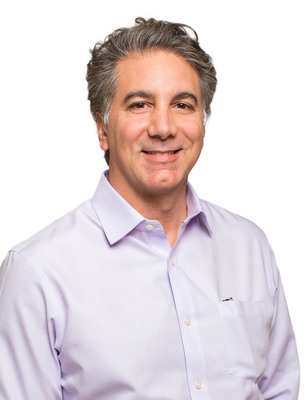 Guest post by Tom Giannulli, MS, MD, chief medical information officer,
 BD (NYSE: BDX) and CareFusion (NYSE: CFN) announced today a definitive agreement under which BD will acquire CareFusion for $58.00 per share in cash and stock, or a total of $12.2 billion, to create a global leader in medication management and patient safety solutions. The agreement has been unanimously approved by the Boards of both companies.