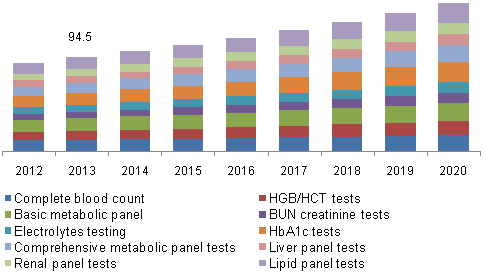
With the global clinical laboratory market slated to grow at an estimated CAGR of 6.8 percent between 2014 and 2020, the importance of clinical testing cannot be underestimated. The development of advanced lab testing techniques is expected to drive the market to a record high of USD 148.8 billion by 2020, making dynamic imaging experiments – the backbone of life science research – a focal point of 21st century R&D.
Dynamic imaging is a central component of lab testing, galvanizing a world of minute cell-level detail into actionable insights. However, for the average life scientist, the need to make hard trade-offs between price, focus and data management can limit the nature and kind of testing that can be done, and hence, the results that are reaped. Whether the research is on something as common as the place of springtime allergies in pediatrics, or as fresh as the role of epigenetic tags in inheritance, life scientists need a camera system that allows them access to minute data, sensitive performance and excellent data management and interpretation. Two imaging options available to them are Charged-Coupled Device (CCD) and scientific Complementary Metal–Oxide–Semiconductor (sCMOS) cameras. But which scientific-grade camera system works in which situation?
CCD vs. sCMOS – Choosing the correct scientific-grade camera
CCD and CMOS technologies both originated in the late 60s – early 70s, each designed to perform the same basic function: capturing, gathering and converting light to produce electronic signals. CCDC cameras dominated the scientific imaging market from the start, as first-generation sCMOS sensors struggled to fabricate quality data. Recent enhancements in sensor design, however, have closed the gap between CCD and sCMOS, allowing the latter to gain ground in life science circles.
Everybody knows that the US healthcare system is in trouble. Issues ranging from cost, to quality and access of care are rampant and only getting worse. On a macro level The Affordable Care Act (ACA) has solved some of the previous access issues, but has added tremendous cost within the system, and at the same time it has not solved the quality issues that exists.
Research suggests that the cost situation is becoming increasingly worse, which is causing firms to scramble for viability. Waves of cost cutting efforts have led payers and providers to capture some, but not nearly enough of the costs necessary for long-term survival.
There are two main cost challenges that both healthcare payers and providers share:
Wildly inefficient operating models and processes. The Harvard School of Public Health projects that of the $2.8 trillion the US spends on healthcare each year, 30 percent or $840 billion may be wasted. For organizations that function on small operating margins, this alone represents the boundary between success and failure.
Large stranded infrastructure and costs combined with declining revenues – The ratio of hospital expense vs. revenue has increased from just under 15 percent in 2011 to nearly 30 percent in 2014 with 25 percent of hospitals reporting an operating loss. For nearly 49 million enrollees in Medicare, hospitals receive only 88 cents for every dollar with lower reimbursement rates predicted in the future.
These pressures have led organizations to make hasty decisions about how to fundamentally solve the problem. Merger and acquisition activity among both payers and providers is at an all-time high, and the ACA appears to have been the catalyst for this M&A activity. Since its enactment, hospitals started merging with competitors at unprecedented rates. In 2009, pre-ACA, there were 52 announced transactions involving 80 hospitals. That number more than doubled by 2012, with 107 announced transactions involving 244 hospitals. The M&A frenzy among healthcare payers has also increased with Anthem’s announcement to acquire Cigna, and Aetna’s acquisition of Humana. Both of these were announced last year and are two of the largest payer M&A deals in history.
Guest post by Drew Ivan, director of business technology, Orion Health.
Drew Ivan
With such an enormous cross-section of the healthcare industry in attendance, the HIMSS Conference and Exhibition represents a comprehensive snapshot of the state of the healthcare industry and a perfect trendspotting opportunity. Here’s a preview of what I expect will be this year’s conference highlights.
Care coordination and population health and process improvement, workflow and change management are tied for the most popular category, with 29 educational sessions focused on each.
Representing 22 percent of the total number of sessions, this is clearly a focus area for the year’s conference, and it’s easy to see why. Changes in healthcare payment models are now well underway, and they are impacting payer and provider operations where healthcare is delivered, managed and documented.
Providers and payers alike are seeking information about how best to operationalize business processes and provide high quality care under new payment models, but it may be even more interesting to visit the Exhibition Hall to see what innovations vendors are bringing to the market to meet these needs.
Another topic related to changes in healthcare delivery is clinical informatics and clinician engagement, which is all about how new technologies, such as big data and precision medicine, can impact care decisions. The ability to make data-driven clinical decisions is one of the many dividends of widely adopted electronic health records. This is likely to be an important area for many years to come.
With 100 million medical records hacked last year, privacy and security is a hot topic at this year’s conference. The number of educational sessions in this category nearly doubled from 13 last year to 25 this year.
While preventing unauthorized access to records is the top priority, security will be a simpler problem to solve than privacy. As more sources of clinical data go from paper to electronic systems and more types of users have legitimate access to patient data, the problem of providing appropriate, fine-grained access in accordance with patient preferences, clinical settings and laws that differ across jurisdictions becomes very difficult to untangle.
Privacy and security concerns will need to be addressed with a combination of open standards and vendor products that implement them. Technologies from other industries, like banking, are likely to start making their way into healthcare.
This year, health information exchange (HIE) and interoperability educational sessions are combined into a single category, reflecting the fact that interoperability within a single institution is, at this point, more or less a solved problem. The next frontier is to enable interoperability across institutions to support improved transitions of care.
HIEs have a role to play when it comes to moving data between organizations; however, many HIEs are struggling or disappearing because of sustainability challenges. This year’s conference will provide an opportunity to learn best practices from the most successful HIEs. It will also be interesting to see what strategies HIE vendors will pursue as their customer base consolidates. In the Orion Health booth alone, we will have executives from HIEs talking about these same issues.
Guest post by Lauran Hazan, director of healthcare analytics, STANLEY Healthcare.
Across nearly every industry, Lean process improvement and analytics have radically changed the way that businesses operate. Now, with the advent of big data and accompanying business insights, we’ve moved beyond troubleshooting problems to data-driven design and predictive analytics. The impact of these processes and technologies is felt at every level of the manufacturing supply chain. What happens when all of these innovations hit healthcare?
We’re already seeing many of them in action in hospitals across the world, which are now able to analyze the movement of patients, clinicians and equipment, thanks to RTLS and RFID – among the first Internet of Things (IoT) technologies. The central value proposition of IoT analytics and data visualizations in healthcare is that by providing clinicians and other users with actionable insight into their everyday processes, they will be empowered to understand and modify their behavior, and improve efficiency and the patient experience.
We know this technology works – revealing inefficient workflows, missing or insufficient levels of equipment, patients who have been waiting too long, and more. But acting on these insights to generate change requires more than technology. It needs visionary leadership to create cultural change, grounded in objective data and the real-time feedback it provides.
It’s no easy feat, and we’ve seen industrial engineers working to create change in healthcare for years. What’s different now is the data, which moves us beyond gut instinct or individual experience. Analytics in healthcare – based on objective and comprehensive IoT data – supports a constructive conversation about change, and can be used by staff at all levels to study the impact of an experimental process improvement. Hospitals can enable highly skilled workers to lead from within, rather than managing them top-down. They can leverage the experience and scientific mindset of clinical staff to identify new areas for growth, experiment to improve, measure success and continue to innovate with each new win.
That last point is perhaps the most important. For us to truly change healthcare, hospitals must develop a continuous cycle of improvement. This is what it means to be a Lean hospital in today’s data-empowered industry. Once the organization changes a practice or habit, it can study the impact of that change and then uncover other opportunities to improve further. The next set of practice changes may involve different measurements and metrics as the process of discovery continues.
Today’s medical devices feature the most cutting-edge technology and sensors to improve patient health, from Fitbits that track heart rate during exercise to devices that can test and display blood glucose levels on a smartphone. Healthcare professionals have also welcomed the use of smart devices and tablets to enhance hospital or clinic visits, lower costs and reduce medical errors.
The demand for health informaticists grows substantially with every government push to adopt technology and ease the switch from paperwork to electronic health records (EHR) systems. To ensure the next generation of health informaticists are learning the skills needed to adapt as technology advances, many universities are offering a health informatics degree program that emphasizes hands-on learning in health IT, data analysis and the healthcare system.
Here’s a look at what a formal education in health informatics looks like today, and what in-demand skills employers can expect from health informaticists down the road:
Health Care System Analysis and Assessment Outcomes
Improvements to the healthcare system begins with a thorough understanding of what the current system lacks. Today’s health informatics courses allow students to examine healthcare needs and analyze the supply and distribution of health professionals and facilities. These courses also explore current industry pain points, particularly care costs, how to assess care quality, and the financial models of care used in both private health insurance systems and government programs.
Health informatics students are also familiarized with methods for determining quality of care and the economic impacts of health care models. Courses examine the outcomes and value added from the view of patients and providers, with a focus on determining standards for setting organizational policy.
Health Care History and Implementation of EHR Systems
To understand the role that health informatics plays in improving the healthcare system, students also cover the history of the U.S. healthcare system. By exploring current trends in electronic health records – including social, ethical, economic and cultural impacts of choices – students will be prepared to identify what improvements can be made to EHR systems later in their careers as health informaticists.
Guest post by Carl Wright, general manager, TrapX Security.
Carl Wright
In August 2015, my colleague Moshe Ben Simon contributed an Electronic Health Reporter story about how hospitals can protect against data breach using deception technologies. Since then, TrapX Labs, the research and development group within TrapX Security, has seen substantial evidence that cyber attackers have continued their attacks on healthcare targets. The number of attacks, quantity of data stolen and the sophisticated human attackers that TrapX Labs continues to track are increasing quarterly. Out of the top seven data breaches of 2015, three of them (Excellus BlueCross BlueShield, Premera Blue Cross and Anthem) lost more than 100 million records combined.
On Jan. 4, 2016, the Identify Theft Resource Center (ITRC) reported that 66.7 percent of all records breached came from the healthcare industry. Healthcare continues to be targeted because of the high value of the data and the vulnerabilities healthcare institutions are susceptible to, such as the medical device hijack (MEDJACK). More information on MEDJACK can be found here.
The convergence of this healthcare cyberwar with incomplete HIPAA compliance creates a double jeopardy situation for healthcare professionals. Not only must healthcare institutions deal with the damage inflicted by a cyber attacker and then manage the data breach penalties, but they also face investigation and additional penalties from HHS. Hospitals, accountable care organization (ACO) networks, large physician practices, health insurance companies, diagnostic laboratories, radiology/skilled nursing facilities, surgical centers and others are high value targets for attackers and all face these risks.
Training is Essential
New strategies to prevent healthcare data breaches have evolved in many areas. Regular training for both clinicians and non-clinicians can have a positive impact on reducing successful attacks.
Clinicians and non-clinicians need to recognize that their “connected” healthcare environment needs to be tightly controlled. IBM’s “2014 Cyber Security Intelligence Index” noted that 95 percent of all security incidents seem to involve human error. Even a MEDJACK usually starts with an email or website based attack. Assuming a healthcare organization’s network perimeter and internal defenses are properly configured and updated, the next step a healthcare organization should take to substantially reduce its risk is implement a rigorous employee training program.
The first component of training comes during orientation. New employees typically receive passwords and authentication information from information technology (IT), the help desk and supervisors in their area, and it’s imperative they manage them in a safe manner (no yellow sticky notes, please).
Over the past few years, healthcare technology has seen many advances. We’ve achieved mass-market adoption of EHRs, many organizations are making meaningful progress on data aggregation and warehousing information from multiple diverse systems, and wearables and other sensors show much potential to unlock personal information about each patient. The pace of change in healthcare is quickening, with each new technology or initiative sending off a chain of reactions across the entire ecosystem, ultimately improving patient care.
I see three trends driving the industry toward change:
Analytics will help predict population heath management
One of the persistent industry challenges is the “datafication” of healthcare. We’re amassing more and more data now than ever before. And new sources (like wearable devices) and new health factors (like DNA) will contribute even more. This data explosion is putting increased pressure on healthcare organizations to effectively make this data useful by delivering efficiency gains, improve quality of care and reduce overall healthcare costs.
Navigating this digitized healthcare environment will require increasingly sophisticated tools to help handle the influx of data and make the overload of healthcare information useful. In 2016, the industry will begin to take concrete steps to transition to a world where every clinician will see a snapshot of each of their patients to help them synthesize the critical clinical information they need to make a care decision. Moreover, hyper-complex algorithms will allow providers not only to know their patients, but to accurately predict their healthcare trajectories. By giving providers insights into how each patient is trending, clinicians will be able to make better-informed, precise decisions in real-time.
Consolidation leads to new healthcare models, improved outcomes
New models for effective population health management continue to drive change across healthcare systems. These models incentivize stakeholders to optimize costs, identify organizational efficiencies and improve decision-making processes to deliver better care at a lower cost through an emphasis on care coordination and collaboration.
Guest post by Will Hayles, technical writer and blogger, Outscale.
Will Hayles
We tend to conceive of the Internet as a place of human communication. In reality, a significant proportion of the traffic carried over the networks that comprise the Internet is generated by machines talking to other machines. For the most part, there is no human in the loop of these so called machine-to-machine (M2M) interactions. Data is gathered from sensors attached to devices which are connected to the Internet. That data it is stored and analyzed in the cloud. Only at the end of the process is a human involved, once the deluge of data generated by machines has been squeezed down to extract useful information.
To take a simple example of how machine-to-machine processes can deliver useful information to human decision makers and system designers, consider a pet store that specializes in selling tropical fish. The store has several dozen aquariums filled with sensors that report the nutrient content and chemical composition of the water — data that is stored on a cloud platform. Another system records the store’s purchases, stock levels and waste. An analytics solution designed by the store’s developers takes both sets of data and tries to develop feeding and water treatment regimens that reduce waste (dead fish) and increase yield (fish growth). Every day, workers at the store get a list of tasks generated by the system — perhaps one of the aquariums is slightly too acidic and action needs to be taken or waste will increase.
The bulk of the communication is machines talking to machines, the culmination of which could be a text message that instructs the fish store owner to add three drops of a particular chemical to a specific tank.
Now that you have a basic grasp of the fundamental idea of M2M communication, let’s focus on how it is being used in the healthcare sector to improve patient outcomes and increase spending efficiency.
Information Sharing
Healthcare treatments often involve many different professionals, from general practitioners to specialists, and from radiologists to physiotherapists. Complex cases can require input and decisions from a dozen or more individuals across several institutions. To be effective, it’s essential that healthcare professionals have access to up-to-date and comprehensive information about the case. With paper record keeping, it’s all too easy for information to fail to reach the right person at the right time. M2M systems, in which relevant data, including test results and real-time monitoring, are made available to all stakeholders simultaneously and automatically can make a real difference to healthcare outcomes, radically increasing the efficiency and efficacy of treatment regimes.
Remote Patient Monitoring
Remote patient monitoring is the classic case for M2M communication. With the advent of sensor-equipped medical devices with internet connectivity, patient status can be monitored in realtime, with physicians and other healthcare professionals receiving alerts when a decision or action needs to be taken.