Apr 24
2026
How Advances in Chronic Lymphocytic Leukemia Medications Are Shaping Patient Care Protocols
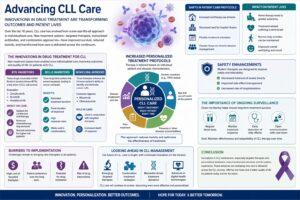 Over the last 10 years, Chronic Lymphocytic Leukemia care has moved from a one-size-fits-all approach to more individualized care because of the multitude of treatment options that have become available Most Chronic Lymphocytic Leukemia therapies involve the use of traditional chemotherapeutic agents, which are known to have a high toxicity as well as a high rate of hospital re-admissions.
Otherwise, the treatment may involve immunotherapy, immuno-chemotherapy, or even combinations of these approaches. The clinical evidence suggests, however, is that these therapies have not only been shown to enhance patient survival, but more importantly, they have begun to alter the way care is delivered throughout the continuum of Chronic Lymphocytic Leukemia management.
The Innovations in Drug Treatment for CLL
The last decade has seen multiple developments in treatment options for Chronic Lymphocytic Leukemia. Chronic lymphocytic leukemia medication has been transformed by the Introduction of Targeted Therapies, as they have centered the focus of care on the patients be treated and the care that is provided.
Targeted therapies have been instrumental in establishing patient-centered care by enabling the development of new and innovative Treatment classes that, for example, improve the continuity of care by lowering the amount of time patients spend in the hospital and by offering more options in the management of their disease, which, in turn, supports their survival. Moreover, care providers are interacting with patients more frequently, which, in addition to addressing the patients’ needs, helps to improve their treatment outcomes.
The Introduction of New Treatment Options in CLL Management
The development of Targeted Therapies has provided more individualized options, resulting in the inception of new Treatment classes with markedly improved side-effect profile, which have been integrated into the lexicon of the treatment of patients with Chronic Lymphocytic Leukemia. An example of this would be the use of drugs that are classified as irreversible Bruton’s tyrosine kinase inhibitors, which selectively inhibit the activity of Bruton’s tyrosine kinase.
The following examples pertain to Bruton’s tyrosine kinase (BTK) inhibitors:
- Zanubrutinib
- Ibrutinib
- Acalabrutinib
Impact on Care:
- Options for continuous oral therapy
- Reduced chemotherapy requirements
- Studied outcomes for higher risk patients
BCL-2 Inhibitors
These drugs cause the death of cancer cells because of the inhibition of proteins that block the process of apoptosis.
Benefits:
- Extended treatment duration
- Fixed duration of treatment
- High response rates
- Works well in combinations.
Monoclonal Antibodies
These therapies improve the immune system’s ability to identify and eliminate cancer cells.
Common Agents:
- Rituximab
- Obinutuzumab
Role in Care:
- Used in conjunction with targeted therapies
- Increased depth of response
Increased Personalized Treatment Protocols
A key influence of the current chronic lymphocytic leukemia medication is the focus on personalized medicine. Therapeutic options are determined by the patient’s genetic profile, the disease’s progression, and other individual characteristics.
Some of the factors include:
- Genetic mutations (e.g. TP53 status)
- Age and overall health of the patient
- Presence of other diseases (comorbid)
- Prior treatment
This approach to care reduces toxicity to the patient and optimizes the effectiveness of the treatment.
Shifts in Patient Care Protocols
Advancements in medication have also restructured how care is delivered.
The following changes have occurred:
- Increased oral therapy use at home
- Decreased need for hospital infusion
- Flexible treatment schedules
- Greater focus on chronic disease management
These changes have improved access to and ease of care for patients.
The goal of modern therapy is to improve safety and tolerability while still minimizing side effects. This is particularly important for the elderly, who form a large part of the population with Chronic Lymphocytic Leukemia.
Safety Enhancements:
- Decreased instances of severe toxicity.
- Improved side effect management.
- Decreased rate of hospitalizations.
This has allowed for the uninterrupted continuity of treatment for even more patients.
Importance of Ongoing Surveillance
With the advent of targeted treatments, often, oral, ongoing surveillance has integrated into treatment guidelines.
Surveillance Techniques:
- Blood drawings at intervals are essential.
- Treatment response timelines must be adhered to.
- Side effects must be monitored at the earliest possible junctures.
- Communication to medical authorities must be unrestricted for the full duration of the study.
Goals of surveillance include ensuring that CLL therapeutics remain effective for as long as possible.
Influence on the Life of the Patient
Improved quality of life for patients is the greatest benefit derived from all advances in the treatment of Chronic Lymphocytic Leukemia.
Benefits:
- Home therapy leads to a greater degree of autonomy.
- Treatment related suffering is diminished.
- Normal functions of daily life can be performed.
- Mood is elevated.
Some patients can maintain daily activities while undergoing treatment, depending on individual response and disease characteristics.
Barriers to New Protocols Implementation
Despite the progress in the field of Chronic Lymphocytic Leukemia therapy, barriers remain to the application of newly developed approaches to standard practice.
Main Barriers:
- Targeted therapies are expensive.
- Patients must be willing to buy into the treatment for the duration of its implementation.
- There is the possibility of developing resistance to the pharmacologic agents that may be used.
- Pharmacologic agents that are used may interact adversely.
The remaining barriers must be addressed to optimize the new approaches to treating Chronic Lymphocytic Leukemia.
Looking Ahead in CLL Management
Innovations in targeted therapy remain the focus in the management of Chronic Lymphocytic Leukemia. It is anticipated that Chronic Lymphocytic Leukemia therapy will still be improved in the near future, providing an even greater degree of personalization.
What to Expect:
- Targeted therapy that is emerging.
- Strategies that include more than one treatment.
- Treatment choices based on specific biological markers.
- New technologies that include digital health.
The treatment of Chronic Lymphocytic Leukemia will be even more effective than it is now.
Conclusion
Recent progressions in chronic lymphocytic leukemia medications have been invaluable in providing quality management strategies for this disease. The innovations with respect to Chronic Lymphocytic Leukemia medications include targeted therapies and personalization of treatment plans. These developments have influenced how care is delivered across different stages of Chronic Lymphocytic Leukemia management. Modern medications for Chronic Lymphocytic Leukemia have also helped in simplifying the process for care givers and have also drastically improved the Chronic Lymphocytic Leukemia patient experience. The ongoing research in this field of study will ensure that the Chronic Lymphocytic Leukemia management will be at the apex, and ensure that the patients will have hope, and live better, in the future.