Sep 10
2026
A Study of SEQUOIA: What Hematologists Should Know About BTK Inhibition

Within adult hematological oncology, chronic lymphocytic leukemia (CLL) represents one of the most frequently diagnosed forms.
It’s especially widespread among patients in Western countries.
Over the past decade, approaches to choosing an initial treatment have been reviewed, changed, and improved. One of the effective CLL treatment types involves the use of Bruton tyrosine kinase (BTK) inhibitors. It may occasionally promise long-term outcomes. Read more to learn about clinical findings from the SEQUOIA study.
Within adult hematological oncology, chronic lymphocytic leukemia (CLL) represents one of the most frequently diagnosed forms. It’s especially widespread among patients in Western countries. Over the past decade, approaches to choosing an initial treatment have been reviewed, changed, and improved. One of the effective CLL treatment types involves the use of Bruton tyrosine kinase (BTK) inhibitors. It may occasionally promise long-term outcomes. Read more to learn about clinical findings from the SEQUOIA study.
The SEQUOIA Trial
The SEQUOIA Zanubrutinib trial evaluated Zanubrutinib across several patient cohorts with different clinical and genetic characteristics. It involved the collection of enough clinical data and helped researchers provide valuable guidance when choosing initial intervention.
This is a global phase 3 study comparing Zanubrutinib with a combination of Bendamustine and Rituximab in patients with CLL and SLL (small lymphocytic lymphoma). The eligibility criteria included patients of 65 years and older alongside younger participants who had health comorbidities. They were enrolled in the study at various international medical facilities.
The study design included several distinct patient cohorts:
- Cohort 1. Evaluation of treatment-naive patients without del(17p), randomized 1:1 to receive either Zanubrutinib or Bendamustine in combination with Rituximab (stratified by age, Binet stage, geographic region, as well as immunoglobulin variable region heavy chain (IGHV) mutational status.
- Cohort 2. Evaluation of non-randomized monotherapy with Zanubrutinib in patients with the high-risk del(17p) genetic abnormality.
- Cohort 3. Evaluation of Zanubrutinib in combination with Venetoclax in treatment-naive patients with CLL/SLL, including those with high-risk genetic features.
Progression-free survival, evaluated via Independent Central Review, served as the primary endpoint for the randomized arm of the study.
Biological Mechanisms and Target Precision
Inside the microenvironment, malignant lymphocytes lean on BTK-driven receptor cascades to stay alive. Targeted inhibitors step in to break that signaling loop. By cutting off downstream survival cues at the enzymatic level, these agents drive leukemic B-cells into apoptosis and slow down CLL advancement.
When it comes to Zanubrutinib, it was primarily designed to provide higher binding selectivity compared to previous inhibitors. Second-generation BTK inhibitors focus on minimizing possible unwanted interactions with off-target enzymes. This particularly concerns EGFR (epidermal growth factor receptor), ITK (interleukin-2-inducible T-cell kinase), and TEC (tyrosine kinase expressed in hepatocellular carcinoma).
Less selective agents can cause unwanted side effects in surrounding benign tissues. Greater precision in targeting helps medical professionals predict long-term treatment tolerability. Besides, it aims to reduce the incidence of off-target cardiac complications. Based on clinical trials, off-target binding to ITK and TEC kinases is often referred to the one connected with such risks as bleeding and/or gastrointestinal disturbances. So, selective molecular designs help reduce the drug-induced side effects. As a result, a patient can tolerate continuous oral therapy for much longer.
Efficacy and Survival Findings
Extended monitoring in the SEQUOIA trial underscores the lasting efficacy of Zanubrutinib over standard chemoimmunotherapy. While the control group reached a median progression-free survival of 44.1 months at five years, the Zanubrutinib arm has not yet met its median. Yielding an impressive hazard ratio of 0.29, selective BTK inhibition provided a reliable, reproducible benefit across diverse patient populations.
As for the 6-year update, around 74% progression-free survival rate with Zanubrutinib against 32% with chemoimmunotherapy was observed. The analysis showed an approximately 72% relative reduction in the risk of disease progression or death with Zanubrutinib. As a result, it’s possible to speak of durable disease control across multi-year evaluation periods.
Response depth favored targeted therapy over the long haul, with Zanubrutinib demonstrating a 98% overall response rate compared to 89% in the Bendamustine-Rituximab group. Despite that efficacy gap, 60-month overall survival rates were virtually identical – 85.8% for Zanubrutinib and 85% for chemoimmunotherapy, reflecting the impact of successful salvage treatments in the control arm.
The switch to effective second-line targeted therapies often evens out overall survival rates in leukemia trials. Continuous BTK inhibition prevents early relapse and prolongs the duration of the initial response. Response duration data strongly favored Zanubrutinib over six cycles of chemoimmunotherapy.
Safety Profile
Long-term safety monitoring confirms that highly selective BTK inhibition remains well-tolerated over many years of treatment. Researchers didn’t identify any new or unexpected side effects during long-term follow-up. Low discontinuation rates indicate acceptable long-term tolerability of the drug among elderly patients. Finally, long-term safety monitoring remains critically important for continuous oral oncology treatment protocols.
In the study, cardiovascular events were monitored throughout treatment, including atrial fibrillation and hypertension. Greater selectivity for BTK may help reduce some off-target effects associated with less selective BTK inhibitors. The reduction in cardiovascular risks allows professionals to safely treat elderly patients with pre-existing heart conditions. Incidence of neutropenia and secondary infections was systematically monitored throughout the study. Blood counts and infection risk remained important considerations during long-term treatment.
The treatment of high-risk molecular subtypes requires targeted strategies that circumvent traditional mechanisms of resistance to chemotherapy. Patients with 17p deletion or TP53 gene mutations have long had poor outcomes with chemoimmunotherapy. These specific genetic abnormalities disrupt the normal apoptosis pathways in leukemic cells, which are mediated by the p53 protein.
Traditional cytotoxic chemotherapy is unable to effectively destroy p53-deficient cancerous lymphocytes. High-risk genetic profiles require the use of targeted, non-cytotoxic treatments to ensure long-term disease control. Clinical trial results have confirmed that Zanubrutinib provides durable efficacy in high-risk genetic subgroups. Zanubrutinib has also demonstrated a sustained prolongation of progression-free survival in patients with high-risk del(17p) abnormalities. Benefits in terms of progression-free survival were also consistently maintained in both the IGHV-mutant and IGHV-wild-type patient cohorts.
Clinical Practice Implications
The long-term SEQUOIA results support Zanubrutinib as an effective first-line treatment option for CLL. Hematologists now have access to robust, multi-year data supporting selective BTK inhibition. The expanded data provide greater clinical confidence when treating frail or elderly patients. Physicians can confidently incorporate these results into their routine treatment planning for patients.
This article is for informational purposes only and does not substitute for professional medical advice. If you are seeking medical advice, diagnosis or treatment, please consult a medical professional or healthcare provider.
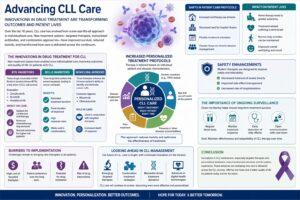 Over the last 10 years, Chronic Lymphocytic Leukemia care has moved from a one-size-fits-all approach to more individualized care because of the multitude of treatment options that have become available Most Chronic Lymphocytic Leukemia therapies involve the use of traditional chemotherapeutic agents, which are known to have a high toxicity as well as a high rate of hospital re-admissions.