The Internet of Things (IoT) is taking hold in nearly every aspect of our lives. No longer are we content with simply connecting via a computer or mobile device. These days, our homes are filled with connected devices, all purporting to make our lives easier, more efficient, and in many cases, more entertaining.
However, the IoT’s creep isn’t limited only to our homes. One area where IoT is already taking hold and is expected to grow even more is in the health care industry. Often referred to as Medical IoT (or just connected medical devices), the adoption of connected devices is already at impressive levels and the trend is for even more devices to be accessible via the internet in the future.
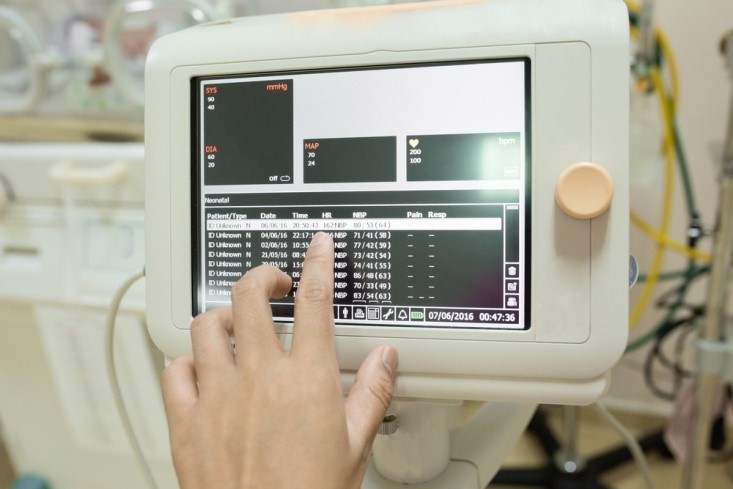
For example, it’s not uncommon to find patients using wearable devices to collect and transmit data about their blood sugar, blood pressure, heart rate, and oxygen rate to their physicians, or to find wireless devices within hospitals that automatically transmit patient vital signs and other monitoring data straight from the hospital room to hospital staff, no matter their location. The assumption is that thanks to such continuous monitoring and real-time data, physicians can provide better quality care and improve patient outcomes.
Undoubtedly, the IoT certainly creates a great deal of opportunity within health care to deliver better outcomes. At the same time, though, there is also the question of the true value of connected devices in every circumstance. The fact is, while there is a certain “cool” factor associated with IoT technology, and a sense of wonder at the fact that a device can transmit data wirelessly, there is also a concern that developers will attempt to include connectivity just because they can. Unless the technology aligns with user expectations and behaviors, is reliable, and delivers actual meaningful outcomes — and doesn’t just add an unnecessary feature to the device — it is unlikely to be successful.
Therefore, when developing connected medical technology, it is just as important to consider why you are connecting it as it is to consider how you will connect it. Often, the how isn’t nearly as complicated as one might think, thanks to relatively inexpensive and widely available microcontrollers and applications. The why, on the other hand, is more complex, and requires developers to consider not only the potential benefits of connecting a medical device, but several other key points as well, among them the potential for data overload, the security of the devices, and addressing potential malfunction, to determine whether a device can benefit from connectivity.
Chief Concerns for Connected Medical Devices
While there are plenty of points to consider when developing any type of medical device, when the device is designed to be connected to the internet, there are additional things to think about.
Guest post Ken Perez, vice president of healthcare policy, Omnicell.
Ken Perez
On October 14, the Centers for Medicare & Medicaid Services (CMS) released a 2,171-page final rule for the implementation of the Medicare Access and CHIP Reauthorization Act of 2015 (MACRA). CMS had issued a proposed rule on April 27 and in the intervening period, more than 100,000 physicians and other stakeholders attended outreach sessions and CMS received more than 4,000 public comments on the proposed rule, with many of the expressed concerns pertaining to the start date for MACRA’s first performance period.
MACRA’s Quality Payment Program replaces the unpopular sustainable growth rate formula and defines how physicians in physician practices—not hospitals—will be reimbursed by Medicare. It features two alternative, interrelated pathways: the Merit-based Incentive Payment System (MIPS) and advanced alternative payment models (APMs). MIPS is designed for providers in traditional fee-for-service Medicare, while the advanced APMs are for providers who are participating in specific value-based care models, such as accountable care organizations (ACOs).
Small physician practices with less than $30,000 in Medicare charges or that see fewer than 100 Medicare patients per year are exempt from MIPS. According to an analysis by the American Medical Association, 30 percent of physicians are below one or both of these thresholds. In addition, providers new to Medicare in 2017 are also exempt (though just for the first year).
The proposed rule specified Jan. 1, 2017, as the start date for the first performance period under MIPS, which would drive calendar year 2019 payment based on performance in 2017 across the four MIPS categories: Quality, Advancing Care Information, Clinical Practice Improvement Activities, and Cost/Resource Use. The final rule allows providers to start collecting performance data anytime between Jan. 1 and Oct. 2, 2017, with data due to CMS by Mar. 31, 2018.
Under MIPS, physicians can earn in 2019 a payment adjustment that is neutral, up to 4 percent positive, or up to 4 percent negative, depending on their level of participation, the amount of data submitted, and the length of the performance period reported. The adjustment increases to plus or minus 5 percent in 2020, plus or minus 7 percent in 2021, and plus or minus 9 percent in 2022. CMS projects that 592,000 to 642,000 clinicians will submit data for MIPS during the first performance year.
Guest post by Abhinav Shashank, CEO and co-founder, Innovaccer.
Abhinav Shashank
A new complex rule is about to change the entire US healthcare industry. It will replace the Sustainable Growth Rate (SGR) and streamline the three programs. The NPRM for MACRA was passed in 2015 and after the comments and feedbacks from numerous healthcare experts, the final rule with comment period has been released by CMS.
In the final rule, CMS has responded to more than 4,000 comments in a document which is more than 2,300 pages long. Some of these comments have been implemented in the law. As a result of this feedback friendly approach, substantial changes have been made.
The New MACRA after changes
The law aims to bring in unified policies that will add greater value to the healthcare system through the new Quality Payment Program (QPP). The program rewards for value in two ways:
Merit-based Incentive Payment System (MIPS)
Advanced Alternate Payment Models (Advanced APMs)
Chance to adapt
To help the physicians get used to the program CMS has declared the first year — 2017 — as “transition” year. There will be four options available to physicians in the transition year:
Clinicians can choose to report one measure in the quality performance category; one activity in CPIA or report the measures in ACI to avoid the negative adjustments. Alternatively, if they choose to report none, they will receive negative adjustments of 4 percent.
Report for minimum 90 days more than one quality measure, more than one CPIA or more than the required ACI to avoid negative adjustments and qualify for possible MIPS positive adjustments.
Ideally, report for a year or more than 90 days and maximize the chances to receive higher positive adjustments.
Participate in the Advanced APMs program, and if can to see ‘sufficient’ portion of the Medicare Patients, they will be able to qualify for 5 percent bonus incentive payment to be paid out in the year 2019.
Merit-based Incentive Payment System
Under this program, eligible clinicians will get payment adjustments based on the quality, cost and other measures related to care. This program will see the “sunset” of three existing programs namely:
When we talk about technology disrupting healthcare, we aren’t just referring to changes in the accuracy of health records or the convenience of mobile care; the real disruption comes in the form of fundamental challenges to traditional scopes of practice.
What Should We Do?
Scope of practice, broadly, is determined by a combination of liability and capability. Lead physicians carry greater liability than the bedside nurses assisting in patient care, because the care plan is directed by the lead physician. Likewise, the extra years of education and practice are assumed to increase the capacity of physicians to lead their care teams, make decisions about how the team will go about its work, and parse all of the information provided by the patient, nurses and other specialists involved with each case.
In every other industry, productivity increases come from technology enhancing the ability of individuals and teams to perform work. Email saves time and money by improving communication; industrial robotics standardize manufacturing and raise the scale and quality of output. Every device, app and system allows individuals to scale their contribution, to do more and add more value. Word processing and voice-to-text enable executives to do work that might otherwise have been performed by a secretary or typist. Travel websites allow consumers to find cheap tickets and travel packages that would previously have required a travel agent to acquire.
In healthcare, technology is changing the capacity of the individual caregiver, expanding what can be done, and often how well it can be done. These improvements, along with a growing need for healthcare professionals and services, are challenging traditional notions of scope of practice–for good and bad.
New Beginnings
Some of the changes to scope of practice are positive, necessary, and constructive. For example, technological literacy is necessary at every point in the care continuum, because interoperable EHRs and the vulnerability of digital information means that everyone must contribute to cyber security. In a sense, caregivers at every level must expand their scope of practice to incorporate an awareness of privacy, security,and data management considerations.
By extension, all caregivers are participating as never before in the advancement of clinical research, population health monitoring, and patient empowerment simply by working more closely with digital data and computers. As EHR technology iterates its way toward fulfilling its potential, caregivers and administrators are being forced to have difficult conversations about priorities, values, goals and the nature of the relationship between patient, provider, system, and technology. It is overdue, and foundational to the future of healthcare.
Is There A Nurse in the House?
The trend in healthcare toward prevention and balancing patient-centered care with awareness of population health issues puts primary care in a place of greater importance than ever. This, in turn, is driving a shift in the education of nurses to promote more training, higher levels of certification, and greater specialization to justify relying on nurses to fulfill more primary care roles. They are becoming better generalists and specialists, capable of bolstering teams as well as leading them.
Guest post by Santosh Varughese, president of Cognetyx
Santosh Varughese
Cybersecurity is a serious concern for every industry in America, but healthcare has been particularly hard hit. It is the most likely industry in the U.S. to suffer a data breach. According to the Ponemon Institute, nearly nine out of 10 healthcare organizations have been breached at least once, and nearly half have been breaced three times or more. Cyber-criminals are clearly winning this war, despite more funding, more firewalls, and more scrutiny. Here are five reasons why healthcare organizations are losing the cybersecurity war.
C-level healthcare executives still aren’t taking data security seriously.
Although the epidemic of healthcare cyber-attacks has C-suite executives claiming they finally realize the gravity of the situation, their actions tell a different story. A recent survey by HIMSS found that while most facilities have given information security a higher priority, healthcare IT personnel still complain of insufficient funding and staffing for cybersecurity. The same concerns were expressed by IT personnel surveyed in the Ponemon study and an earlier study conducted by IBM.
Frontline employees aren’t taking it seriously, either.
A group of security researchers from the University of Pennsylvania, Dartmouth and USC recently conducted an ethnographic study of cybersecurity practices among nurses, doctors, and other frontline medical personnel. The results showed a flagrant, widespread, shocking disregard for even the most basic data security practices; among other things, workers were observed:
Writing passwords on sticky notes and tacking them on machines in full view of anyone who wandered by.
Allowing other staff members to use their login credentials out of “professional courtesy.”
Purposefully defeating automated system timeouts by placing foam cups over sensors or by having another employee tap a spacebar at intervals.
Criminal hackers are fully aware of these types of practices and do not hesitate to take advantage of them; 95 percent of breaches occur when hackers get their hands on legitimate login credentials, either by obtaining them from a malicious insider or by taking advantage of an employee’s negligence or carelessness.
Too many facilities think that HIPAA compliance is sufficient to secure their data.
Most healthcare organizations focus primarily or exclusively on HIPAA compliance, erroneously thinking that complying with HIPAA is all they need to do to secure their systems. However, HIPAA was never meant to be a blueprint for a comprehensive data security plan. The law primarily addresses documentation and procedures, such as specifying when a patient’s medical records can legally be released, not technical safeguards. Information security experts surveyed by the Brookings Institution stated that HIPAA does very little to address the types of security challenges faced by large healthcare organizations with hundreds of employees and highly complex, interconnected data environments. The proof is in the numbers; if HIPAA compliance were enough to protect patient data, 90 percent of healthcare organizations would not have experienced breaches.
Healthcare jobs are plentiful, and at least through 2024, the demand for healthcare professionals, such as nurses, anesthesiologists and physicians, will only continue to rise.
The Bureau of Labor Statistics has said that healthcare jobs are “expected to have the fastest employment growth and to add the most jobs between 2014 and 2024.” Given the healthcare industry’s propensity for increased growth, hospitals need to embrace scalable IT—for their own sake and for the sake of their patients.
Fortunately, there are options.
Healthcare organizations increasingly rely on cloud-based IT solutions, and SADA Systems has reported that the number of organizations living in the cloud could be as high as 89 percent. There’s a reason for the high percentage—cloud solutions are safe, scalable and efficient.
Hospital data safety is no small concern.
In 2008, 9.4 percent of hospitals used EHRs. By 2014, the percentage had skyrocketed to 96.9 percent. The switch to digital records was necessary, but in the rush to modernize, hospitals were left more vulnerable to data theft than other industries that had migrated more slowly.
According to Niam Yaraghi, healthcare systems are left with an additional concern. “Hospitals cannot tolerate the consequences of computer lockdowns,” writes Yaraghi. “If Walmart gets attacked, it will likely shut down for a short period of time and fix the issue … hospitals on the other hand, are dealing with patients’ lives.”
Cloud-based IT solutions provide both reliable security and almost nonexistent downtime.
Further arguments for cloud IT include the sheer number of patients hospitals see every year. Hospitals treat 136.3 million patients in the emergency room alone, according to CDC.gov, and believe it or not, that number is growing. Cloud IT accommodates growing demand seamlessly.
The aforementioned surge in healthcare labor will also necessitate a consolidated communications option for employees—cloud solutions provides that as well. With healthcare utilization likely to rise, what are hospitals doing to keep up with the demand? Hospital staffs are growing, medical specialists are gaining more expertise, and healthcare centers are getting exponentially bigger.
Check out the graphic below showing the largest hospitals in each state by number of staffed beds, for some perspective.
Lee Horner serves as Stratus Video’s president of telemedicine, bringing more than 25 years of experience in enterprise software and healthcare IT industry. Most recently, Horner served as the president of CareCloud, a health care technology company specializing in practice management and EHR software. During that time, his core focus was setting the direction and strategy of the company while managing the top- and bottom-line revenues. He also drove both technology excellence and platform growth to meet CareCloud’s clients’ goals. Prior to CareCloud, Lee also held executive roles at Vitera Healthcare (formerly Sage Healthcare, where I worked with him; now Greenway Health) and Eliza Corporation.
You recently joined Stratus as president of telehealth – what motivated your decision and why is this such an important field nowadays?
In today’s mobile and fast-paced world, telehealth is a necessity. Telehealth is healthcare 2.0 – it can cut wait times, costs for both the provider and the patient, inefficiencies. At the same time it can elevate the kind of expertise and quality of the care patients receive, as well as give new opportunities to connect doctors to the patients who need them most. Telehealth is the future of health. It’s not only preserving that face-to-face connection between patients and providers – which is essential to great healthcare – it’s making that connection available to so many more people in so many different contexts. By enabling these essential connections, telehealth expands the probability of people getting the care they need, and is inevitably helping to save lives.
What is your background in health IT?
I have been involved in healthcare IT for the past 10 years. I have experience operating businesses in the payer, ambulatory and health system markets. It is a great field to be in. It’s very progressive and always changing.
Why is health IT where it’s at today? What do you feel has made this industry successful?
This market is expanding rapidly and technological advancement is at the forefront of that expansion. Smart people with extreme passion for improving patient quality care are really what is making this industry successful.
What are some of the things that most inspire you about the space and it’s work?
I am inspired every time I see the changes we are making improve a patient’s quality of care. It is incredible to see our work start to make a difference.
What are the most important areas in telehealth nowadays?
One important area is how telehealth is opening opportunities for more health industry professionals – and this is in turn, leading to a more robust patient experience. Predictable disruption is a huge theme in telehealth. You saw unpredictable disruption with industries like car ride service – when Uber and other apps came out, people who weren’t taxi drivers were suddenly entering that industry. In healthcare, it’s different – apps are creating opportunities for people already within the industry, allowing more providers to help the patients who need them most and more patients to connect with the providers best suited to their needs.
A couple of other important areas are readmissions and urgent care:
The Affordable Care Act penalizes hospital readmissions, because it’s important to incentivize successful treatment. Unfortunately, the nature of healthcare and the nature of life is that you sometimes need to go back in for continued treatment or to inquire about something. But maybe you moved or you’re too sick to keep going back to your treating physician. Discharge solutions are allowing people to reconnect and get the follow-up care they need without the hassle.
Urgent and emergency care solutions are also becoming really important. Imagine a burn victim walks into an ER at 4 a.m. and needs to see a specialist – but the staff is all tied up or there isn’t a specialist working in that particular facility. Without an urgent care app, the patient would be waiting and suffering, while the provider would be struggling to give them the care they need. With an app, they’d be able to pull up a tablet and connect that patient face-to-face with the doctor they need almost immediately.
About two decades ago who would’ve thought of the invention of Nano robots that are able to carry drugs all the way to the human bloodstream?
It’s happening. Technology is revolutionizing the conventional ‘human country doctor’ health care and there’s not much to be surprised of. With modern machines and software taking over the healthcare industry, one often wonders, “What good is technology doing to it?”
Health information technology (HIT is information technology applied to health and health care. It supports health information management across computerized systems and the secure exchange of health information between consumers, providers, payers, and quality monitors) is the burgeoning specialized combination of information technology, communications, and health care and it is altering the course of patient care for the better. Here’s how:
Knowledge Sharing
Practicing medicine is a lifelong learning. Doctors need to be on their toes all the time to acquire the knowledge of the latest developments in their field. Not updating themselves can make their practice stagnant – nobody would want to consult a doctor like that. Health IT brings the knowledge about everything, be it patients, therapies, diseases or medicines at their easy disposal. This knowledge can be easily shared between consultants, patients, and can even be updated when needed. That’s a whole new world of medical science for the doctors and patients to explore.
Improved Coordination
The world is swiftly moving towards specialization. Healthcare is no different. A single hospital stay could mean being under the observation of several different specialists at the same time. These specialists are required to coordinate with each other on every case they deal with. The way forward is paved by health IT. Health IT helps bring everything related to your condition from nutrition to neural complications in tandem with each other. The specialists know which condition can make regular course of treatment difficult for you or which medicine would trigger your skin allergies. The result? There are fewer chances of problems arising in your healthcare.
Better Outcomes
The most significant way IT is transforming the healthcare industry is in the form of better outcomes. Automation streamlines the operations of a medical facility, making them more effective and efficient. It is easier for different doctors and nurses to coordinate and diagnose a particular case. There are less chances of human error which ultimately leads to higher quality and safer care. With less time wasted in going through physical files and other manual work, doctors and nurses have more time on their hands to spend with patients.
The Patient’s Involvement
If anything, health IT has made patients increasingly vigilant about their health. It enables them to gain electronic access to their medical history, health records, and doctor’s recommendations. They get a chance to take control of their health. Patients’ portals and online knowledge hubs help patients educate themselves about their conditions, its symptoms and treatment procedures. Health IT makes it easier for patients to get in touch with doctors and nurses for better health outcomes and medical care.
 The Internet of Things (IoT) is taking hold in nearly every aspect of our lives. No longer are we content with simply connecting via a computer or mobile device. These days, our homes are filled with connected devices, all purporting to make our lives easier, more efficient, and in many cases, more entertaining.